
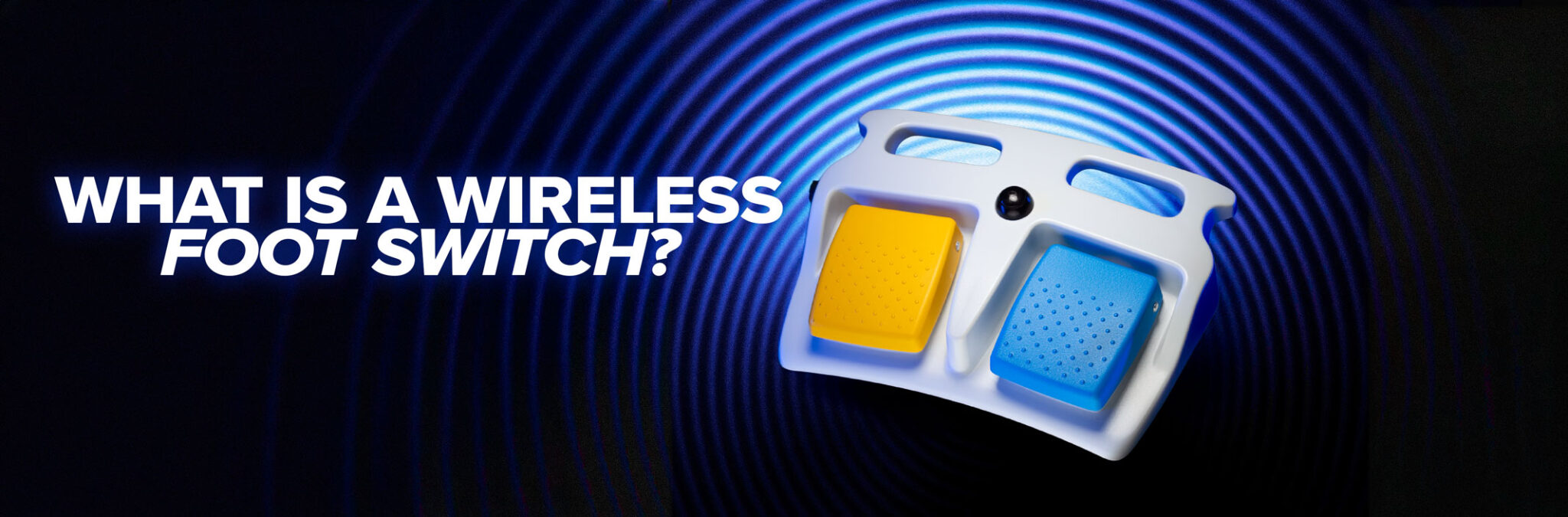
What is a Wireless Foot Switch?
Foot switches are commonly used to control equipment while keeping the operator’s hands free. In many traditional setups, the foot switch is connected to the equipment through a physical cable that carries the electrical signal when the pedal is pressed.
In some environments, however, equipment layout, mobility requirements, or cable management concerns make a wireless connection a useful alternative. RF wireless foot switches provide this capability by transmitting the control signal between the foot pedal and the equipment without a physical cord.
Understanding how wireless systems work can help explain why they are used in certain types of equipment and applications.
What Does Wireless Mean?
RF stands for radio frequency, the method used to transmit signals wirelessly between devices.
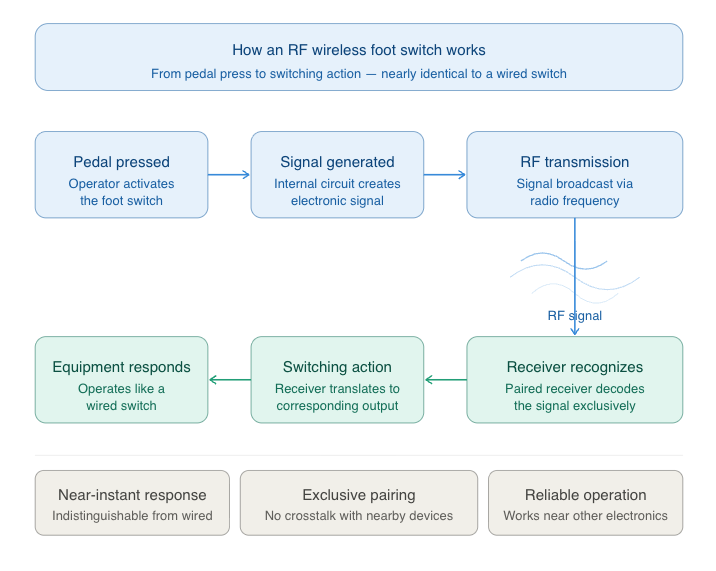
In an wireless foot switch system, pressing the pedal does not send a signal via a cable. Instead, the foot switch contains a transmitter that sends a radio frequency signal to a receiver connected to the equipment.
The receiver detects the signal and converts it into the electrical command needed to activate or control the equipment.
From the operator’s perspective, the experience remains the same as using a traditional foot switch. Pressing the pedal activates the desired function, and communication between the switch and the equipment occurs wirelessly.
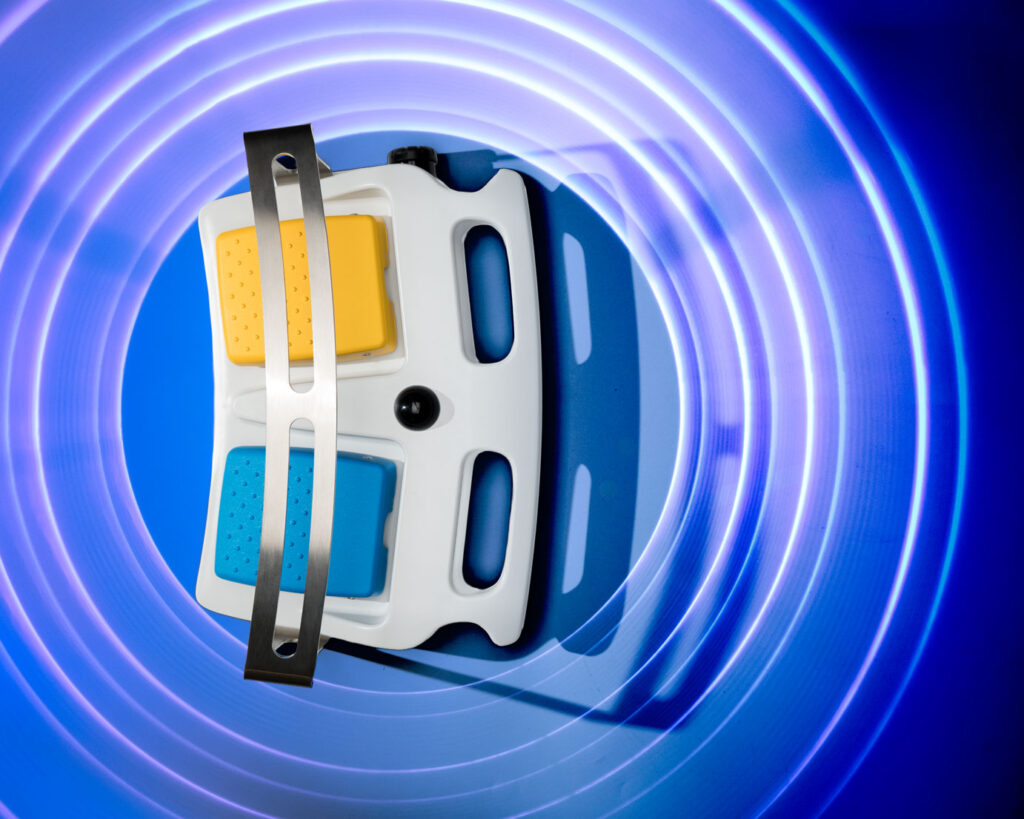
Key Components of a Wireless Foot Switch System
A wireless foot switch system typically consists of two main components.
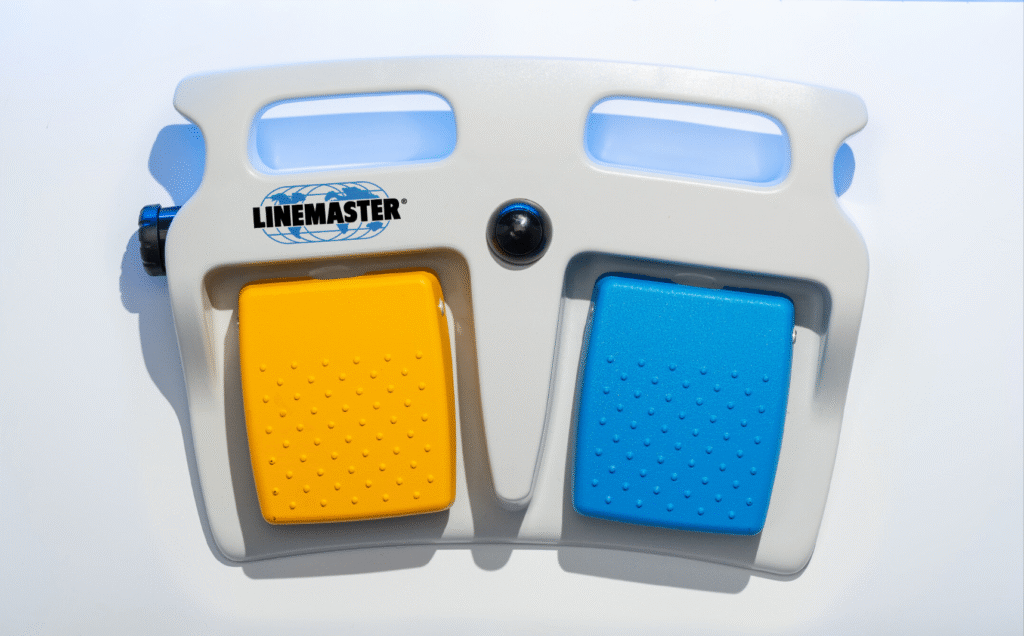
The first component is the transmitter, which is integrated into the foot switch itself. When the operator presses the pedal, the transmitter sends a wireless signal indicating that the switch has been activated.
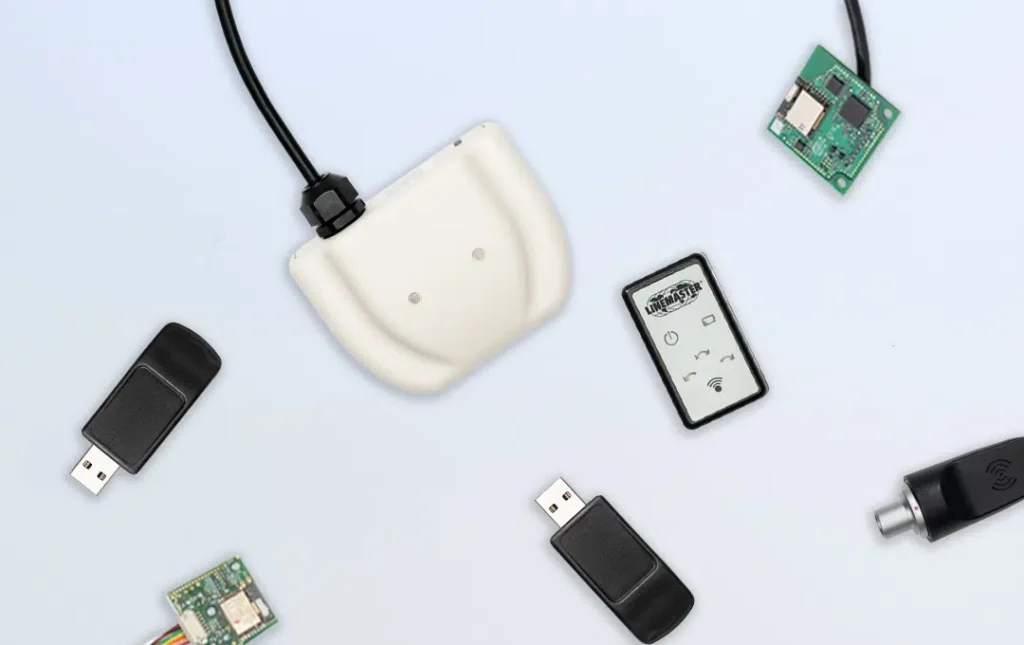
The second component is the receiver, which is connected to the controlled equipment. The receiver listens for signals from the transmitter and converts those signals into the electrical output required by the device.
Together, the transmitter and receiver allow the foot switch to control equipment without a direct wired connection.
How Wireless Signals Are Used in Foot Switches
When the pedal of an RF wireless foot switch is pressed, an internal electronic circuit generates a signal that is transmitted via radio frequency. The receiver recognizes the signal and translates it into the corresponding switching action.
This process occurs very quickly, allowing the foot switch to operate nearly identically to a traditional wired switch from the operator’s perspective.
Wireless systems are designed so that the paired transmitter and receiver communicate reliably and exclusively, even when other electronic devices are operating nearby without crosstalk.
Why Some Equipment Uses Wireless Foot Switches
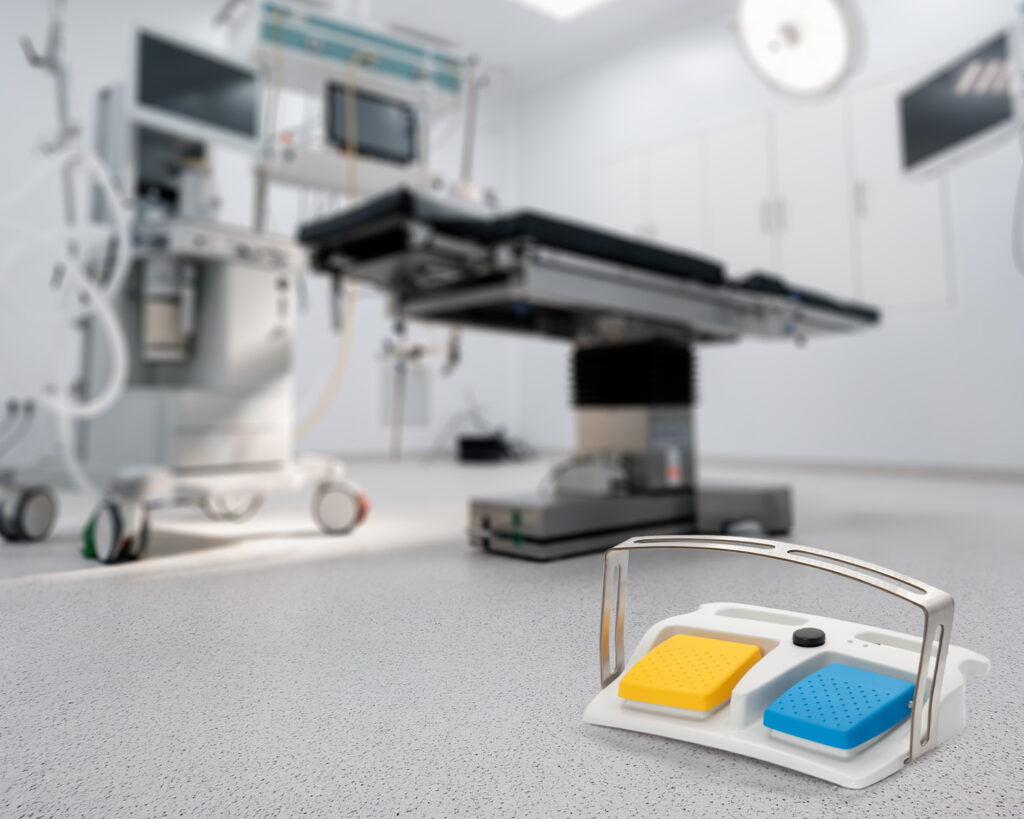
Wireless foot switches can be useful when eliminating a cable between the pedal and the equipment, this provides greater flexibility and prevents trip hazards for safety.
Without a cord attached to the foot switch, the operator may be able to position the pedal more freely. This can be helpful in environments where equipment may be moved, repositioned, or arranged differently depending on the task being performed.
Removing cables from the floor can also simplify equipment setup and reduce the amount of wiring to manage around a workstation and make it safer for people or equipment to move around.
Applications for Wireless Foot Switches
RF wireless foot switches are used in many of the same applications as traditional foot switches. These include systems where hands-free control is important for the operator.
Examples include certain types of medical equipment, laboratory instruments, and specialized machinery, where the operator must activate or control a function while focusing on another task.
In these situations, wireless foot controls work like wired switches but allow more flexible pedal placement.
Wireless Control with Familiar Foot Switch Operation
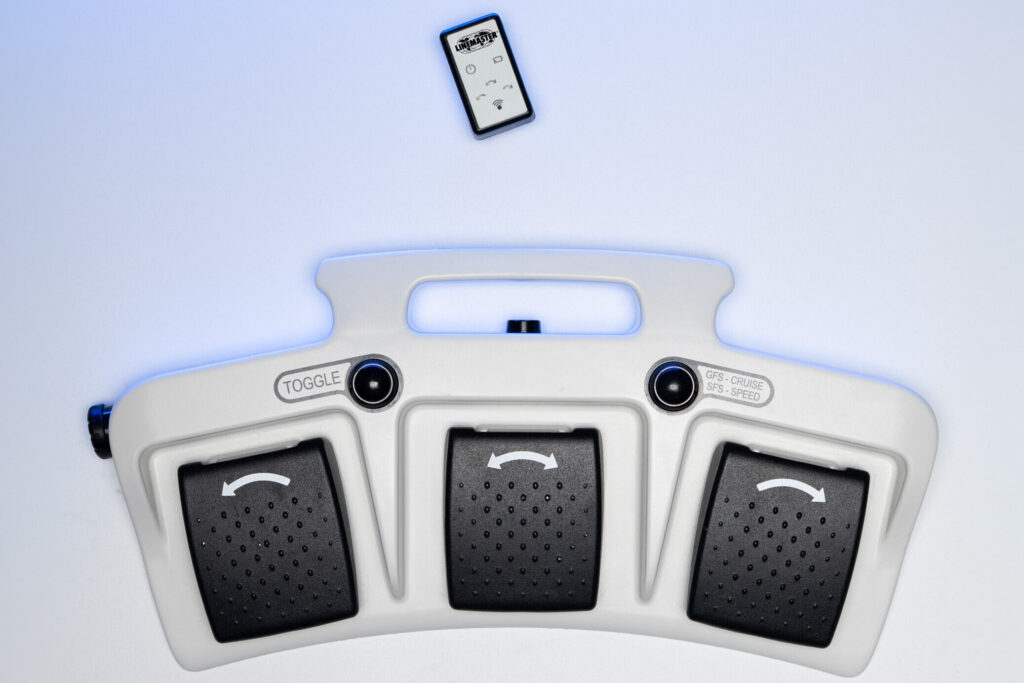
Although the signal is transmitted differently, the overall function of an RF wireless foot switch remains the same as any other foot operated control.
The operator presses the pedal, and the equipment responds. RF wireless technology replaces the physical cable with a wireless link between the foot switch and the device.
As equipment designs continue to evolve, wireless control systems offer another option for integrating reliable foot operated controls into a wide range of applications.
Conclusion
RF wireless foot switches provide the same hands free control as traditional foot switches while eliminating the need for a physical cable connection. By using radio frequency communication between a transmitter in the pedal and a receiver connected to the equipment, these systems allow operators to activate functions just as they would with a wired switch, but with greater flexibility in positioning and setup.
As equipment continues to evolve across industries such as medical and laboratory technology, RF wireless systems offer another option for integrating reliable foot operated control without the limitations of a corded connection.
If you are exploring wireless control solutions or want to learn more about how different foot switch technologies work, take a look at the other articles in our Learning Center to continue expanding your understanding of foot operated controls.
Meet The Author

Arijan Kandic
Digital Marketing Specialist
Arijan is the Digital Marketing Specialist at Linemaster Switch Corporation and holds a bachelor’s degree in business management from Quinnipiac University. He manages the company’s SEO strategy, Google Ads campaigns, and digital marketing initiatives, and develops educational content for the Linemaster Learning Center to help engineers, OEMs, and medical device manufacturers better understand foot switch technology. Arijan works closely with Linemaster’s engineering and applications teams to translate complex technical concepts into clear, accurate articles on foot switch design, customization, and compliance considerations.
In Collaboration with

William Chan
Chief Electrical Design Engineer
Bill has more than thirty four years of experience in high speed digital and analog electronic system architecture and hardware circuit design across the medical and security industries. He has been with Linemaster for over sixteen years and serves as the primary technical contact for customer electrical requirements and application specific solutions. He is best known for his wired and wireless low power digital and analog circuit designs, PCBA development, and cybersecurity focused hardware work.
Uploaded 04/22/2026
Custom Foot Switches
Linemaster’s custom footswitches are designed to meet specific user requirements, offering a range of features such as various pedal configurations, wired and wireless options, and customizable LED indicators. These custom footswitches provide reliable, durable solutions tailored to enhance functionality in diverse applications.

