
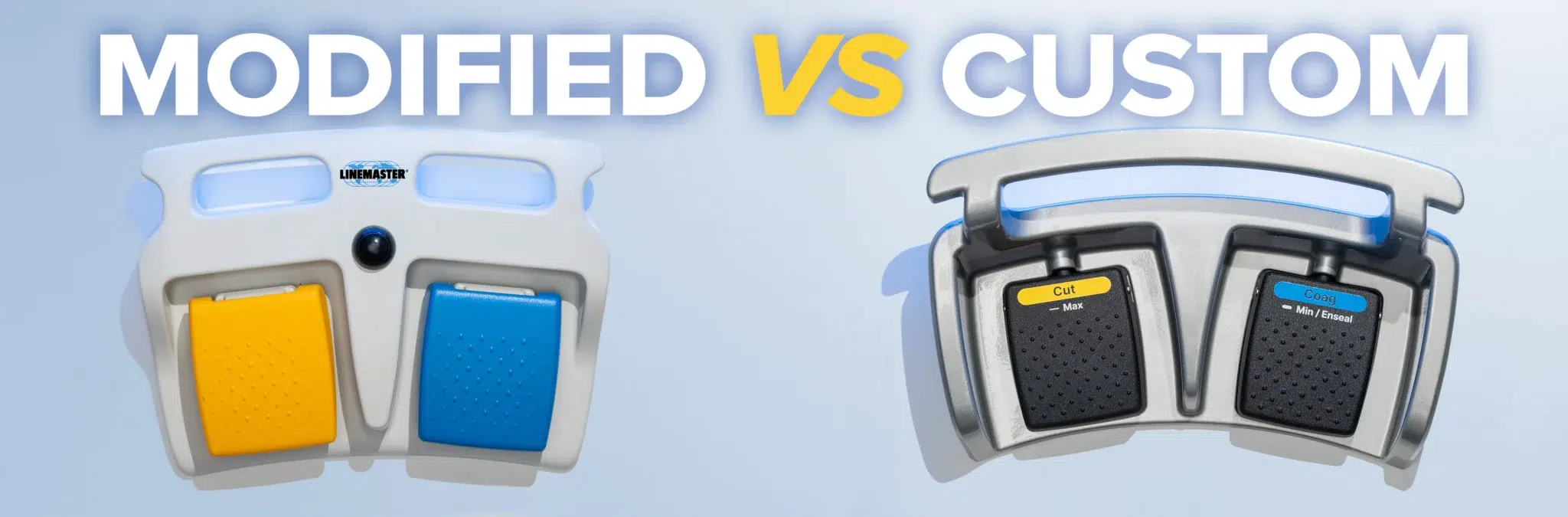
Two Paths to a Custom Medical Control: Product Line Extension vs. Fully Custom Design
A custom medical foot or hand control does not always require a completely new product.
For many medical OEM programs, one of the most important early engineering decisions is determining whether the application should be developed from an established control platform or whether the requirements justify a completely custom mechanical architecture and dedicated tooling.
At Linemaster, these programs generally follow two design paths.
A product line extension uses an established Linemaster platform and existing production tooling as the foundation for an OEM specific control.
A fully custom design begins with the OEM application and develops a new product configuration, including dedicated product tooling developed specifically for that program and owned by the OEM.
Both approaches can produce highly customized medical controls. The difference is where the engineering program starts, which design constraints are already established, and how much of the product architecture must be created specifically for the application.
Selecting the right path can have a major effect on development cost, tooling investment, schedule, verification planning, documentation, and long term production strategy.
The objective is not to minimize customization or to maximize it.
The objective is to use proven architecture where it creates value and create new architecture where the application requires it.
Path One: Product Line Extension
A product line extension begins with an established Linemaster product platform.
This approach can provide a significant development advantage because the program does not begin with a blank sheet of paper.
The existing tooling and portions of the underlying architecture are retained, while the control is configured around the functional and interface requirements of the OEM equipment.
The platform already represents engineering knowledge related to its basic mechanical construction, manufacturing methods, materials, assembly processes, component sourcing, and production history. Linemaster documentation also recognizes that product line extensions use parts, supplier relationships, material selections, and price models that are already established within the existing configuration.

That does not mean the resulting product must look or function like a generic catalog control.
A platform can provide the mechanical foundation while still allowing significant application specific engineering.
How Much Can Be Changed Within an Existing Platform?
The Aero family provides a useful example.
Its modular architecture allows different control technologies and configurations to be incorporated while retaining the underlying product platform and existing tooling.
Depending on the application, the platform can support differences in push button size and placement, actuation force, surface identification, materials, footing, control technology, wireless pairing, and treadle configuration. The modular treadle architecture also allows different armatures to be applied to the same fundamental platform rather than requiring the entire product to be redesigned.
Electrical configuration can also vary substantially.
Depending on the platform and application requirements, a control may incorporate mechanical switching, Hall effect sensing, discrete or variable outputs, redundant sensing, wired communication, wireless communication, visual indication, and different host system interfaces. Linemaster’s broader platform work specifically supports configuration of electrical architecture, wireless communication, redundancy, ergonomics, housing construction, and environmental protection around OEM equipment requirements.
This leads to an important distinction:
Using an existing platform does not mean selecting a standard product and changing only the cable or color.
It means starting with an established mechanical and manufacturing foundation and applying engineering effort to the portions of the control that need to be different for the OEM application.
Where a Product Line Extension Creates Value
The primary advantage of the product line extension path is not simply lower tooling cost.
It is the ability to begin development with more known information.
Existing tooling is already available. Core manufacturing methods have been established. Components and suppliers may already be qualified for the platform. Assembly experience exists. Production considerations are better understood.
That changes the nature of the engineering problem.
Instead of developing every element of the control simultaneously, Engineering can focus more directly on the characteristics that differentiate the OEM application.
For the right program, this can reduce development effort, shorten the path to representative hardware, reduce the amount of new tooling required, and create a more predictable transition into production.
It can also influence verification planning.
However, existing verification evidence should never be assumed to apply simply because two products share the same housing or platform.
The correct engineering question is:
What changed, and what does that change affect?
Verification for a Product Line Extension
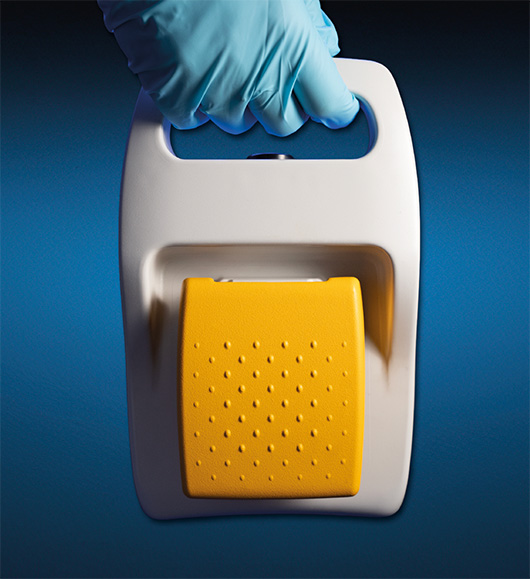
A product line extension may be able to use portions of existing design and verification evidence, but applicability requires technical review. The correct engineering question is what changed, and what that change affects. Changing artwork is fundamentally different from changing treadle geometry. Changing a connector is different from changing a sensing architecture.
Existing evidence is most useful when the assumptions behind that evidence remain valid. Where a modification affects those conditions, new verification should focus on the characteristics affected. How configuration scope determines verification activity is covered in Custom Medical Foot Control Configuration Scope.
When a Product Line Extension Is the Right Choice
A product line extension is particularly effective when the established platform already provides the fundamental physical architecture the application requires.
The OEM may need a different electrical configuration, connector, pedal arrangement, labeling system, actuation characteristic, sensing method, communication interface, or another application specific feature without requiring an entirely different product form.
In these programs, developing new molds simply to create something different can add cost, schedule, and technical risk without necessarily improving the control.
An experienced design team should recognize when the platform already solves the difficult mechanical problems and concentrate new engineering effort where it creates meaningful application value.
That is engineering efficiency, not design compromise.
Path Two: Fully Custom Design
There are also applications where an established platform is not the right starting point.
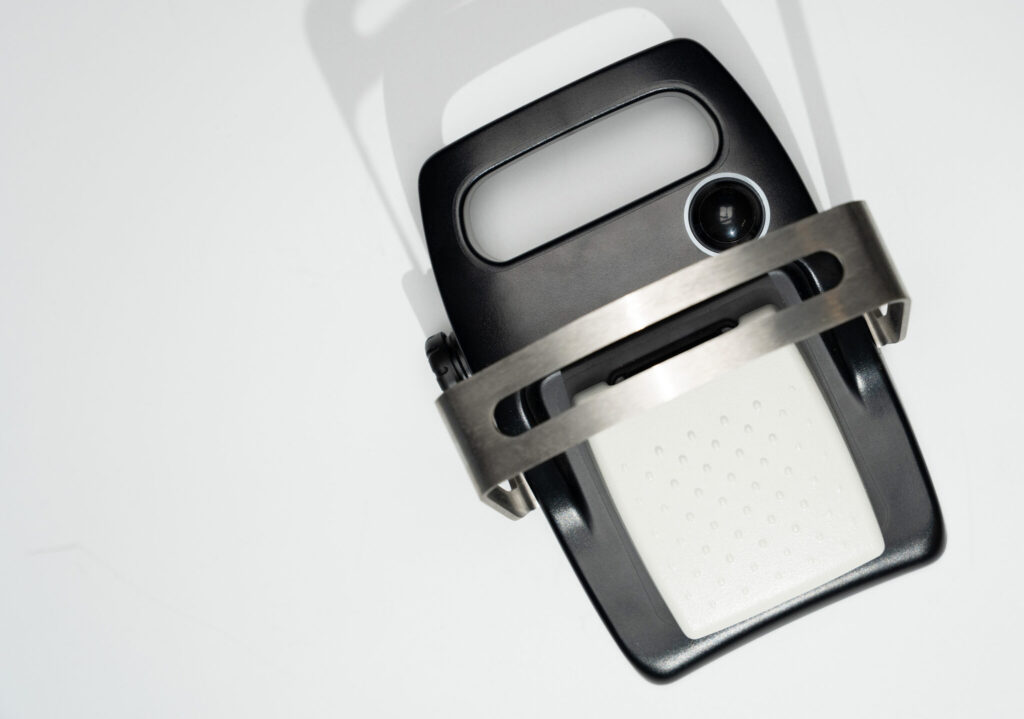
The required footprint may be unique. The equipment architecture may dictate a specific envelope. Operator interaction may require pedal geometry that cannot be achieved within existing tooling. Industrial design may need to integrate visually and mechanically with the larger medical system. The application may require a combination of controls, sensing technologies, materials, environmental protection, or ergonomics that fundamentally changes the product architecture.
In those cases, the appropriate path is a fully custom design.
Rather than configuring an existing housing and tooling platform, the control is developed around the specific OEM application.
Dedicated product tooling is then developed for the program and owned by the OEM.
That gives the engineering team substantially greater freedom over the physical architecture of the control.
What Fully Custom Really Means
Fully custom should not mean discarding everything that has been learned from previous designs.
A strong custom development program still draws on established engineering knowledge involving pedal mechanics, sensing, ergonomics, materials, sealing, cable construction, electronics, redundancy, assembly, testing, and long term durability.
What changes is the physical design boundary.
With a platform extension, existing product tooling creates part of that boundary.
With a fully custom program, Engineering has the freedom to establish a new mechanical architecture and create the tooling necessary to produce it.
That distinction allows the control to be developed around the equipment rather than forcing the equipment to adapt to an existing control envelope.
This is also consistent with Linemaster’s broader design phase positioning: the goal is to bring specialized control expertise into the program while the control can still be developed as an integrated part of the medical system.

When Dedicated OEM Tooling Makes Sense
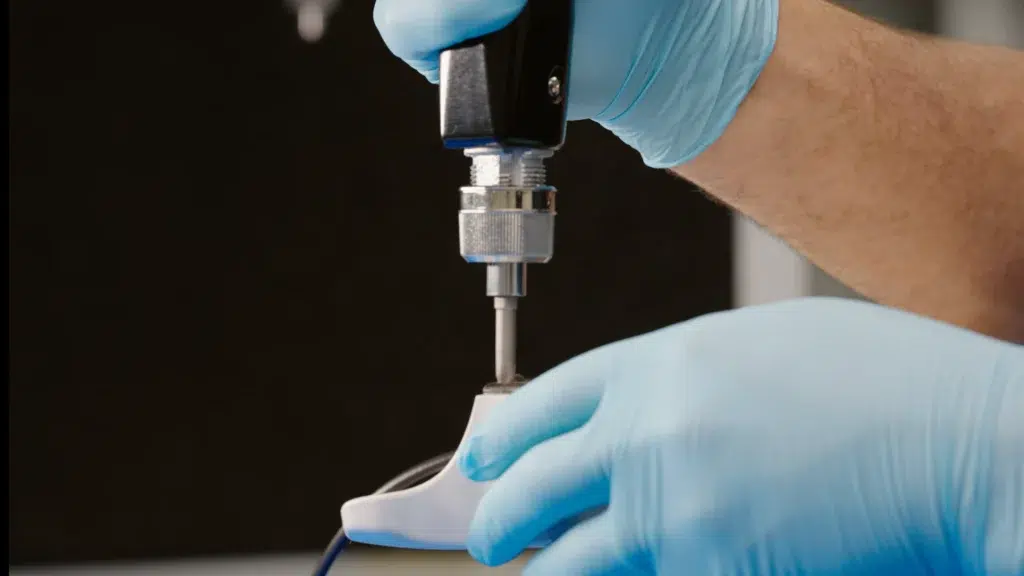
New tooling represents an additional program investment, so it should solve a problem that is worth solving.
A fully custom path may be justified when the application requires a unique combination of product size, geometry, pedal spacing, actuation, ergonomics, industrial design, environmental performance, internal packaging, or system integration that cannot be achieved effectively with an existing platform.
Higher anticipated program volume can also change the economics of dedicated tooling.
A product intended for substantial long term production may justify investment in dedicated molds or other production tooling because the resulting architecture can be optimized specifically for the application.
The important point is that tooling should follow the design strategy.
The design should not be forced into new tooling merely to make the product appear custom.
Likewise, a product should not be forced into existing tooling when doing so creates meaningful compromises in operator interaction, system integration, safety, reliability, or manufacturing.
Greater Design Freedom Comes With Greater Development Scope
A fully custom design provides greater freedom, but every new design decision must also be engineered.
A new housing affects more than appearance.
It can influence structural loading, sealing, internal clearances, molding behavior, material selection, tooling, assembly, cleaning, inspection, and durability.
A new pedal architecture can influence force, travel, mechanical stress, user interaction, sensing geometry, guarding, and unintended activation risk.
New electronics or communications can influence power architecture, software, EMC, test strategy, diagnostics, and system interfaces.
The benefit of a fully custom program is therefore not simply that anything can be changed.
The benefit is that the product architecture can be optimized around the requirements that actually matter to the OEM system.
That freedom is most valuable when it is guided by engineers who understand how individual design decisions propagate through verification and manufacturing.
Verification for a Fully Custom Product
A fully custom product generally creates a broader verification scope because more of the design is new. That does not mean every possible test is automatically required. Verification should follow requirements and technical impact, with the test plan developed from the design requirements and the risks created by the specific architecture rather than from a standard checklist.
The Two Paths Affect Quotation Differently
The choice between product line extension and fully custom development also has a direct effect on quotation.
For a product line extension, much of the manufacturing foundation already exists.
Existing product tooling, established components, supplier relationships, manufacturing processes, and known assembly methods provide a more defined starting point for estimating cost.
Customization still affects pricing, particularly when it changes electronics, purchased components, cables, connectors, materials, testing, secondary operations, or assembly content.
But the program is building from an established cost structure rather than creating the entire manufacturing architecture from the beginning.
A fully custom program requires a different commercial model.
In addition to the production unit cost, the development program may include dedicated molds, dies, fixtures, specialized manufacturing equipment, new supplier development, engineering effort, prototype components, and qualification activities.
The resulting quotation therefore needs to distinguish between development investment and production economics.
This is particularly important when OEM owned tooling is involved.
The tooling creates an up front investment, but it also establishes a dedicated manufacturing asset for that OEM specific product.
Tooling Ownership Is a Strategic Difference Between the Two Paths
Tooling is one of the clearest distinctions between a platform extension and a fully custom product.
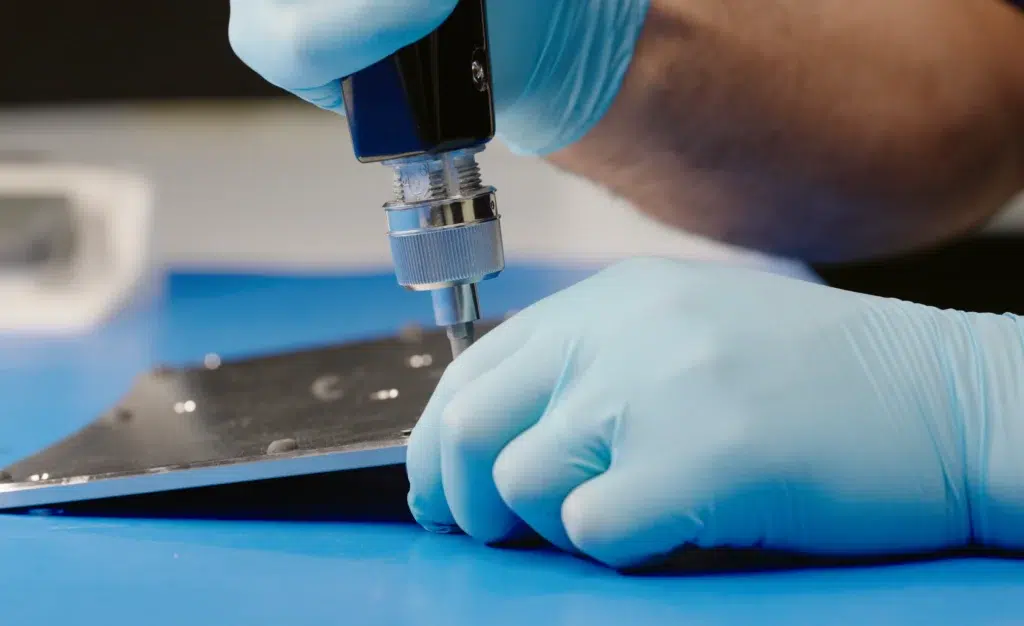
In a product line extension, the OEM benefits from Linemaster’s existing platform tooling. The program can create a customer specific control without requiring the customer to fund an entirely new set of product molds for the core architecture.
In a fully custom program, dedicated product tooling is developed specifically for the OEM and owned by the OEM.
That distinction has implications beyond the initial tooling charge.
OEM owned tooling allows the physical product architecture to be created specifically for the OEM application. It also makes the tooling investment part of the long term product strategy rather than simply another development expense.
Choosing between those approaches should therefore consider expected volume, product lifecycle, industrial design requirements, application differentiation, architecture constraints, and the degree of mechanical freedom the program actually needs.
Manufacturing Experience Should Influence the Choice Early
The decision between platform extension and fully custom design should not be made only by comparing CAD concepts.
The eventual product has to be manufactured repeatedly.
Materials, tooling, tolerances, component availability, assembly methods, sealing processes, cable construction, inspection, functional testing, process capability, serviceability, and supply continuity all influence whether a concept will become a strong production product. Linemaster’s design phase work specifically treats those manufacturing considerations as inputs during development rather than issues to address after the design is complete.
This is where specialized manufacturing experience changes the quality of the decision.
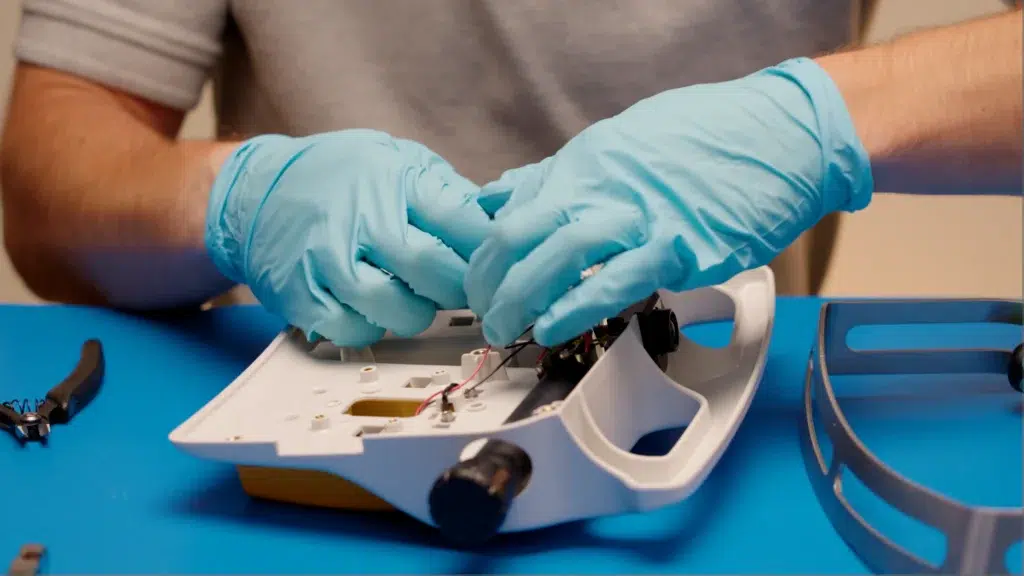
An established platform may contain design details that appear insignificant but exist because of years of molding, assembly, testing, environmental exposure, or field experience.
Conversely, an experienced team can also recognize when continuing to work within an existing platform is creating compromises that dedicated tooling could eliminate.
The SME role is not to advocate for one path.
It is to recognize which path gives the application the strongest technical and commercial foundation.
Product Development Still Includes Refinement
Choosing the development path early does not mean every subsequent design decision is fixed.
Both product line extensions and fully custom programs can include engineering refinement as more information becomes available.
The difference is that refinement should be purposeful.
Supplier feedback may improve a component or manufacturing method. Prototype evaluation may identify an ergonomic improvement. Testing may provide data that supports an adjustment to design margin. Manufacturing review may identify a way to simplify assembly or improve inspection.
Those findings can cause a design activity to be revisited.
That is not guess and check engineering.
It is controlled convergence toward a more mature design.
The underlying development process supports this principle. Prototype build observations and variances are captured so applicable lessons can be incorporated when the product progresses toward production documentation.
Similarly, the preproduction review can return a program for additional work or control unresolved items before unrestricted production proceeds.
The purpose of those feedback loops is to make each design decision more informed than the one before it.
How to Choose Between the Two Paths
The decision ultimately comes down to one engineering question:
Does an established platform provide the right foundation for the application, or would adapting the application to that platform create compromises significant enough to justify a dedicated design?
A product line extension is often the stronger choice when the existing platform already provides the appropriate core architecture and the OEM requirements can be achieved by configuring the controls, electronics, interface, materials, identification, or other available design elements.
A fully custom design becomes the stronger choice when the application requires a physical architecture, ergonomics, packaging, industrial design, or system integration that cannot be achieved effectively within existing tooling.
Neither approach is inherently more advanced.
A fully custom product should not be selected simply because greater customization sounds more sophisticated.
Likewise, an established platform should not be selected solely because it reduces tooling investment.
The best solution is the one that provides the required performance with an appropriate balance of engineering effort, design freedom, verification, schedule, tooling investment, and production economics.
Why Specialized Control Experience Matters
The difficult part of custom medical control development is often not designing an individual feature.
It is understanding what that feature affects.
A different treadle geometry can affect force, travel, sensing, tooling, ergonomics, and mechanical life.
A new housing material can affect impact behavior, cleaning resistance, molding, tolerances, surface finish, and long term durability.
A connector change can affect cable construction, strain relief, shielding, sealing, assembly, and the host system interface.
That interconnectedness is why specialized experience matters.
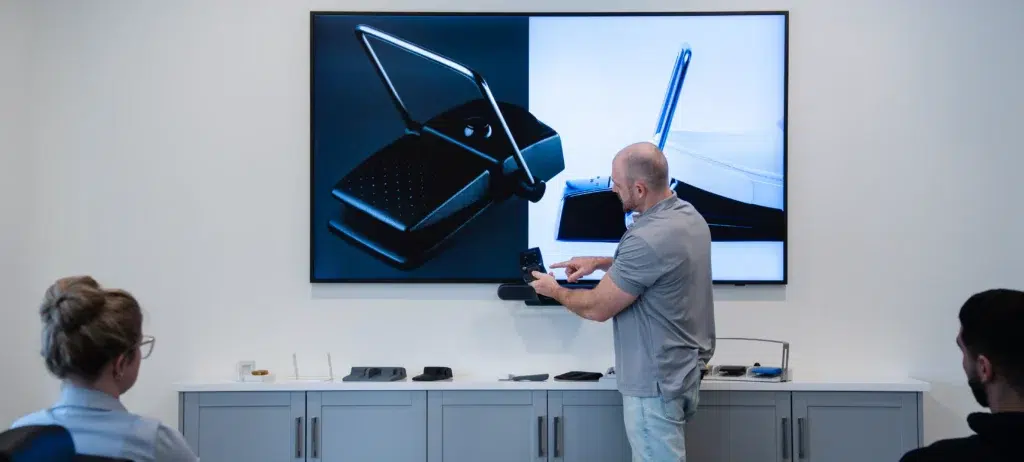
Linemaster’s design phase work is specifically positioned around bringing expertise in foot switches, foot pedals, hand controls, risk controls, verification, and manufacturing into the program while meaningful architecture decisions are still available to the OEM.
The goal is not to create the most customized product possible.
It is to make the right architectural decisions early enough that the control can be designed, verified, and manufactured around the real requirements of the medical system.
Summary
Medical OEMs developing a custom foot or hand control generally have two primary design paths.
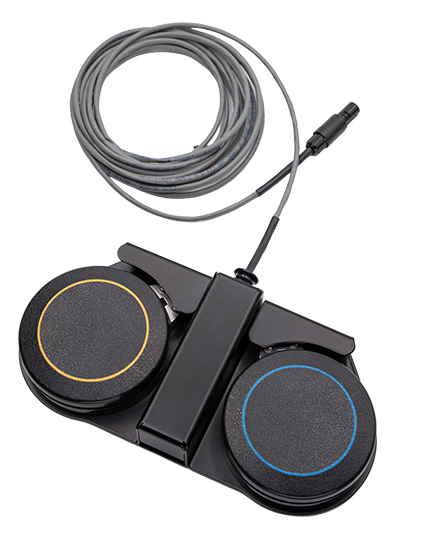
A product line extension begins with an established Linemaster platform and existing Linemaster tooling. The platform can then be configured around the OEM application while retaining the benefits of an established mechanical and manufacturing foundation.
A fully custom design develops the control around the specific OEM system and uses dedicated product tooling developed for and owned by the OEM. This provides greater freedom over geometry, ergonomics, industrial design, packaging, and other characteristics that may not fit within an existing platform.
The engineering decision is not simply which path offers more customization.
It is determining where proven architecture provides value and where new architecture is justified.
For a product line extension, existing design knowledge can help focus engineering and verification on the characteristics that actually changed.
For a fully custom program, the greater degree of design freedom is supported by a correspondingly broader development, tooling, documentation, and verification effort tailored to the new architecture.
In both cases, the strongest programs use prototype, supplier, testing, and manufacturing evidence to refine an already informed design direction rather than relying on trial and error.
The value of an experienced medical control partner is knowing when to build on what is already proven and when the application deserves something entirely new.
Discuss the Right Design Path for Your Medical Control
The best time to determine whether an application should use an existing platform or dedicated OEM tooling is early in development, while mechanical architecture, interfaces, ergonomics, production volume, and commercial requirements can still be evaluated together.
Linemaster’s engineering and applications teams can review the intended function, host system interface, operating environment, design requirements, anticipated volume, and program goals to determine whether a product line extension or fully custom control provides the stronger foundation for the application.
Meet The Author

Arijan Kandic
Digital Marketing Specialist
Arijan is the Digital Marketing Specialist at Linemaster Switch Corporation and holds a bachelor’s degree in business management from Quinnipiac University. He manages the company’s SEO strategy, Google Ads campaigns, and digital marketing initiatives, and develops educational content for the Linemaster Learning Center to help engineers, OEMs, and medical device manufacturers better understand foot switch technology. Arijan works closely with Linemaster’s engineering and applications teams to translate complex technical concepts into clear, accurate articles on foot switch design, customization, and compliance considerations.
In Collaboration with

Sean Lewis
Director of Engineering
Sean has more than fifteen years of experience in product development, engineering governance, and cross functional technical operations. His background in metal fabrication, including machining, forming, welding, and inspection, provides a strong manufacturing foundation that supports his approach to design and process optimization. Sean holds a bachelor’s degree in mechanical engineering, an MBA with a manufacturing concentration, and an MSOL. He is a Certified SolidWorks Expert with advanced capability in CAD, rendering, simulation, and rapid prototyping. Sean also specializes in DFMEA and PFMEA risk management practices and is the holder of several foot switch design and utility patents.
Uploaded 09/23/2026
Custom Foot Switches
Linemaster’s custom footswitches are designed to meet specific user requirements, offering a range of features such as various pedal configurations, wired and wireless options, and customizable LED indicators. These custom footswitches provide reliable, durable solutions tailored to enhance functionality in diverse applications.

