
Manufacturing Fixture Qualification: How IQ, OQ, and Preventive Maintenance Support Production Consistency
A manufacturing fixture does more than hold a part.
When a fixture establishes component position, controls alignment, supports a defined insertion force, locates a staking operation, or constrains an assembly during processing, its condition can directly influence the output of the manufacturing process.
That is why custom production tooling should not enter routine manufacturing simply because it appears to work.
A controlled qualification process establishes what the fixture is intended to do, confirms that it was built and installed correctly, demonstrates that its functional requirements are achieved, and creates the baseline from which the tooling can be maintained throughout its production life.
At Linemaster, equipment qualification uses Installation Qualification and Operational Qualification to establish that basis before equipment is approved for manufacture or testing of saleable product. The qualification record also identifies maintenance, calibration where applicable, storage, and equipment tracking requirements.
Qualification establishes the controlled starting condition. Preventive Maintenance helps preserve it. Production and inspection data provide evidence that the overall process continues to perform as intended.
Why Manufacturing Fixtures Matter to Process Consistency
Repeatable manufacturing depends on controlling the sources of variation that can influence the product.
Those sources include materials, equipment, methods, measurement systems, operators, environmental conditions, and tooling.
A well designed fixture reduces dependence on operator technique by mechanically controlling characteristics that should not vary from unit to unit.
Depending on the operation, a fixture may establish:
- Orientation
- Component alignment
- Assembly position
- Spring placement
- Label position
- Orientation during potting or curing
- Insertion depth
- Staking location
- Machining position
- Snap fit alignment
- Part support during torque application
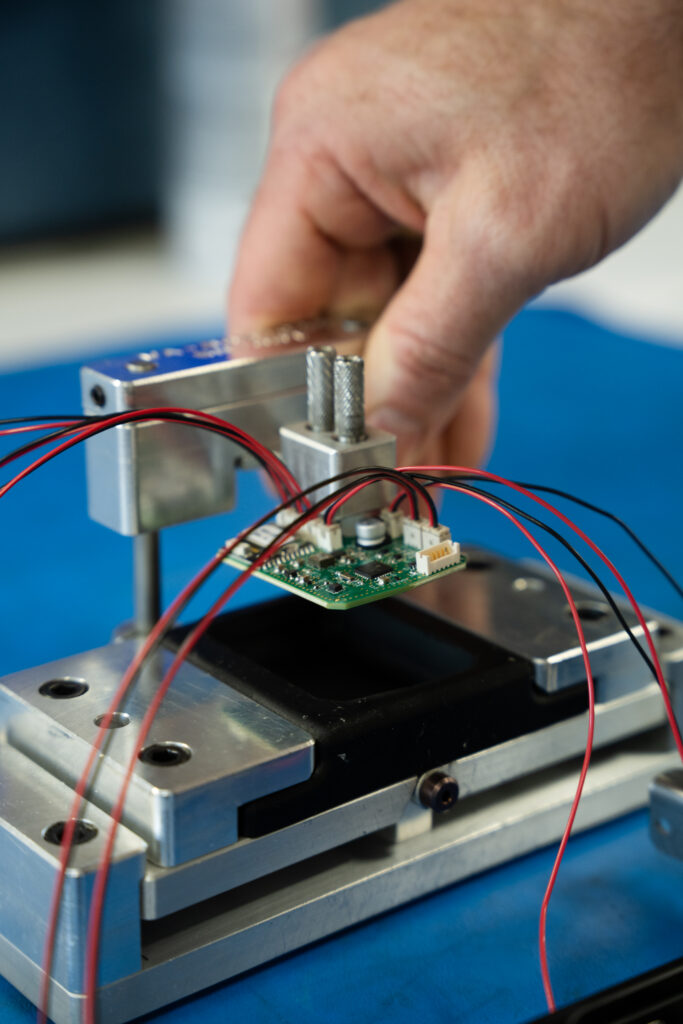
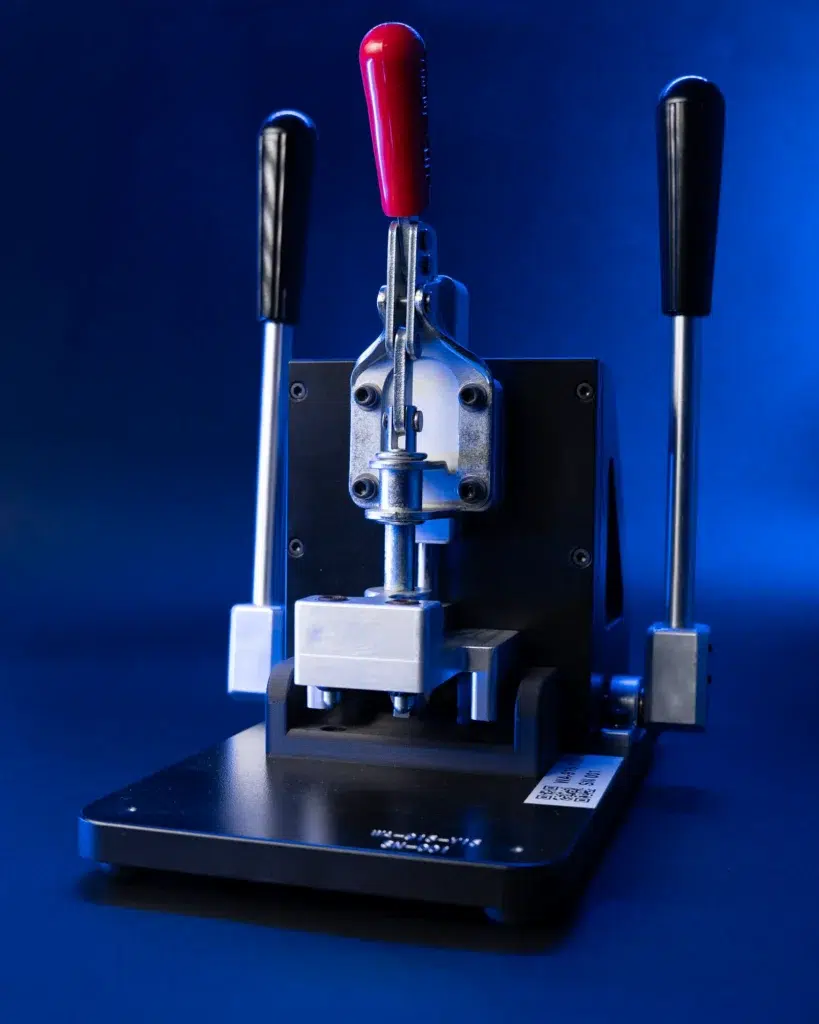
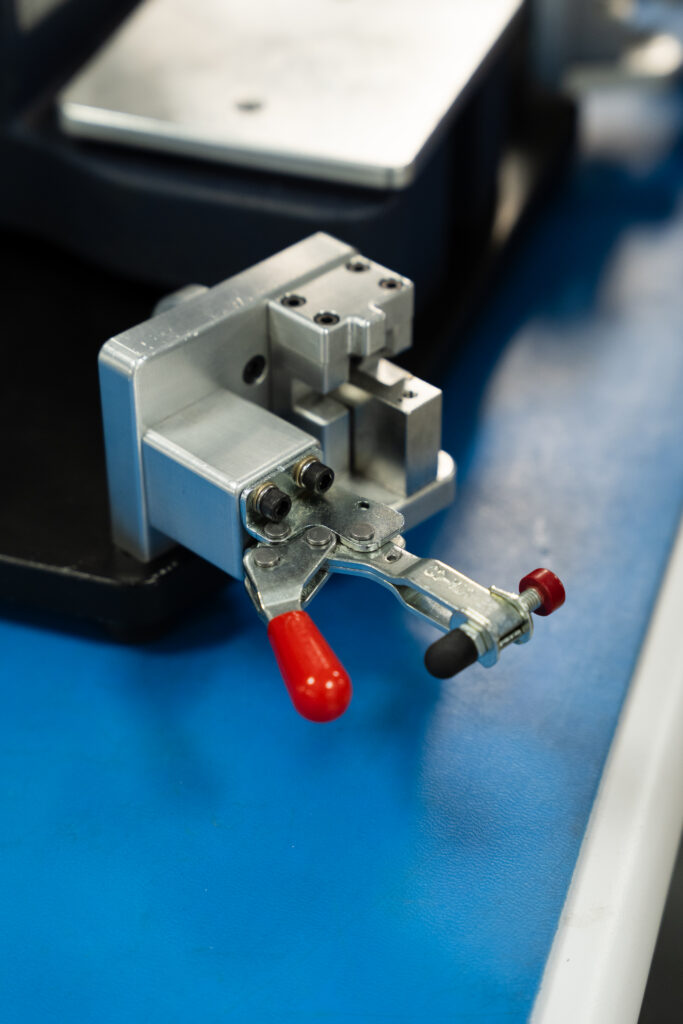
This does not remove the operator or other process variables from consideration.
It does something more useful: it converts selected elements of the assembly method from operator dependent judgment into controlled physical conditions.
For a medical control manufacturer, that distinction matters. A process that depends on an experienced operator “knowing where the part should be” is fundamentally different from a process in which the required position is established by qualified tooling.
The Difference Between a Fixture That Works and a Qualified Fixture
A fixture can produce a good part without being qualified.
That does not mean the fixture is ready for controlled production.
Qualification asks a different set of questions:
- Was the fixture built to the intended design?
- Are the applicable design requirements satisfied?
- Does it perform the functions for which it was created?
- Are the methods used to evaluate it appropriate?
- Are measurement devices used during qualification calibrated?
- Are safety and training requirements addressed?
- Have deviations been resolved?
- Are maintenance and tracking requirements defined?
Those questions turn a fixture from a shop floor aid into controlled manufacturing equipment.
Linemaster’s equipment qualification criteria reflect this distinction. The success criteria include confirmation that the equipment is designed as intended, built to design specification, meets its functional requirements, has complete supporting documentation, and has applicable deviations or corrective actions completed before the equipment is considered in a validated state.
The documentation is therefore not the qualification itself.
The documentation is the objective evidence that the engineering and functional requirements were actually demonstrated.
Installation Qualification: Confirming What Was Built
Installation Qualification, or IQ, establishes the physical and documented foundation for the equipment.
For custom manufacturing fixtures, that begins with the design requirements.
The qualification should confirm that the equipment that was fabricated corresponds to the intended design and that the characteristics necessary for its function have been established.
Linemaster’s IQ structure requires all applicable design requirements to be satisfied before the equipment can proceed to Operational Qualification. Where gauges or measurement equipment are used during IQ, those devices must be calibrated. The qualification can also incorporate dimensional or attribute based first article inspection as applicable.
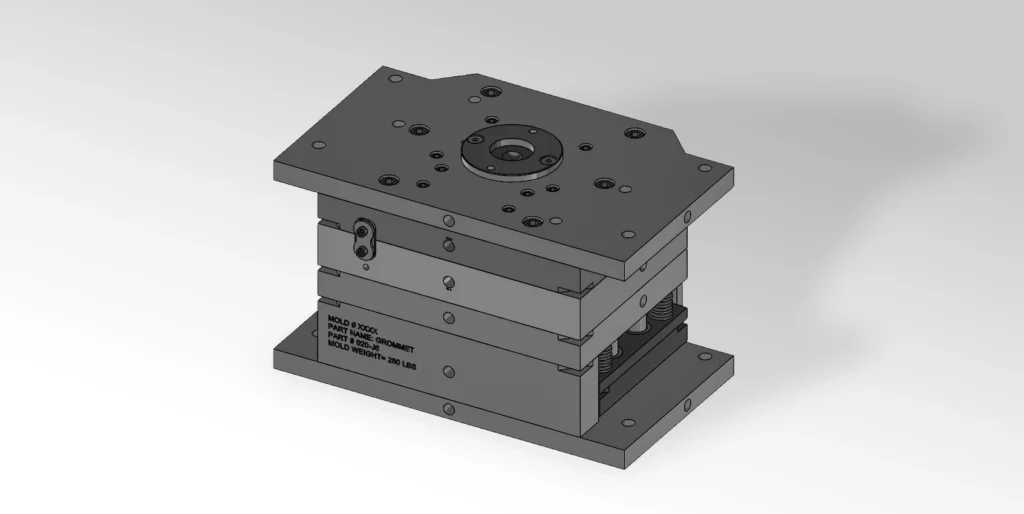
For a positioning fixture, IQ might confirm locating dimensions and physical interfaces.
For a staking fixture, it might confirm the geometry that locates the assembly and staking position.
For a machining fixture, it may include critical locating surfaces, datums, clamps, and equipment interfaces.
The important principle is that IQ answers:
Did we build and establish the equipment we intended to build?
A fixture should not advance because it looks correct or because an experienced technician believes it will work.
The applicable requirements should be demonstrated.
Operational Qualification: Confirming What the Fixture Does
Operational Qualification, or OQ, moves the question from construction to function.
A fixture can conform perfectly to its drawing and still fail to perform adequately in the manufacturing operation.
OQ therefore evaluates whether the equipment performs its intended functions under the applicable conditions of use.
The specific requirements depend on what the fixture controls.
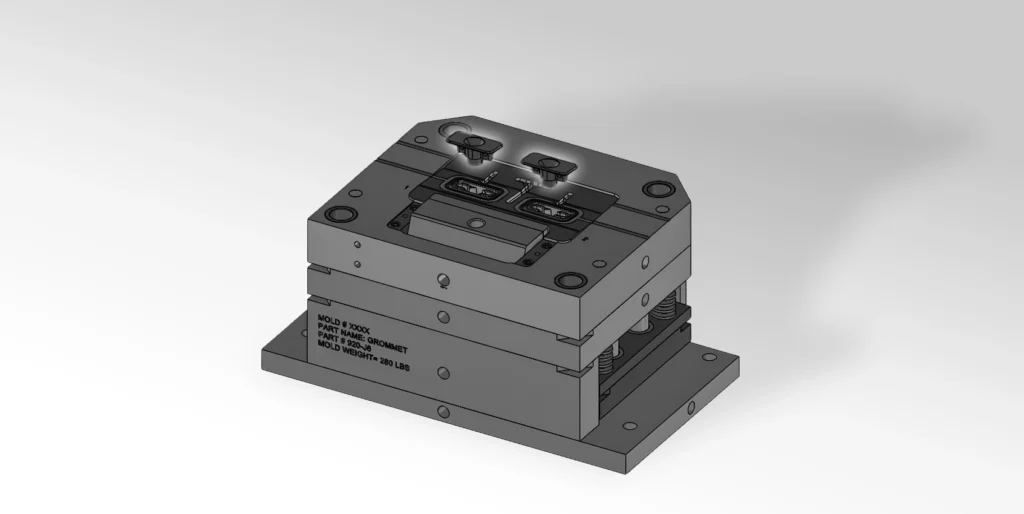
For example, OQ for an assembly fixture might evaluate whether components can be repeatedly positioned and assembled as intended.
A staking fixture may be evaluated for repeatable location and completed connection.
A torque support fixture may need to demonstrate that the assembly remains properly constrained during the fastening operation.
A fixture used in a test process may need to demonstrate reliable electrical or mechanical interface with the product.
Linemaster’s equipment qualification format intentionally allows the requirements, instructions, expected results, and Pass/Fail evidence to be established for the individual piece of equipment rather than assuming every fixture can be qualified using the same test.
That flexibility is important.
Good qualification is based on intended function, not a generic checklist.
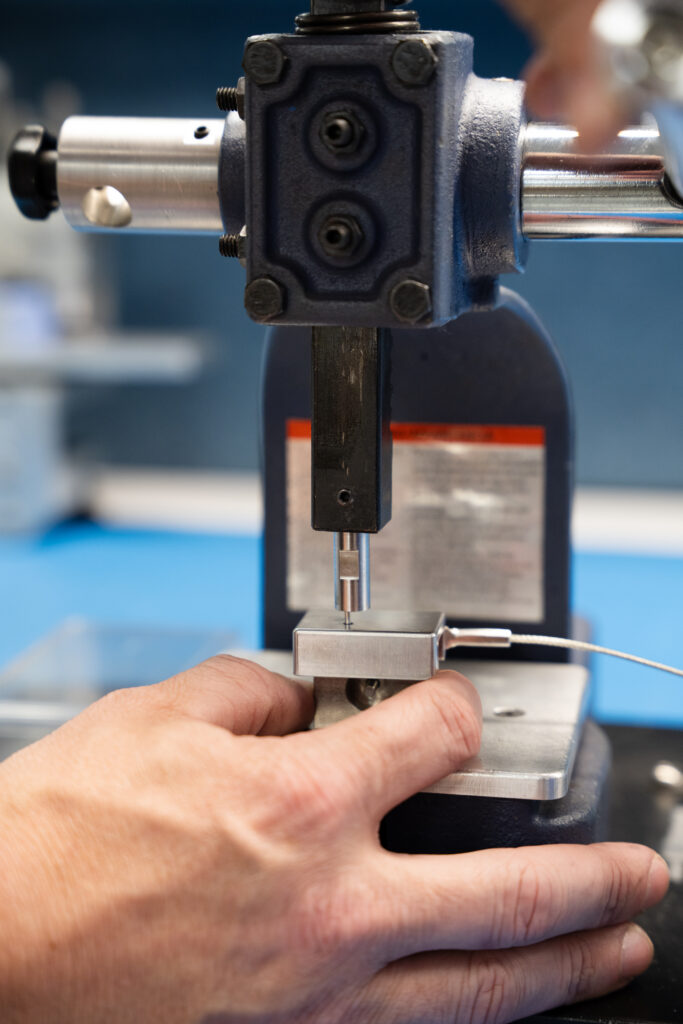
IQ and OQ Are Related, but They Answer Different Questions
The sequence matters.
IQ asks: Was the equipment correctly designed, built, installed, and documented?
OQ asks: Does the equipment perform the required manufacturing or test function?
Linemaster requires IQ to be completed before OQ begins.
That sequence prevents a common qualification mistake: attempting to demonstrate equipment performance before establishing that the equipment itself conforms to its intended configuration.
If OQ fails, the team then has a more useful starting point for investigation because the physical configuration has already been established through IQ.
Where Performance Qualification Fits
The regulatory value of a component supplier does not stop once the design is released.
Manufacturing controls also generate evidence about the product actually being supplied.
Depending on the program, this can include incoming inspection, manufacturing process controls, fixture qualification, final inspection, production testing, traceability, and retained quality records.
For applicable products, unit level production data can provide additional evidence about specific characteristics measured during manufacturing.
For example, Linemaster has used production data logging to retain minimum travel, maximum travel, and raw output values for individual units in variable output applications.
Where this type of information is collected, it can support investigations, manufacturing trend analysis, calibration review, and other retrospective evaluation of the characteristics actually recorded.
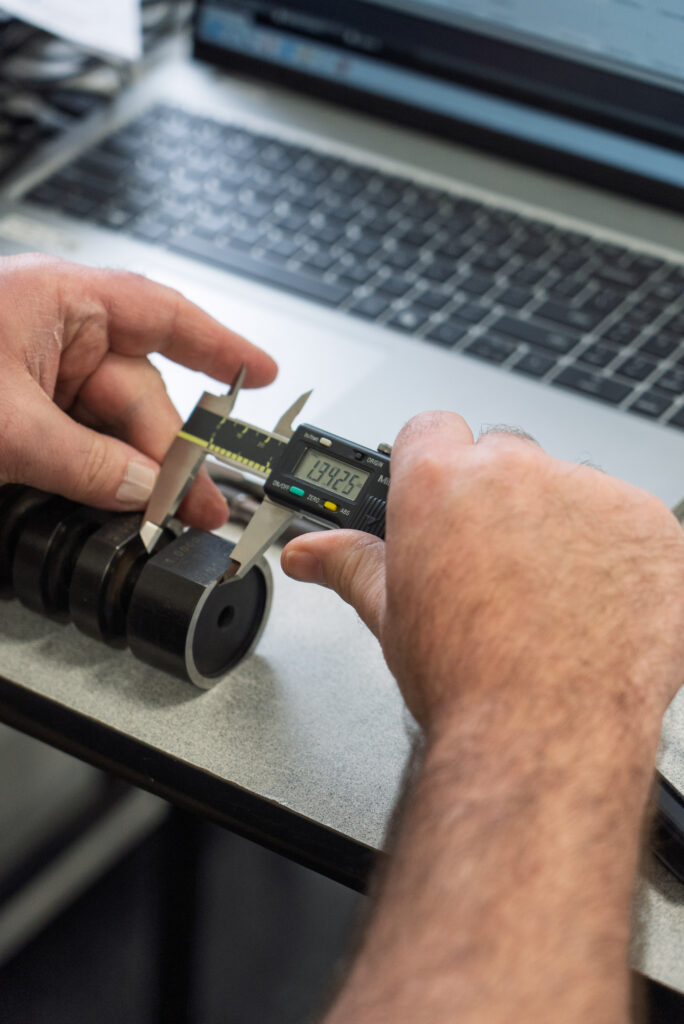
Measurement Systems Matter Too
Qualification conclusions are only as reliable as the measurements used to support them.
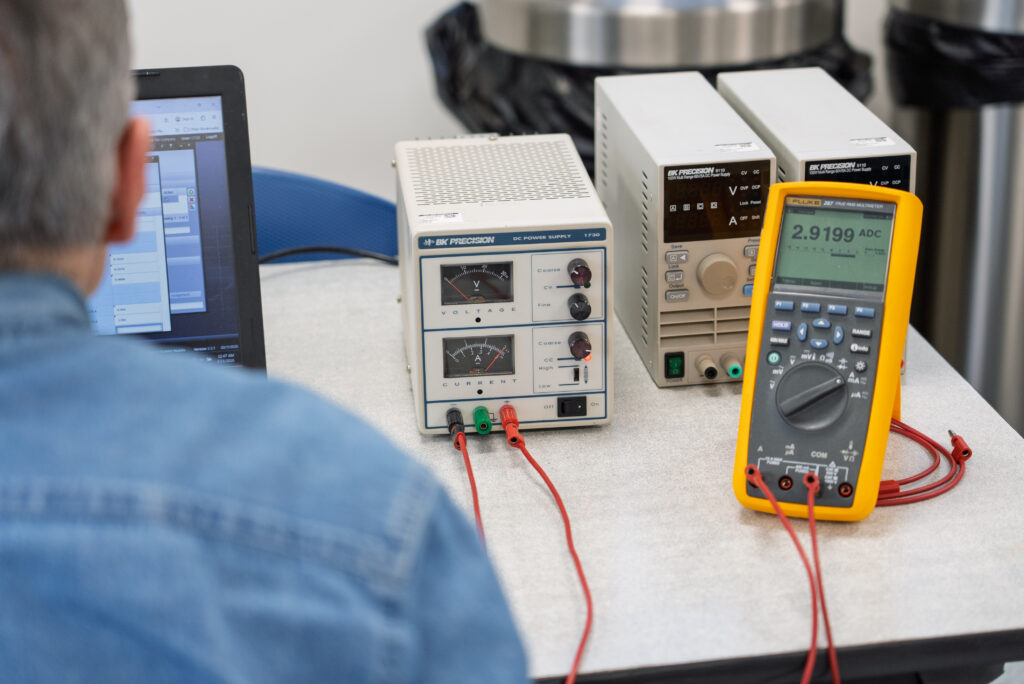
When a fixture or equipment qualification depends on dimensions, force, displacement, torque, electrical output, or another measured characteristic, the measurement method must be appropriate for the decision being made.
At a minimum, equipment used for measurement during Linemaster IQ must be calibrated.
For more demanding applications, the qualification strategy may also include Measurement System Analysis or Gage Repeatability and Reproducibility where appropriate.
Linemaster qualification work on other manufacturing and test applications demonstrates this broader approach by combining IQ, MSA, Gage R&R considerations, OQ, and PQ when the application requires that level of evidence.
The engineering principle is straightforward:
Do not use measurement variation to make conclusions about process variation without understanding the measurement system first.
Preventive Maintenance Begins With the Qualification Strategy
Qualification is not the end of tooling control.
Fixtures wear.
Locating pins can loosen. Bushings can wear. Clamps can lose force. Contact surfaces can become damaged. Fasteners can shift. Electrical interfaces can degrade. Potting fixtures can accumulate material. Staking features can wear gradually.
Some of these conditions create obvious failures.
Others create slow process drift.
That is why maintenance planning should be considered when the equipment is initially released.
Linemaster’s equipment qualification record identifies maintenance information, a maintenance period, calibration period where applicable, equipment location, and the system used to track the equipment.
Depending on the fixture and its function, Preventive Maintenance activities can include inspection, functional checks, wear assessment, cleaning, adjustment, repair, or replacement of wear components.
The exact maintenance activity should follow the failure mechanisms of the tooling.
A label placement fixture does not need the same maintenance strategy as a staking fixture.
A passive assembly nest does not create the same risks as a fixture containing sensors, cylinders, switches, or calibrated measurement components.
Preventive Maintenance is most effective when it is based on what can actually degrade and how that degradation could affect the process.
Wear Matters Because Drift Can Be Gradual
Tooling wear deserves particular attention when fixture geometry directly controls product characteristics.
Consider a fixture that establishes component alignment.
The fixture does not necessarily move from “good” to “failed” in a single cycle. A locating feature may wear slowly.
The same issue can occur with staking position, insertion depth, clamping force, machining location, or other controlled conditions.
Product may continue appearing acceptable while the process moves progressively closer to its specification limit.
This is why tooling maintenance should not depend exclusively on the discovery of defective product.
Inspection and maintenance provide an opportunity to identify deterioration before it becomes a production escape.
That is the larger purpose of preventive control.
Safety and Training Are Part of Equipment Readiness
Fixture qualification also extends beyond dimensional and functional performance.
The equipment may introduce mechanical, electrical, ergonomic, chemical, thermal, or other hazards depending on its function.
Linemaster’s qualification structure includes review of applicable machine guarding, interlocks, emergency stops, lockout requirements, PPE, ergonomics, ventilation, mechanical safety, electrical safety, and related considerations. It also includes documented operator training before release.
For a simple passive fixture, many of these requirements may not apply.
For powered or more complex equipment, they can be significant.
The qualification should therefore be proportional to what the equipment actually does.
Production Data Adds Another Layer of Process Visibility
For applicable products and processes, unit level manufacturing data can provide an additional view of process performance.
Linemaster has used production data logging to retain measured performance information for individual units in searchable records. One application, for example, tracked minimum travel, maximum travel, and raw output before linearization for every unit produced.
This type of information can be valuable when investigating trends.
If production measurements begin moving over time, Engineering and Quality can review the data together with equipment qualification, maintenance, calibration, material, and process records to determine what changed.
It is important not to overstate what the data proves.
A production trend does not automatically identify fixture wear as the cause.
Likewise, a maintenance record alone does not prove that the fixture was responsible for a product trend.
The value comes from having multiple sources of objective evidence that can be correlated during an investigation.
That is a much stronger manufacturing control strategy than trying to reconstruct process history after a problem occurs.
Cross Functional Qualification Strengthens the Result
Manufacturing equipment affects more than Engineering.
Engineering understands the design intent.
Production understands how the equipment is actually used.
Quality understands the inspection and acceptance requirements.
Safety considerations may introduce another set of requirements.
A strong qualification brings those perspectives together.
Linemaster’s equipment qualification process reflects that cross functional structure. Engineering owns Installation Qualification, Production or Quality performs Operational Qualification as applicable, and the completed release includes approvals from Engineering, Production, Quality, and Human Resources.
This matters because a fixture should not be evaluated only against its own drawing.
It needs to be evaluated against the manufacturing function it serves.
A beautifully machined fixture that satisfies every dimension on its drawing can still be inadequate if it does not consistently support the product or process requirement.
The product requirement is the reason the fixture exists. Qualification should remain anchored to that requirement.
Equipment Tracking Extends Control Beyond Initial Release
Once qualification is complete, equipment enters its operating life.
At that point, traceability becomes important.
The qualification record identifies the equipment, its intended application, maintenance information, maintenance period, calibration requirements where applicable, location, and tracking system. The equipment must also be entered into the applicable tracking system upon release.
That creates continuity between:
Equipment design
Qualification
Release
Maintenance
Continued use
Without that continuity, qualification can become a historical document disconnected from the equipment currently being used on the production floor.
A controlled system keeps the qualification baseline connected to the physical asset throughout its service life.
Qualification and V&V Build Representativeness
For medical device programs requiring production representative verification or validation units, equipment readiness becomes particularly important.
If the units are intended to represent routine production, the equipment and processes used to build them should also represent the intended production system to the extent required by the program.
Tooling should therefore be qualified before it is relied upon as part of a representative production build.
This does not mean fixture qualification alone establishes product validation.
It means that qualification removes an important source of uncertainty about the manufacturing method used to produce the evaluation units.
Linemaster program planning has explicitly sequenced tooling IQ/OQ before subsequent production representative PQ and finished good V&V activities.
The principle is important:
Evidence generated from representative production methods is more useful than evidence generated from temporary methods that will not be used in production.
Qualification Does Not Freeze the Process Forever
A qualified fixture should not be treated as untouchable.
Manufacturing processes evolve.
Wear may identify an opportunity to improve a replaceable feature. Operators may identify an ergonomic improvement. Manufacturing Engineering may develop a more effective locating method. Quality data may identify an opportunity to improve process control.
Controlled improvement is compatible with qualification.
The important requirement is maintaining the connection between the approved equipment configuration and the evidence supporting its use.
Changes that can affect the qualified function should therefore be evaluated to determine whether documentation, inspection, functional testing, or requalification is appropriate.
The goal is not to prevent change.
The goal is to prevent uncontrolled change.
Summary
Manufacturing fixture qualification is one element of building a repeatable production process.
Installation Qualification establishes that the equipment has been designed, built, installed, and documented to satisfy its applicable requirements.
Operational Qualification demonstrates that the equipment performs its intended manufacturing or test function.
Where the broader process requires additional evidence, Performance Qualification or other production representative studies may follow as separate activities.
Once equipment enters production, defined maintenance, calibration where applicable, equipment tracking, inspection, and process monitoring help preserve the qualified condition and provide evidence for future evaluation.
The strongest qualification programs also recognize that the fixture is only one part of the process. Materials, operators, methods, measurement systems, equipment, inspection, and tooling interact to determine the final manufacturing result.
A qualified fixture does not guarantee perfect production.
It removes uncontrolled tooling performance as an assumption and replaces it with objective evidence.
For medical control manufacturing, that distinction matters. The result is not simply better documentation. It is a more controlled connection between product requirements, production tooling, manufacturing execution, inspection, and the records used to demonstrate that the process continues to perform as intended.
Frequently Asked Questions
What is manufacturing fixture qualification?
Manufacturing fixture qualification is the documented demonstration that equipment has been designed and established as intended and performs the functions required for its manufacturing or test application.
What is the difference between IQ and OQ?
Installation Qualification confirms the applicable design, construction, installation, and documentation requirements of the equipment. Operational Qualification demonstrates that the equipment performs its intended function under the defined conditions of use.
Does every manufacturing fixture require PQ?
Not necessarily. Equipment qualification can establish the fixture itself through IQ and OQ. Performance Qualification may be used separately when the broader manufacturing process requires evidence of repeatable production performance under representative operating conditions.
Why is calibrated measurement equipment important during qualification?
Qualification decisions depend on objective evidence. When dimensional, force, torque, displacement, electrical, or other measurements are used to establish acceptance, the measurement equipment needs to be suitable for the decision being made. Linemaster’s IQ requirements specifically require gauges or measurement equipment used during qualification to be calibrated.
What happens after a fixture is qualified?
The equipment enters controlled production use with applicable maintenance, calibration, storage, and tracking requirements established. Preventive Maintenance and ongoing process controls then help support continued performance.
Why does tooling qualification matter for production representative builds?
Where verification or validation units are intended to represent routine production, using qualified production tooling reduces uncertainty about whether the manufacturing method used for those units represents the intended production process.
Discuss Manufacturing and Qualification Requirements
Fixture requirements should be considered while the manufacturing process is being developed, not after tooling arrives on the production floor.
Understanding what the fixture controls, which product requirements depend on it, how its performance will be demonstrated, what can wear or change over time, and how the equipment will be maintained creates a stronger qualification strategy from the beginning.
Linemaster’s engineering and manufacturing teams can incorporate tooling, qualification, inspection, test, maintenance, and production considerations into the development of medical foot and hand controls so that the manufacturing method is developed alongside the product rather than added after the design is complete.
Meet The Author

Arijan Kandic
Digital Marketing Specialist
Arijan is the Digital Marketing Specialist at Linemaster Switch Corporation and holds a bachelor’s degree in business management from Quinnipiac University. He manages the company’s SEO strategy, Google Ads campaigns, and digital marketing initiatives, and develops educational content for the Linemaster Learning Center to help engineers, OEMs, and medical device manufacturers better understand foot switch technology. Arijan works closely with Linemaster’s engineering and applications teams to translate complex technical concepts into clear, accurate articles on foot switch design, customization, and compliance considerations.
In Collaboration with

Sean Lewis
Director of Engineering
Sean has more than fifteen years of experience in product development, engineering governance, and cross functional technical operations. His background in metal fabrication, including machining, forming, welding, and inspection, provides a strong manufacturing foundation that supports his approach to design and process optimization. Sean holds a bachelor’s degree in mechanical engineering, an MBA with a manufacturing concentration, and an MSOL. He is a Certified SolidWorks Expert with advanced capability in CAD, rendering, simulation, and rapid prototyping. Sean also specializes in DFMEA and PFMEA risk management practices and is the holder of several foot switch design and utility patents.
Uploaded 08/13/2026
Custom Foot Switches
Linemaster’s custom footswitches are designed to meet specific user requirements, offering a range of features such as various pedal configurations, wired and wireless options, and customizable LED indicators. These custom footswitches provide reliable, durable solutions tailored to enhance functionality in diverse applications.

