
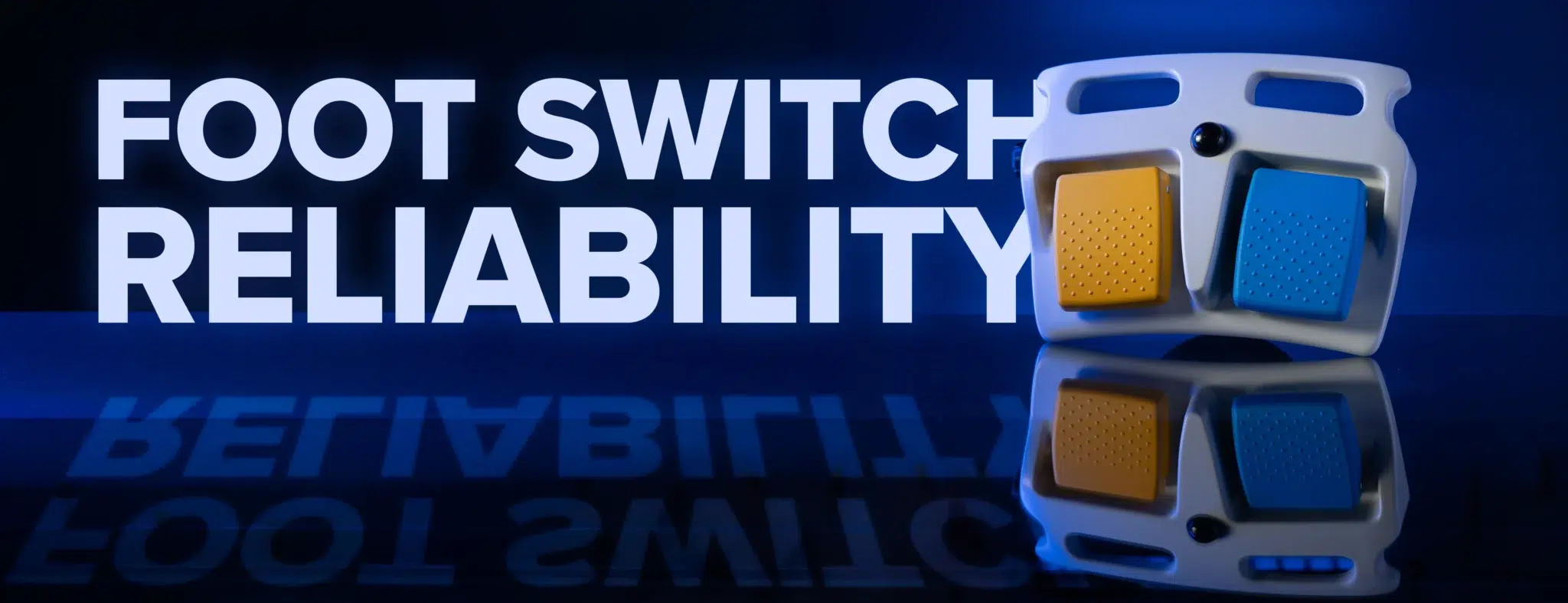
What Reliability Actually Means in a Foot Switch
Every foot switch manufacturer claims reliability. It’s the most overused word in the category, and it’s also the one that matters most. The trouble is, reliability isn’t something that can be stamped on a spec sheet. It shows up in how a product gets designed, what tests it has to clear, and what happens to it years after it ships. That’s where the conversation should actually start.
Reliability Starts in Design
Foot switches don’t get reliable by accident. Linemaster’s development process pairs solid modeling with rapid prototyping and 3D printing, so design decisions can be validated before tooling is committed. That structured approach, combined with DFMEA and PFMEA risk management practices, is what catches the issues that would otherwise become field failures.
A switch that looks fine on paper still has to survive the operator who steps on it hundreds of times a day, the cleaning fluid that lands on the housing, and if the cable gets rolled over by a cart. Designing for those realities up front is what separates a switch that lasts from one that just shows up.
Reliability Has to Be Tested
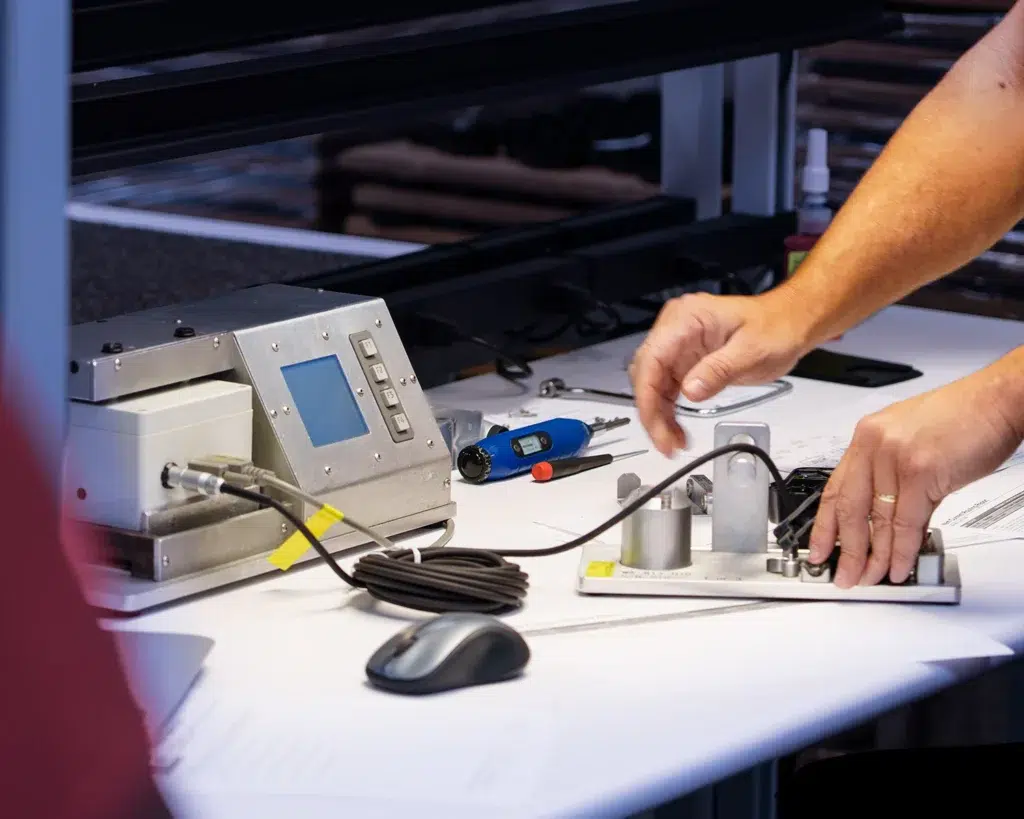
A reliability claim without test data behind it is just confidence. Linemaster’s testing capabilities cover the conditions a foot switch will actually see in the field, from ingress protection (the IP ratings that define how well a switch resists dust, splash, washdown, and full immersion) to mechanical cycling, environmental exposure, and electrical performance.
The goal is to put the switch through more than the application ever will, so the version that ships is the version that already proved itself. The Ingress Protection guide in the Learning center breaks down how IP ratings translate into real-world performance, and our broader testing capabilities cover the mechanical and environmental side.
Reliability Is Documented
One of the more telling examples already lives inside the Learning Center. A customer had requested data logging on the variable output of their foot switches. The system tracked minimum travel, maximum travel, and the raw value before linearization for every unit that came off the line.
Years later, that customer came back wanting an audit. They wanted to see how the calibration had held up over time, and whether units were hitting plus or minus 5 percent, 10 percent, or somewhere else entirely. The database had the answer. Every unit, going back to day one, was right on the dot.
That kind of traceability doesn’t happen unless reliability is treated as something measurable, not something promised. The full breakdown sits in the Data Logging in Foot Switch Manufacturing article.
Reliability Carries Through to Safety
For medical and industrial OEMs, reliability and safety are the same conversation. Electrical isolation determines whether a fault on the equipment side has a path through the switch toward the operator. Wireless protocols decide whether a signal lands at the right receiver and only the right receiver. Sealing methods determine whether disinfectants pooling on the pedal becomes a maintenance issue down the line.
Each of those is its own engineering decision, and each one is covered in depth across the Learning Center, including Electrical Isolation in Foot Switches, Wireless Medical Foot Switch Safety, and Environmental Protection and Cleanability.
Reliability Has a Regulatory Foundation
Linemaster works alongside customers on the regulatory side too. FDA considerations, EU MDR, ISO 13485, UL standards, RoHS, and REACH all factor into how products are documented and how they’re built. None of that replaces the engineering work, but it reinforces it. Customers integrating a foot switch into a finished medical device or industrial system need consistent, well-documented components, and that documentation is part of what makes the switch dependable in the regulatory sense, not just the mechanical one.
A Track Record That Predates Most of the Industry
Linemaster was formally established in 1952, and the foundation of the company goes back to 1937. Over more than 70 years, the leadership has stayed close to engineering and close to the customer. The product lines have evolved (Air Seal, Atlas, Aquiline, Aero Channel, wireless platforms, haptic feedback, secure communication), but the standard for what’s allowed to ship has stayed the same.
What Reliability Actually Looks Like
Reliability in a foot switch isn’t one feature. It’s the result of design discipline, real-world testing, traceable manufacturing data, careful safety engineering, regulatory rigor, and decades of refinement. The Learning Center is built around explaining how each of those pieces work, because the more you understand what goes into a foot switch, the easier it becomes to choose one that fits the application instead of one that just looks close enough.
If you’re evaluating a foot switch for a new system or a redesign, the engineering team can walk through the specifics with you. Reach out and we’ll help you work through it.

Meet The Author

Arijan Kandic
Digital Marketing Specialist
Arijan is the Digital Marketing Specialist at Linemaster Switch Corporation and holds a bachelor’s degree in business management from Quinnipiac University. He manages the company’s SEO strategy, Google Ads campaigns, and digital marketing initiatives, and develops educational content for the Linemaster Learning Center to help engineers, OEMs, and medical device manufacturers better understand foot switch technology. Arijan works closely with Linemaster’s engineering and applications teams to translate complex technical concepts into clear, accurate articles on foot switch design, customization, and compliance considerations.
Uploaded 05/21/2026
Custom Foot Switches
Linemaster’s custom footswitches are designed to meet specific user requirements, offering a range of features such as various pedal configurations, wired and wireless options, and customizable LED indicators. These custom footswitches provide reliable, durable solutions tailored to enhance functionality in diverse applications.

