
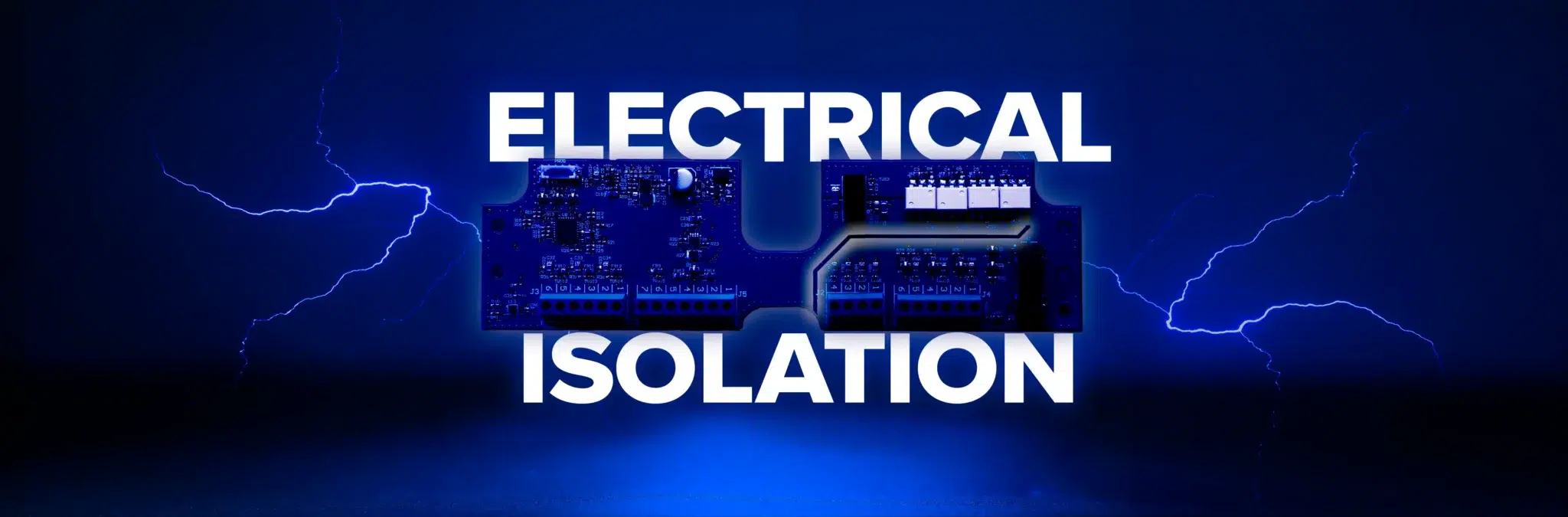
Electrical Isolation in Foot Switches: Protecting People, Equipment, and Signal Integrity
When a foot switch sits between an operator and a piece of high voltage equipment, the path that electricity can take through that switch matters more than most people realize. Electrical isolation is what determines whether that path stays safely contained or whether it has the potential to carry energy somewhere it shouldn’t. For OEMs designing medical, laboratory, and industrial systems, getting isolation right isn’t a finishing touch. It’s a foundational decision that shapes everything from operator safety to signal reliability.
Here’s how electrical isolation works inside a foot switch, why it matters, and how the right isolation method gets selected for a given application.
What Electrical Isolation Actually Means
The concept itself is simple. Electrical isolation means there is no direct conductive connection between two sides of a circuit. The two sides can still communicate, transfer signals, and operate together, but they remain electrically separated by a barrier that prevents current from flowing across.
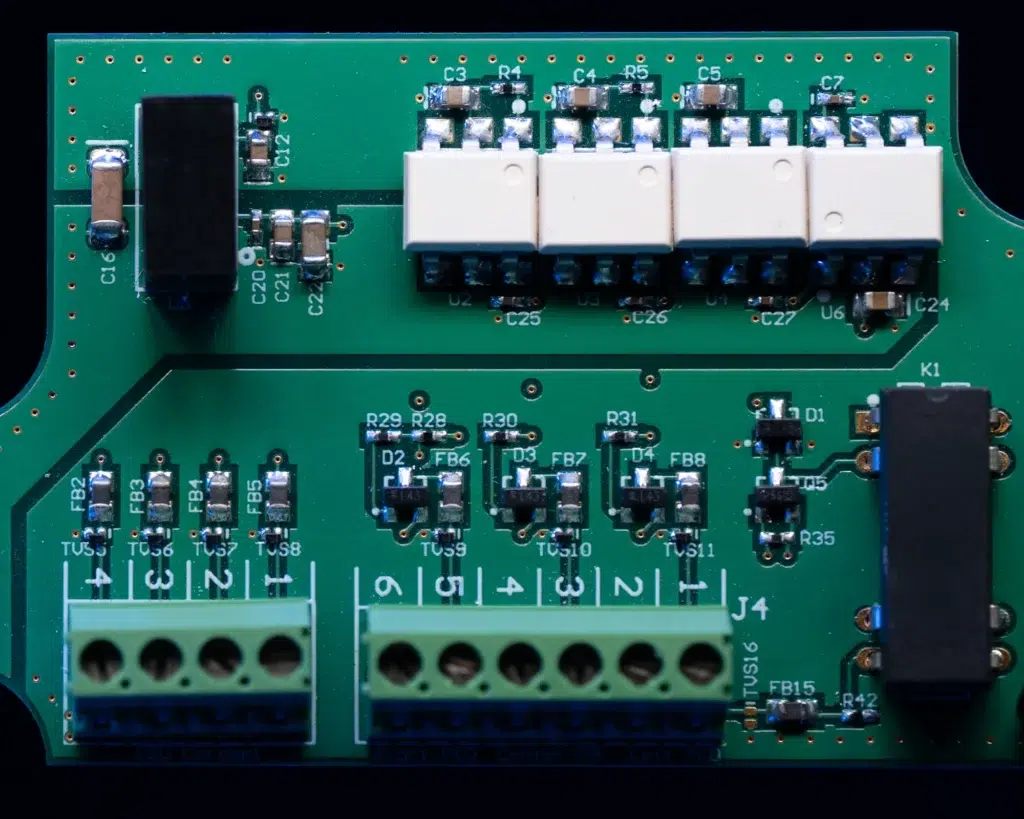
In a foot switch, that usually means separating the side of the circuit that interfaces with the operator (the pedal mechanics, the contact assembly) from the side that connects to the host equipment through the cordset. The barrier between them is what protects against the things that go wrong when isolation is missing.
Why Isolation Matters: The Three Reasons OEMs Specify It
Isolation in a foot switch typically comes down to three goals.
Protecting People
The first reason is operator safety. When a foot switch is connected to equipment running off mains power, or any high voltage, high current source, a fault on the equipment side has to have somewhere to go. Without isolation, that fault has a clear conductive path through the foot switch and toward the person standing on it. Leaks, shorts, and ground faults that would otherwise stay contained can propagate through the switch and create a hazardous condition for the operator.
Protecting Equipment
The second reason is protecting whatever the foot switch is connected to. Equipment is built to specific voltage and current ratings, and exceeding those ratings, even briefly, can damage components or shorten service life.
Without an isolation barrier, energy can travel through the foot switch in ways the equipment isn’t designed to handle. A simple example: if a downstream input is rated for 10 volts and the mains side accidentally shorts into it, 120 volts AC traveling through that path can wipe out the electronics on the receiving end. Isolation prevents that scenario by ensuring the two sides never share a conductive route.
Preventing Signal Degradation and False Activations
The third reason is performance. Even when nothing is actively failing, electrical noise, especially high frequency noise, can couple onto a signal line and corrupt what the equipment reads. A clean 1-volt signal can pick up enough noise to look like 2 to 3 volts to a detection circuit. If that misread voltage crosses an activation threshold, the equipment can interpret it as a deliberate input when none was intended.
For applications where a foot switch controls something consequential, a surgical instrument, a laser, a press, or any actuator that needs to fire only when the operator means it to, inadvertent activations are not an acceptable failure mode. Isolation helps block that noise from crossing into the signal path in the first place.
How Isolation Gets Built into a Foot Switch
Once a customer determines their equipment doesn’t have enough isolation on its own and they need it built into the foot switch itself, the next questions are about scope. How much voltage. How much current. How much physical separation can the design tolerate. The answers shape the isolation method.
Physical Distance
The simplest and lowest cost form of isolation is space. Put enough physical distance between the two sides of the circuit and there’s no realistic path for current to jump across. Depending on the voltage involved, the required separation might be a few millimeters or it might approach an inch or more.
The catch is that foot switch electronics typically live on a single circuit board, and the cordset that connects to the equipment lands directly on that board. There’s only so much
physical separation a compact design can accommodate. For low voltage, low current applications, distance alone can be enough. For anything more demanding it usually isn’t.
Transformers
Transformers transfer signals magnetically. A coil on one side induces a magnetic field that crosses the barrier, and a coil on the other side picks that field up and converts it back into an electrical signal. There is no conductive path between primary and secondary, only magnetic coupling. Transformers handle higher power well and provide robust isolation, which is why they show up in applications that involve significant current.
Capacitive Coupling
A capacitor, at its simplest, is two conductive plates separated by an insulating gap. That gap is itself a form of isolation, since DC current cannot cross it. But high frequency signals can couple across capacitively, which makes it possible to use a capacitor as a deliberate signal path while still maintaining isolation against DC and low frequency faults.
In practice, this means generating a high frequency carrier on one side. When the carrier is present, the detector on the other side rads it as “on.” When it’s absent, the detector reads “off.” For this method to actually do its job, both sides also need low-pass filtering to keep
the high frequency carrier contained to the coupling stage. Without those filters, the same signal used to bridge the barrier bleeds into the rest of the circuit on both ends and reintroduces the kind of noise isolation is supposed to block. The signal makes it across, but the conductive barrier stays intact.
Optocouplers
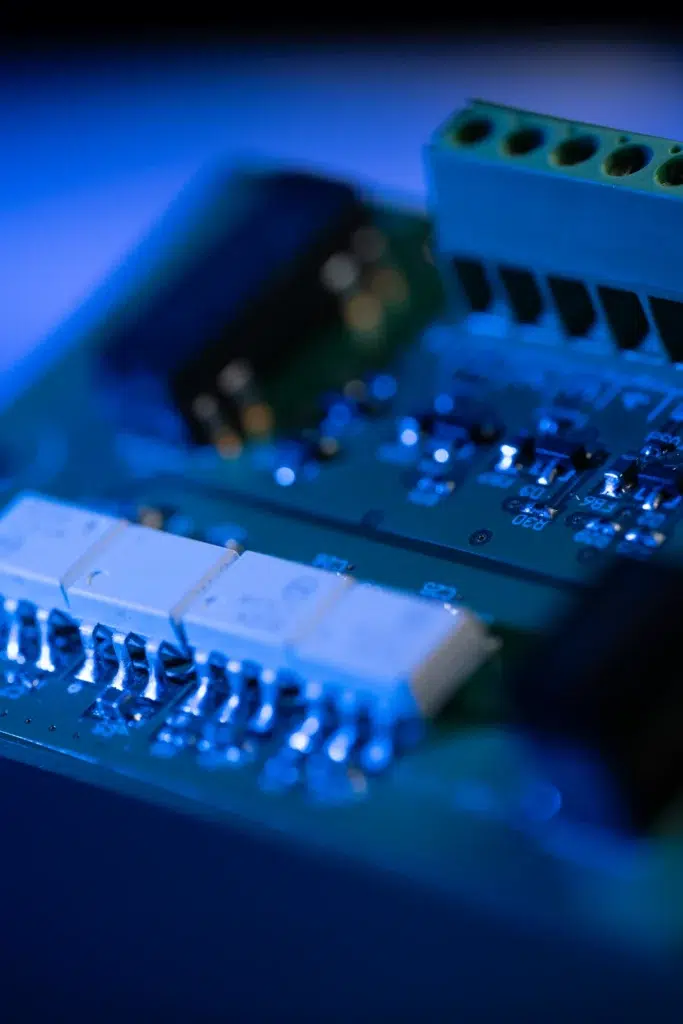
Optocouplers use light to cross the barrier. On the input side, a light emitting diode turns on when the signal is active. On the output side, a photosensitive transistor detects that light and switches accordingly. The two sides never touch electrically. They communicate entirely through photons traveling across a small gap inside the package.
Optocouplers are one of the most common isolation methods in modern electronics. They’re compact, fast, reliable, and well suited to the kind of digital signaling that foot switches typically send to a host controller.
Relays
Relays use the same magnetic coupling principles as transformers, just applied to mechanical contacts. A coil on the input side energizes when the control signal is active. The resulting magnetic field pulls a contact closed on the output side, completing the circuit. When the coil powers down, the contact opens again. The coil and the contact never share a conductive path, which is what gives the relay its isolation.
Relays are particularly useful when the foot switch needs to switch real load, not just signal. For applications where the pedal directly controls a higher current circuit, a relay handles both the switching and the isolation in one component.
Choosing the Right Isolation for the Application
There isn’t one isolation method that wins for every foot switch. The right choice depends on what the customer’s equipment requires, what voltages and current are involved, what kind of signals need to cross the barrier, and how much board space the design can dedicate to separation.
For low voltage signal isolation in a digital input, an optocoupler often makes the most sense. For switching real load, a relay may be the better fit. For demanding power applications, a transformer can carry the energy across cleanly. And for some specialized signal paths, capacitive coupling solves the problem in a way nothing else does elegantly.
Most foot switches built for medical, laboratory, and industrial OEMs use one of these methods, and sometimes more than one in combination, depending on what the application calls for. The conversation with the customer almost always starts in the same place: what are you trying to isolate from what, and how much energy is involved? From there, the right approach tends to make itself clear. Isolation requirements are also one of the most common reasons a project moves into special switch territory, where the standard catalog gives way to a build tailored to the application.
The Takeaway
Electrical isolation in a foot switch isn’t a single feature you either have or don’t. It’s a design decision that scales with the application. The level of isolation, the method used, and the physical arrangement on the board all flex based on what the equipment needs and what the operator must be protected from.
For OEMs specifying foot switches into safety critical systems, getting that conversation right early in the design phase is what separates a switch that fits the application from one that just barely meets it.
If you’re working through isolation requirements for a new build or revisiting an existing design, reach out and we’ll walk through it with you.
Meet The Author

Arijan Kandic
Digital Marketing Specialist
Arijan is the Digital Marketing Specialist at Linemaster Switch Corporation and holds a bachelor’s degree in business management from Quinnipiac University. He manages the company’s SEO strategy, Google Ads campaigns, and digital marketing initiatives, and develops educational content for the Linemaster Learning Center to help engineers, OEMs, and medical device manufacturers better understand foot switch technology. Arijan works closely with Linemaster’s engineering and applications teams to translate complex technical concepts into clear, accurate articles on foot switch design, customization, and compliance considerations.
In Collaboration with

William Chan
Chief Electrical Design Engineer
Bill has more than thirty four years of experience in high speed digital and analog electronic system architecture and hardware circuit design across the medical and security industries. He has been with Linemaster for over sixteen years and serves as the primary technical contact for customer electrical requirements and application specific solutions. He is best known for his wired and wireless low power digital and analog circuit designs, PCBA development, and cybersecurity focused hardware work.
Uploaded 05/11/2026
Custom Foot Switches
Linemaster’s custom footswitches are designed to meet specific user requirements, offering a range of features such as various pedal configurations, wired and wireless options, and customizable LED indicators. These custom footswitches provide reliable, durable solutions tailored to enhance functionality in diverse applications.

