
Triple Pedal
Foot Switches
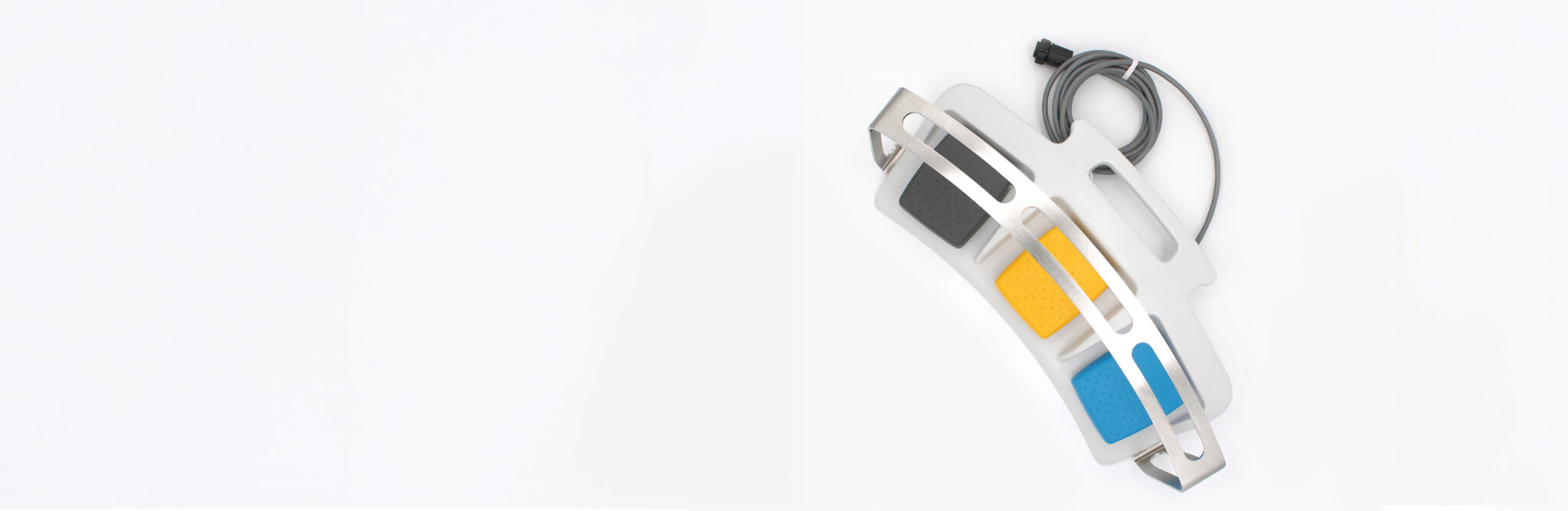
Some medical systems depend on several foot-operated commands from a single interface, and each one has to stay accessible, easy to differentiate, cleanable, and properly integrated with the electrical and software architecture of the complete system. A triple pedal foot switch was built for that kind of demand. It brings three pedals into one integrated medical foot control within a compact housing, and each pedal can be configured around a separate equipment function, so the operator can manage multiple commands while keeping both hands available for instruments, equipment, or other procedural tasks. Linemaster builds triple pedal foot switches on more than one proven platform, including the compact, configurable Aero Channel and the field-proven Crescent.
WHY TRIPLE PEDAL
One Foot Control with
Three Pedals
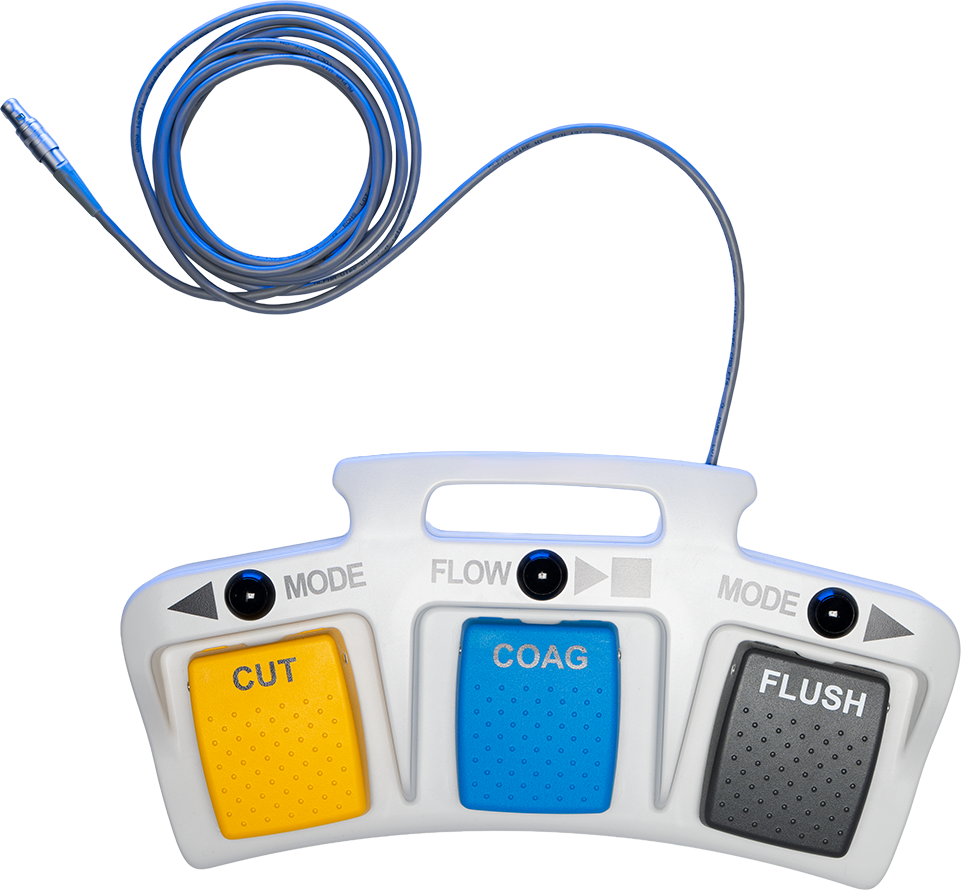
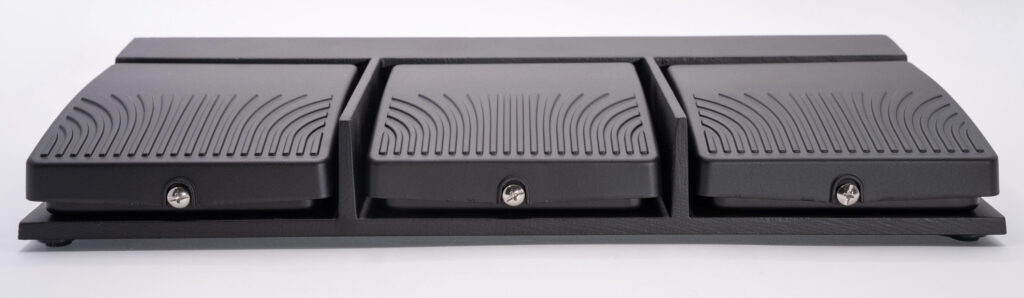
A triple pedal foot switch incorporates three pedals into one complete assembly. The pedals share a common housing and base, while each treadle can be configured around the function it performs.
Potential functions include:
- Equipment activation
- Forward, reverse, or oscillating instrument operation
- Variable speed
- Energy delivery
- Ablation or coagulation
- Irrigation
- Aspiration
- Suction or vacuum
- Mode selection
The final pedal assignments are defined by the medical device OEM, based on the intended use, equipment architecture, workflow, usability requirements, and system risk analysis.
More Than Three System Functions
A three pedal foot control is not necessarily limited to three total functions. The medical system can remap the pedals based on the active operating mode, the connected instrument, or the selected procedural profile. The foot control provides the physical inputs, while the equipment electronics and software determine how those inputs are interpreted.
For example, the pedals may control forward rotation, reverse rotation, and oscillation while the system is running a powered bone shaver. After a deliberate mode change, the same three pedals may control ablation, coagulation, and vacuum or fluid management. This lets one operator interface support multiple procedural technologies without increasing the number of primary pedals.
The equipment should clearly communicate the active mode and the current pedal assignments. Mode transitions, simultaneous inputs, communication interruptions, and invalid commands are addressed through the OEM’s system design, software architecture, usability engineering, and risk-management processes.

Flip-Up Treadles Optimized for Cleanability
Cleanability is an important design requirement for medical foot controls, since these products may be exposed to fluids, debris, and repeated cleaning during normal use.
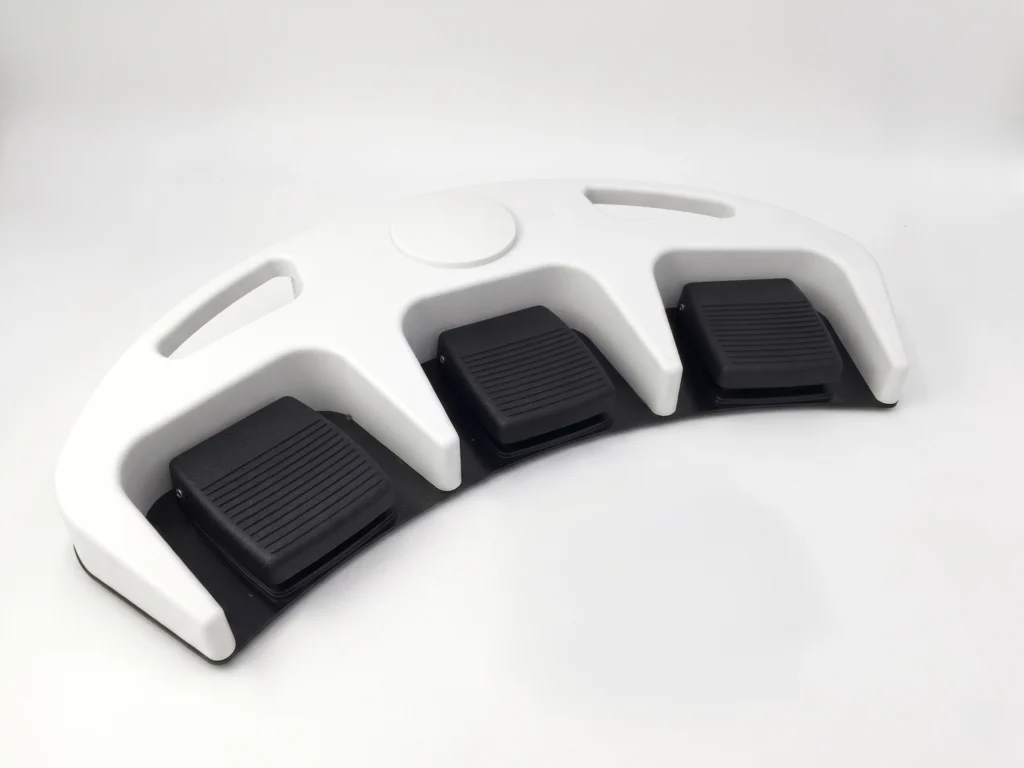
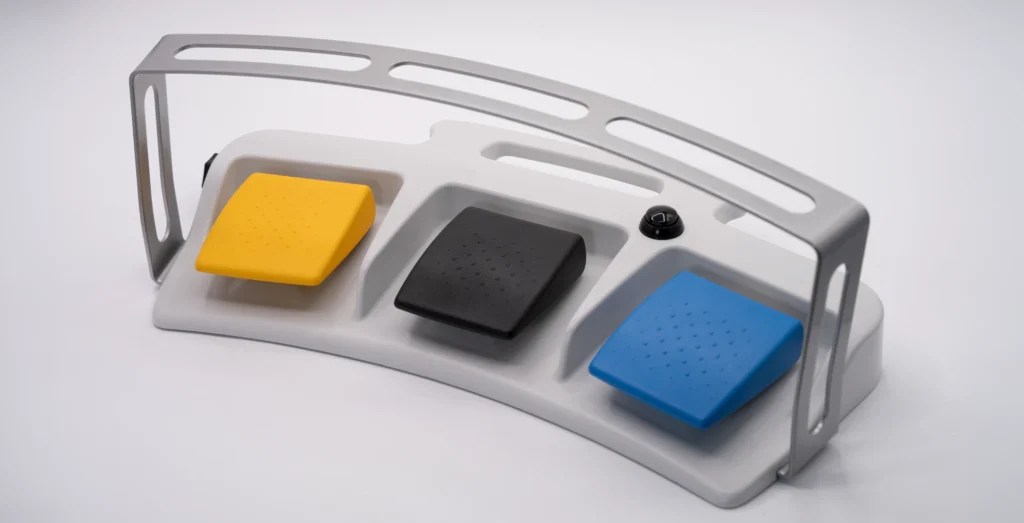
A triple pedal foot switch built on the Aero Channel platform can be configured with Linemaster’s flip-up treadles. Each pedal can be raised to provide direct access to the surfaces beneath it without disassembling the complete control. This improves access to:
- Pedal undersides
- Channel surfaces
- Dividers
- Internal enclosure surfaces
- Areas between adjacent treadles
The flip-up treadles are supported by a continuous molded housing that extends beneath the pedals and toward the baseplate. Tapered internal surfaces help direct fluid outward and reduce areas where fluid or debris can collect. Together, the flip-up treadles, continuous housing, and tapered geometry create a platform designed around practical cleaning access.
Material selection, sealing, chemical compatibility, and the final cleaning procedure remain dependent on the intended clinical environment and the requirements established by the OEM.
Tactile Pedal Differentiation
Medical foot controls are frequently operated without direct visual attention, since the user may be focused on the patient, an instrument, or a display. A triple pedal foot switch uses physical separation, channel dividers, and textured treadle surfaces to help the operator locate and distinguish the three pedals through foot position and tactile feedback.
Relevant ergonomic considerations include:
- Pedal width and spacing
- Treadle geometry
- Divider height
- Actuation force
- Pedal travel
- Surface texture
- Footwear interaction
- Access from different directions
- Protection against unintended activation
The three pedals should be evaluated together, as one complete operator interface within the intended use environment.
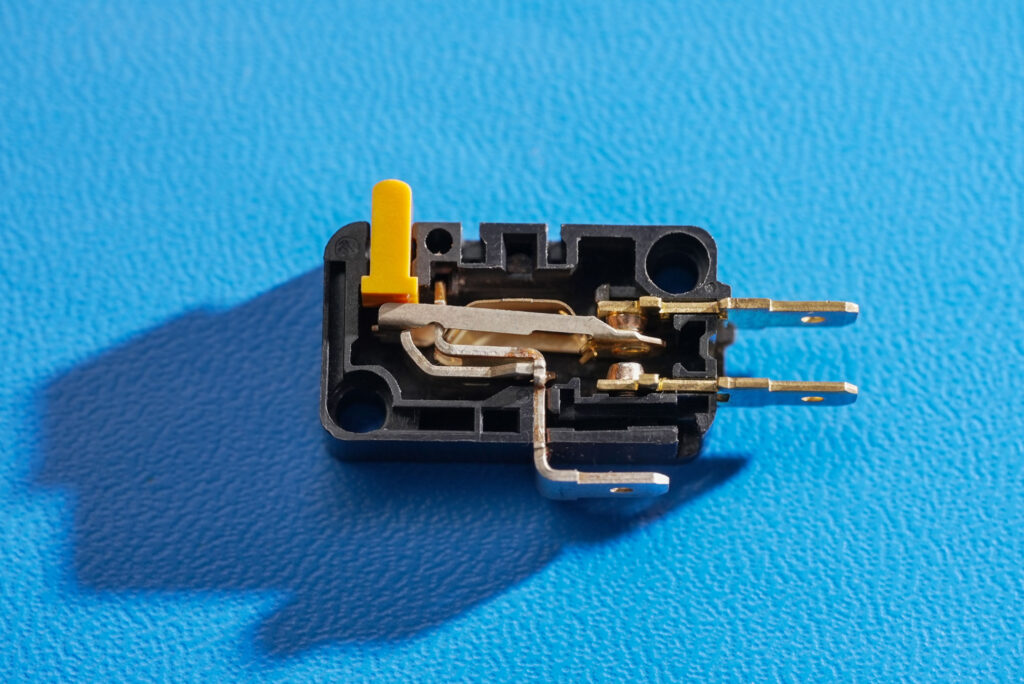
Configurable Sensing Technologies
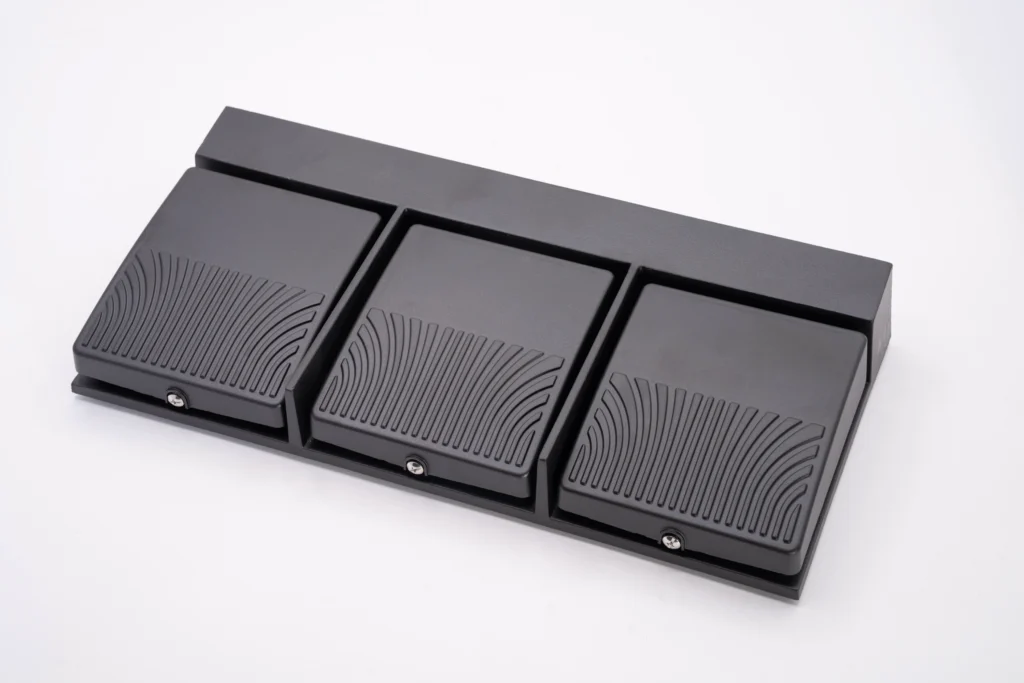
Each pedal can be configured around the required function and output architecture. Available approaches may include:
- Single-stage microswitches
- Multiple-stage microswitches
- Hall-effect sensing
- Hybrid Hall-effect and microswitch arrangements
- Linear or proportional outputs
A simple microswitch arrangement may provide a discrete on-and-off command, while multiple-stage configurations can provide more than one output based on pedal travel. Hall-effect sensing provides noncontact position detection and can support discrete, staged, or proportional outputs. Linear configurations allow the equipment to respond continuously to pedal position for functions such as speed, movement, energy level, or flow. Different sensing technologies can also be used across the three pedals within the same foot control.
Redundant Sensing Options
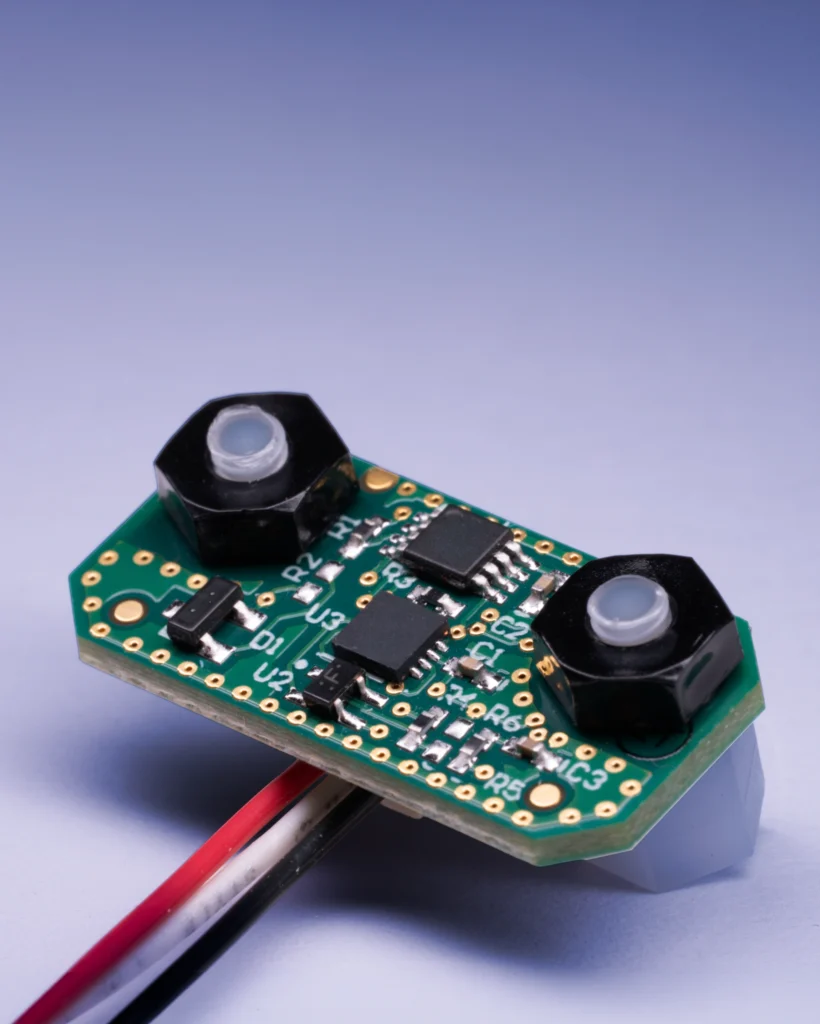
Both proportional and simple on-and-off functions can be configured with redundant sensing when the system architecture requires it. Potential arrangements include:
- Multiple Hall-effect sensors
- Multiple microswitches
- Combined Hall-effect sensors and microswitches
- Independent output circuits
- Separately monitored signal paths
A discrete pedal may use two microswitches to provide independent outputs from the same pedal movement, and it may also use multiple Hall-effect sensors or a hybrid Hall-effect and microswitch configuration. A proportional pedal can use multiple Hall-effect sensors to provide independent position signals throughout pedal travel, which the equipment can compare to identify disagreement or an implausible output.
Redundant sensing may support:
- Confirmation of pedal position
- Comparison of independent outputs
- Detection of signal disagreement
- Open or short circuit monitoring
- Detection of a failed sensing channel
- Controlled system response following a fault
A triple pedal foot switch can provide the physical redundant sensing architecture. The OEM remains responsible for defining how the signals are monitored, what constitutes an acceptable relationship between channels, and how the complete equipment responds to a detected fault.
Auxiliary Controls
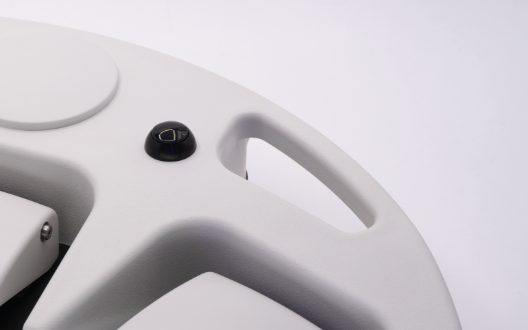
Auxiliary push buttons can be incorporated in addition to the three primary pedals. Potential functions include:
- Changing operating mode
- Selecting an instrument
- Increasing or decreasing a setting
- Enabling a secondary function
- Controlling irrigation or suction
- Wireless pairing
- Confirming a deliberate system change
Button size, position, actuation force, and accessibility can be adjusted based on the function and its expected frequency of use. Frequently used controls may call for prominent placement, while mode selection, pairing, or other less frequently used functions may be positioned in more protected locations to reduce unintended activation.
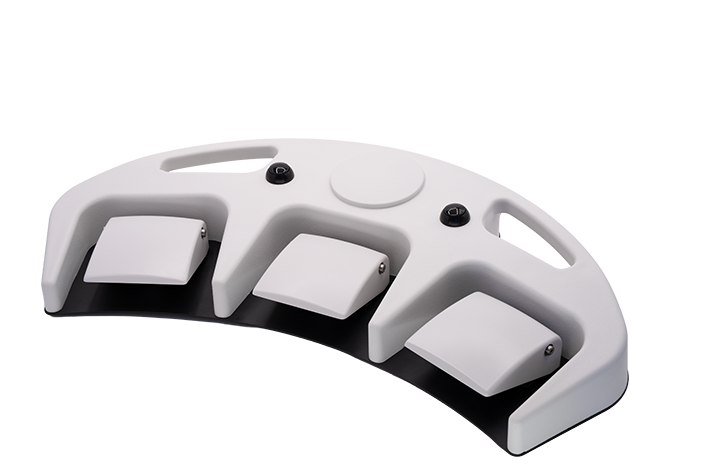
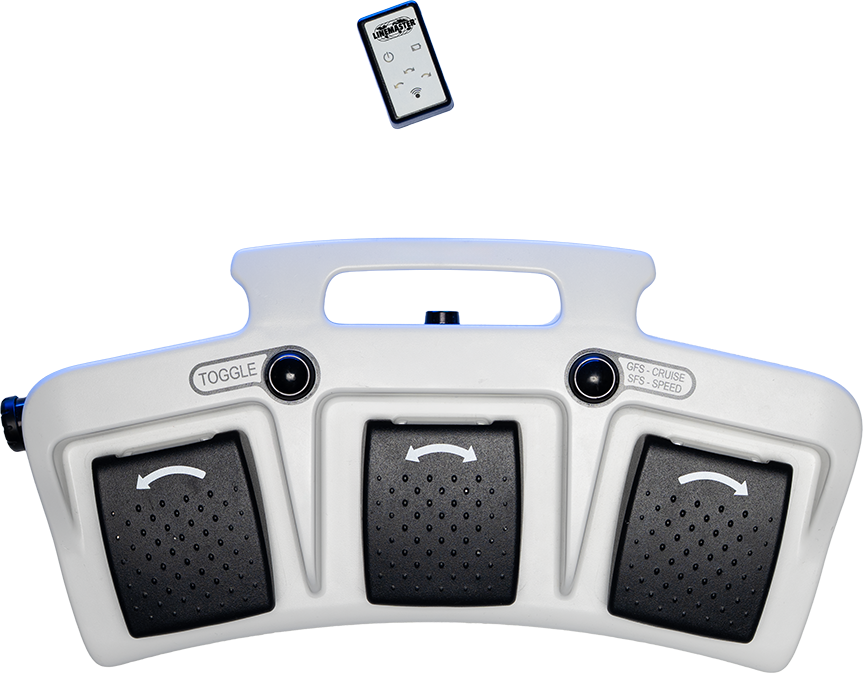
The Crescent Channel Triple
For OEMs that value a long clinical track record, Linemaster offers triple configurations on the Crescent Channel, one of its original medical control designs, with more than 15 years in the field and hundreds of thousands of units in service. The Crescent has earned a reputation for consistency, durability, and long-term dependability across a wide range of clinical applications, and it continues to be specified by medical device manufacturers today.
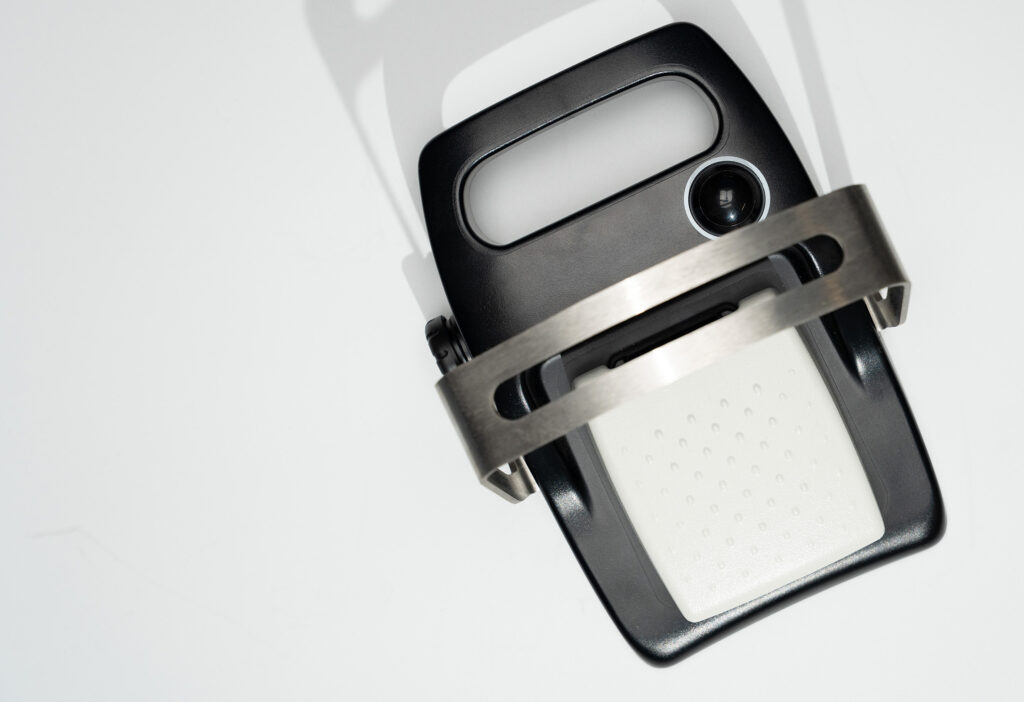
A Crescent Channel triple carries the same configurability the platform is known for. It is available in wired and wireless configurations and supports multiple functions within the control, including side button options that let one control manage more of the clinical workflow. Sensing can be built around traditional microswitches or optional contactless Hall-effect technology, with digital and proportional control and optional redundant sensing for applications that require additional fault detection. Integrated handles built into the housing make the control easier to lift, position, and move without relying on the cable, and its exterior is designed for routine wipe down and disinfection in demanding clinical settings.
Customization on the Crescent includes up to four side buttons on a single pedal, optional auxiliary push buttons, a mode-change switch, custom switch colors, custom labeling, silk screening, and color coding for function identification. Like every Linemaster control, it is manufactured under an ISO 13485 certified quality management system and functionally tested before shipment.
The Triple Executive Rocker Control
The Triple Executive takes a different approach from the treadle-style platforms. Instead of pressing pedals, the operator rocks each control, which makes it well suited to directional positioning tasks. A single Triple Executive can command up to six motions across its three rocker controls, including up and down, forward and backward, and tilt forward and tilt backward, so one foot can drive a full range of movement without the hands leaving the primary task.
This rocker format has long made the Executive a fit for positioning applications such as adjustable beds and tables, where an operator needs to raise, lower, advance, retract, and tilt a surface through foot control alone. Because each rocker actuates in two opposing directions, the platform pairs naturally with equipment built around directional movement rather than discrete on and off functions.
Like every Linemaster control, the Triple Executive can be adapted to the motions and equipment interface a given positioning application requires.
Powered Shaver and Electrosurgical Applications
Powered bone and soft-tissue shavers are an important application for three pedal medical foot controls. Depending on the system, the pedals may provide:
- Forward rotation
- Reverse rotation
- Oscillation
- Variable speed
- Irrigation
- Instrument selection
- Mode selection
- Suction
A triple pedal foot switch is also applicable to systems that combine mechanical tissue or bone resection with electrosurgical or radio frequency functions. Within this type of equipment, the same foot control may support:
- Bone or soft-tissue resection
- Electrosurgical cutting
- Radio frequency ablation
- Coagulation
- Suction or vacuum
- Instrument or operating-mode selection
- Fluid management
- Irrigation
Pedal remapping allows the control to support both powered-shaver and energy-based functions within a common physical interface.
Additional Medical Applications
A triple pedal foot switch can be configured for a range of OEM medical equipment, including:
- Arthroscopic shavers
- Powered surgical resection systems
- Integrated shaver and radio frequency systems
- Electrosurgical equipment
- ENT shavers and microdebriders
- Surgical drills and burrs
- Multifunction procedural platforms
- Fluid-management systems
- Patient-positioning equipment
- Imaging and diagnostic systems
- Surgical robotics
- Medical laser systems
- Irrigation and aspiration equipment
The suitability of each configuration depends on the intended use, user interaction, equipment architecture, environmental conditions, and system-level risk controls.

Global Adoption and Regulatory Experience
The Aero Channel and Crescent product families have been adopted by medical equipment OEMs in multiple regions around the world. Custom configurations have supported a broad range of global applications and have been incorporated into OEM medical devices that completed FDA 510(k) clearance and EU MDR conformity-assessment pathways.
Linemaster supports the control-level design, sensing architecture, risk analysis, verification, and production implementation. The OEM retains responsibility for the complete medical device, regulatory strategy, submission, certification, and system-level verification and validation. This experience provides an established foundation for developing customized triple pedal foot switch configurations intended for global medical markets.
Wired and Wireless Integration
A triple pedal foot switch can be configured for wired or wireless integration. Wired configurations may be developed around cable construction, conductor arrangement, shielding, connector selection, strain relief, and output requirements.
Wireless configurations may address:
- Pairing behavior
- Device identification
- Communication status
- Battery condition
- Reconnection
- Communication interruption
- Prevention of unintended connections
The OEM defines how the complete equipment interprets, monitors, and responds to the foot-control inputs.
Materials and Customization
Triple pedal configurations may use materials such as PC/ABS, aluminum, or stainless steel, based on the required durability, weight, cleaning process, and environmental exposure. Customization may include:
- Pedal function and geometry
- Sensing technology
- Redundant outputs
- Actuation force and travel
- Flip-up treadles
- Auxiliary button placement
- Materials and finishes
- Baseplate and footing
- Surface texture
- Labeling and artwork
- Cable and connector construction
- Wireless behavior
Linemaster manufactures its triple pedal foot switches at its Woodstock, Connecticut facility, providing continuity between configuration, engineering development, verification support, and production implementation.
Single, Dual, and Triple Pedal Foot Switches
Linemaster’s medical foot control platform supports different numbers of primary pedal inputs:
Single pedal foot switch
One integrated foot control with one pedal
Dual pedal foot switch
Also referred to as a twin pedal: one integrated foot control with two pedals
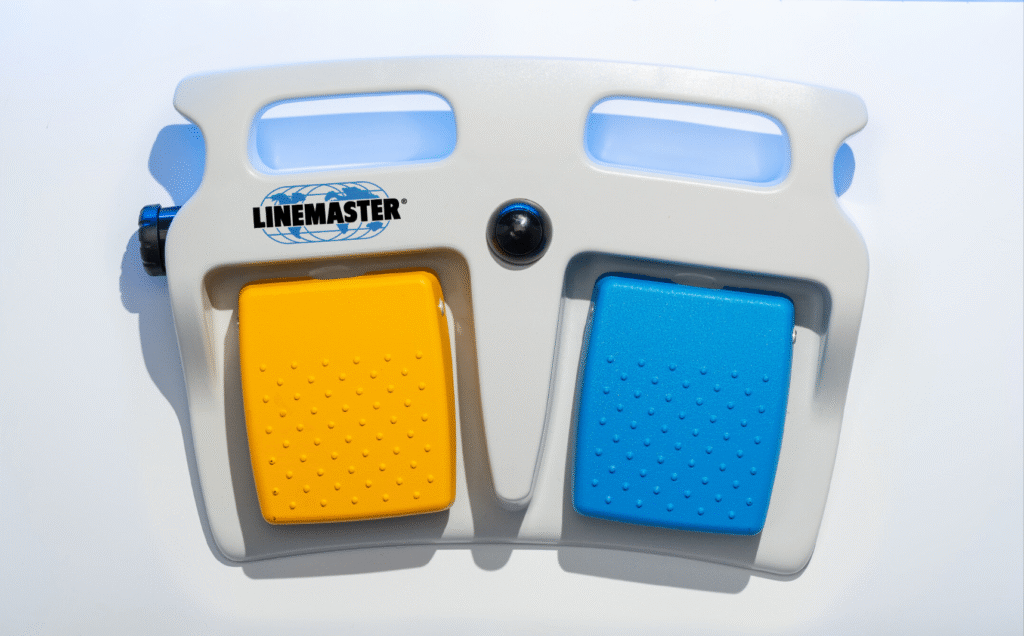
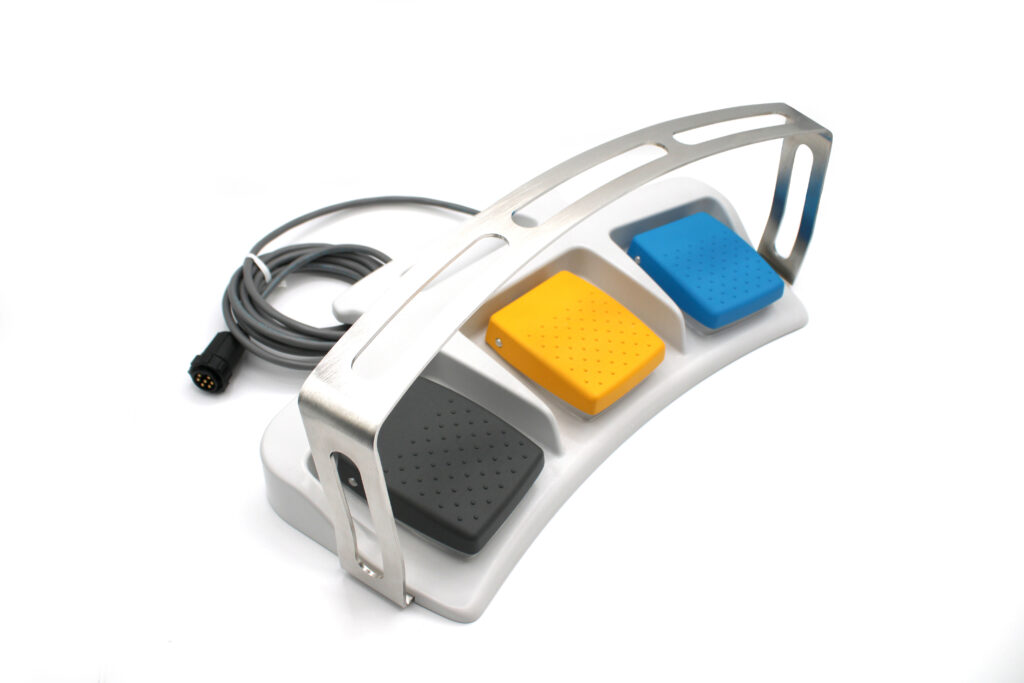
Triple pedal foot switch
One integrated foot control with three pedals
Develop a Custom Triple Pedal Medical Foot Control
A triple pedal foot switch provides three primary foot-operated inputs within one compact, configurable, and cleanable medical control. On the Aero Channel platform, flip-up treadles improve access beneath the pedals, while the Crescent Channel offers a proven design trusted across more than 15 years of clinical use. For directional positioning equipment, the Triple Executive provides a rocker control across up to six motions. Discrete and proportional functions can be configured with redundant Hall-effect sensors, microswitches, or hybrid sensing arrangements. Through pedal remapping and auxiliary controls, the same device can support powered-shaver, electrosurgical, radiofrequency, suction, irrigation, and other procedural functions.
Contact Linemaster to discuss the functional, ergonomic, sensing, cleanability, and system-integration requirements for a custom triple pedal medical foot control.
Frequently Asked Questions
Is a triple pedal foot switch three separate foot switches?
No. A triple pedal foot switch is one integrated foot-control assembly containing three pedals.
Is a three pedal foot control limited to three functions?
No. The equipment can remap the three pedals based on the active operating mode, the connected instrument, or the selected procedural profile.
Can a triple pedal foot switch use redundant sensors?
Yes. Discrete and proportional pedals can use multiple Hall-effect sensors, multiple microswitches, or a combination of both technologies.
What platforms are available for a triple pedal foot switch?
Linemaster offers triple configurations on the Aero Channel, a compact platform with flip-up treadles and cleanable channel geometry, and on the Crescent Channel, a proven original design with more than 15 years of clinical use and integrated handles.
Can a triple pedal foot switch support both bone-shaver and electrosurgical functions?
Yes. The pedals can provide fixed functions or be remapped as the equipment changes between powered-shaver, electrosurgical, radiofrequency, and fluid-management modes.
Can auxiliary controls be added?
Yes. Auxiliary buttons can be added and customized based on function, location, accessibility, and actuation force.
Has the platform been used in globally marketed medical devices?
Yes. Custom Aero Channel and Crescent configurations have been supplied to medical OEMs in multiple regions and incorporated into devices that completed FDA 510(k) and EU MDR regulatory pathways. The OEM remains responsible for the complete device submission and regulatory approval.
What is the Triple Executive rocker control used for?
The Triple Executive uses rocker controls rather than treadles, which suits directional positioning tasks. A single unit can command up to six motions, including up and down, forward and backward, and tilt forward and tilt backward, making it a fit for applications such as adjustable beds and tables where a surface is raised, lowered, advanced, retracted, and tilted by foot.