

What Is a Double Pole Switch?
Electrical switches are often described using terms such as single pole, double pole, SPST, or DPDT. While these labels may sound technical, they simply describe how many electrical circuits a switch controls and how those circuits behave when the switch is activated.
Knowing these terms clarifies how switches operate and when each type is suitable.
A double pole switch controls two electrical circuits simultaneously with a single action. Use it when both conductors must change state together or when you need to disconnect equipment more completely.
This article explains what a double pole switch is, how it works, where it is used, and what to consider when selecting one.
What is a Double Pole Switch?
Have you ever wondered how you can control two electrical circuits at once? A double pole switch allows you to do just that. The term “pole” refers to the number of individual electrical circuits a switch controls.
While a single pole switch controls one circuit path, a double pole switch provides two independent paths linked so both operate at the same time. This opens up new possibilities for control.
Actuating the switch simultaneously changes the states of both poles. Returning the switch to its original position restores both circuits to their previous states together.
Think about the convenience: with one action, you can manage two electrical conductors at once. In many situations, this ensures both electrical paths respond in sync, making operations smoother and safer.
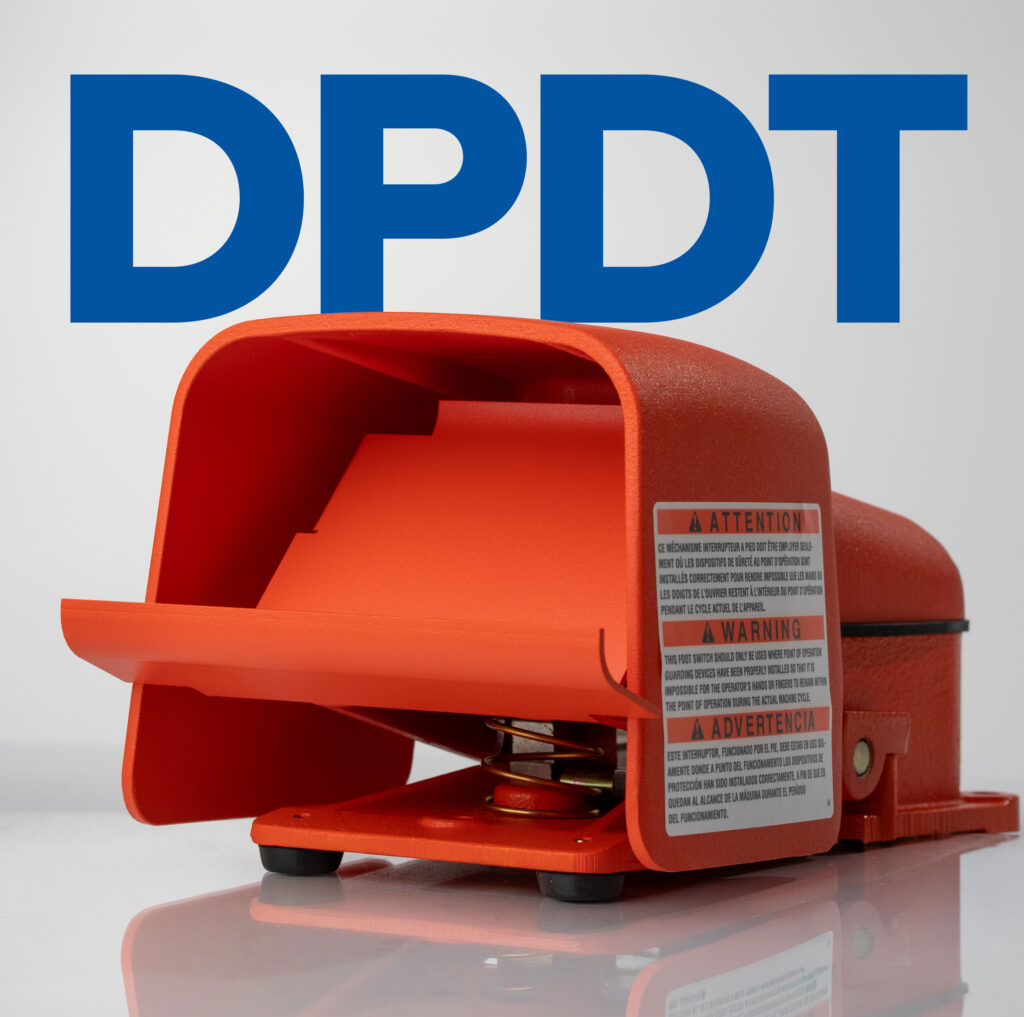
Double pole switches use terms like DPST and DPDT to describe their configurations.
How Does a Double Pole Switch Work?
A double pole switch works by linking two sets of electrical contacts to a single actuator. When the actuator is pressed, toggled, or otherwise activated, both sets of contacts move together.
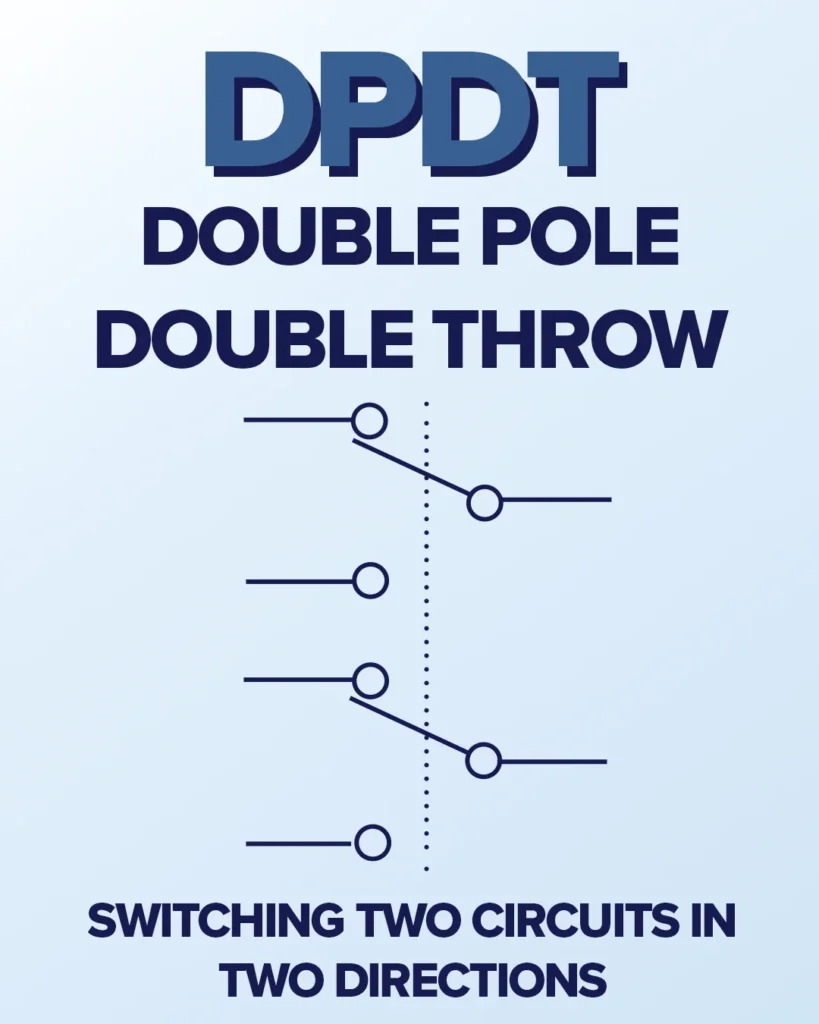
Each pole contains its own set of electrical contacts that control the flow of electricity through that circuit. When the switch is actuated, both poles change state simultaneously. Depending on the switch configuration, this action may connect, disconnect, or redirect the circuits.
Because the two poles are mechanically linked, the switching action occurs simultaneously in both circuits.
Depending on the design, each pole may use normally open (NO) or normally closed (NC) contacts. This determines how the circuit behaves before and after the switch is activated.
Double pole switches may also operate as momentary switches, which return automatically after activation, or as maintained switches, which remain in position until they are actuated again.
What Is a Double Pole Switch Used For?
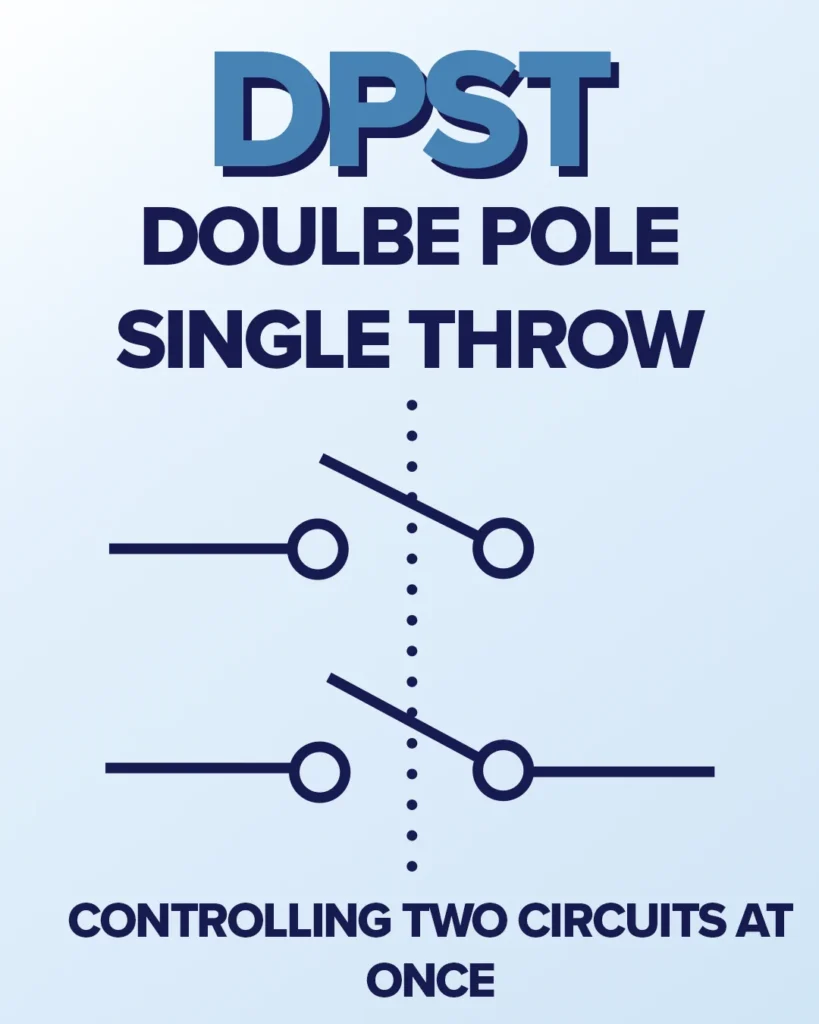
Double pole switches change the state of two circuits simultaneously.
In some electrical systems, several conductors need to be switched together. This is required to properly control or isolate equipment. A double pole configuration allows both electrical paths to respond to the same action.
This type of switching is used in a wide range of equipment, including industrial systems, control interfaces, and high-power electrical applications.
In equipment control environments, double pole switches may be used when two signals must be managed simultaneously. This could involve switching two power conductors, two control signals, or both.
Both poles operate together, so the switch ensures both circuits respond consistently when actuated.

Components of a Double Pole Switch
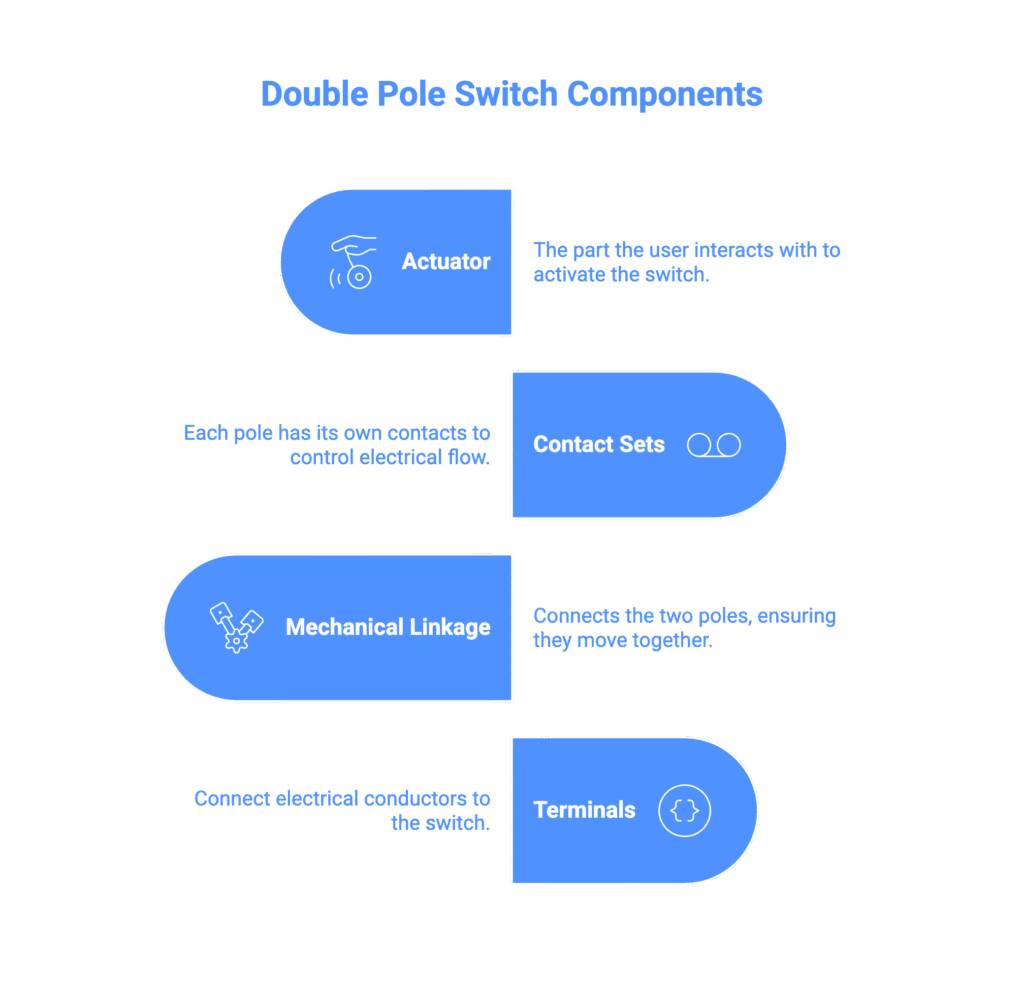
Although switch designs vary by application, most double pole switches include several core components.
Actuator: The part of the switch that the user interacts with. In foot controls, this is typically the pedal that activates the switch.
Contact Sets: Each pole contains its own electrical contact set. These contacts allow electrical current to flow or to interrupt the circuit, depending on the switch’s position.
Mechanical Linkage: The two poles are mechanically connected, so they move together when the actuator is engaged.
Terminals: terminals connect electrical conductors to the switch. These components ensure both circuits respond together when actuated.

Advantages of a Double Pole Switch
A double pole switch can offer several advantages depending on the system’s requirements.
One advantage is the ability to control two circuits with a single switch, simplifying system control.
Synchronized switching ensures both circuits change state at the same time because the poles are linked.
Double pole switches offer greater design flexibility than single pole switches. DPDT configurations allow signals to be redirected.
Limitations of a Double Pole Switch
While double pole switches can be useful in many situations, they may not always be necessary.
In applications where only one circuit needs to be controlled, a single pole switch may be sufficient.
Because double pole switches control two circuits, they typically include additional internal components. This can make the switch slightly more complex than a single pole design.
Selecting between single pole and double pole switching depends on how many electrical circuits need to be controlled simultaneously.
Conclusion
Understanding switch terminology can make it easier to evaluate the right control solution for an electrical system.
A double pole switch allows two electrical circuits to be controlled simultaneously with a single action. Because both poles operate together, the switch ensures that both electrical paths change state simultaneously.
This type of switching can be useful in applications where multiple conductors or control signals must respond together. By understanding how poles, throws, and contact configurations work, equipment designers and engineers can select the switching arrangement that best suits their system.

Frequently Asked Questions
Is “double pole” the same thing as “redundant” or “failsafe” switching?
A double pole switch simply means the switch controls two circuits simultaneously. This does not automatically indicate redundancy or failsafe behavior. Redundant safety systems typically involve additional design considerations beyond the number of poles in a switch.
When would I choose DPST vs DPDT in a Linemaster foot control?
A DPST configuration is typically used when two circuits need to be opened or closed together. A DPDT configuration allows each circuit to connect to two different paths, providing additional flexibility in routing signals or electrical paths.
Can I use a Linemaster DPDT foot switch as two independent SPDT Switches?
Because a DPDT switch contains two poles, each pole can function similarly to an SPDT switching circuit. In some designs, this allows the switch to control two separate signal paths simultaneously, depending on the wiring configuration.
Meet The Author

Arijan Kandic
Digital Marketing Specialist
Arijan is the Digital Marketing Specialist at Linemaster Switch Corporation and holds a bachelor’s degree in business management from Quinnipiac University. He manages the company’s SEO strategy, Google Ads campaigns, and digital marketing initiatives, and develops educational content for the Linemaster Learning Center to help engineers, OEMs, and medical device manufacturers better understand foot switch technology. Arijan works closely with Linemaster’s engineering and applications teams to translate complex technical concepts into clear, accurate articles on foot switch design, customization, and compliance considerations.
In Collaboration with

Sean Lewis
Director of Engineering
Sean has more than fifteen years of experience in product development, engineering governance, and cross functional technical operations. His background in metal fabrication, including machining, forming, welding, and inspection, provides a strong manufacturing foundation that supports his approach to design and process optimization. Sean holds a bachelor’s degree in mechanical engineering, an MBA with a manufacturing concentration, and an MSOL. He is a Certified SolidWorks Expert with advanced capability in CAD, rendering, simulation, and rapid prototyping. Sean also specializes in DFMEA and PFMEA risk management practices and is the holder of several foot switch design and utility patents.
Uploaded 03/18/2026
Custom Foot Switches
Linemaster’s custom footswitches are designed to meet specific user requirements, offering a range of features such as various pedal configurations, wired and wireless options, and customizable LED indicators. These custom footswitches provide reliable, durable solutions tailored to enhance functionality in diverse applications.

