
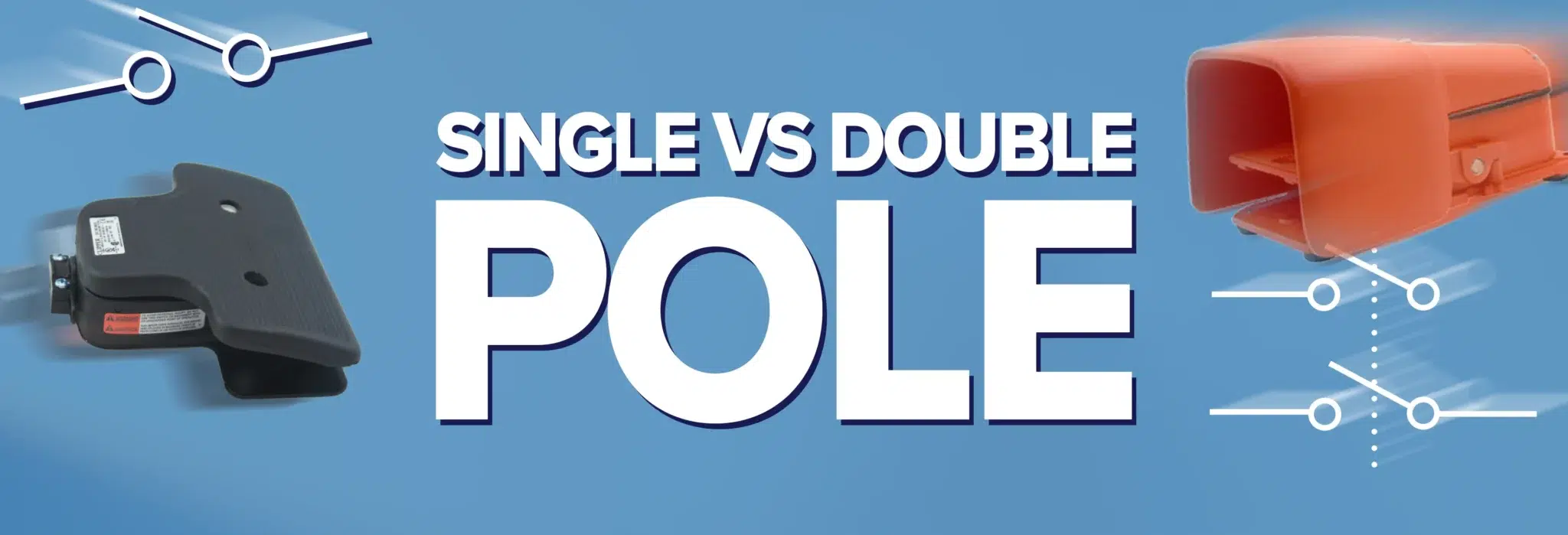
Single Pole vs Double Pole Switches: What’s the Difference and When to Use Each
Single pole and double pole switches can look nearly identical from the outside yet serve different purposes internally. In equipment and control system design, that difference matters. Understanding single pole vs double pole configurations is not just about terminology. It directly affects how many circuits are being controlled and how interruption or isolation is achieved within a system.
If you have ever questioned the difference between single pole and double pole switches, the answer begins with understanding how many independent current paths need to be opened or closed in your application.
What Does “Pole” Mean in a Switch?
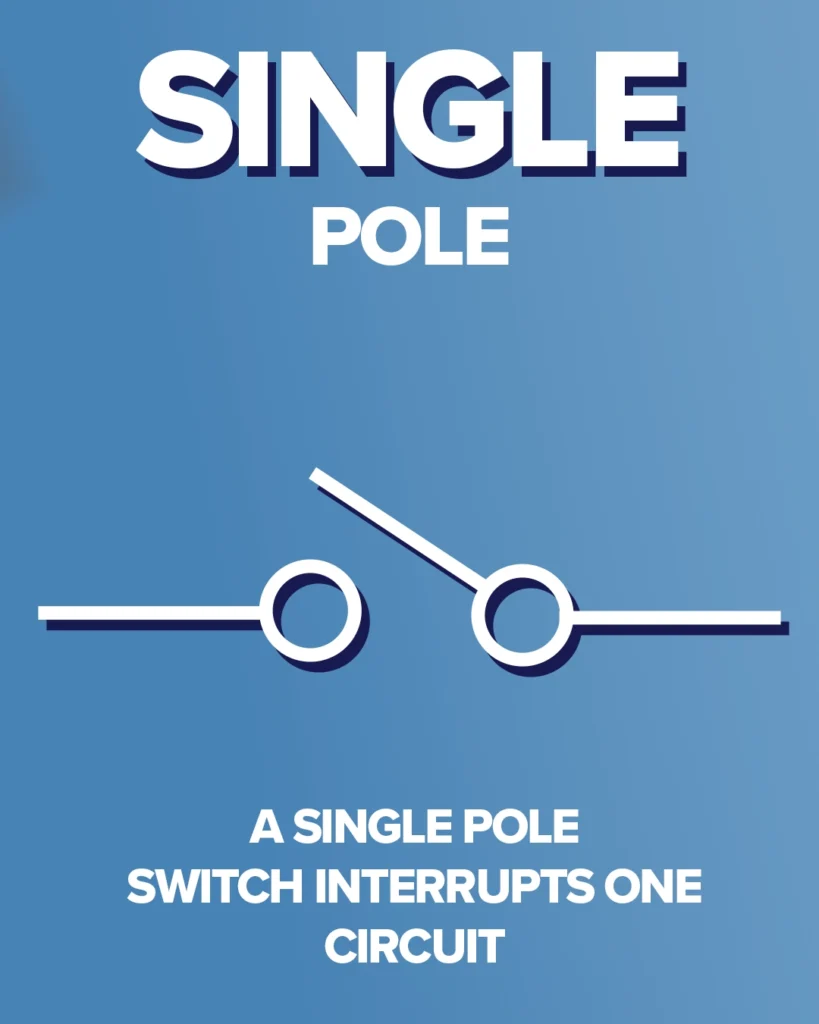
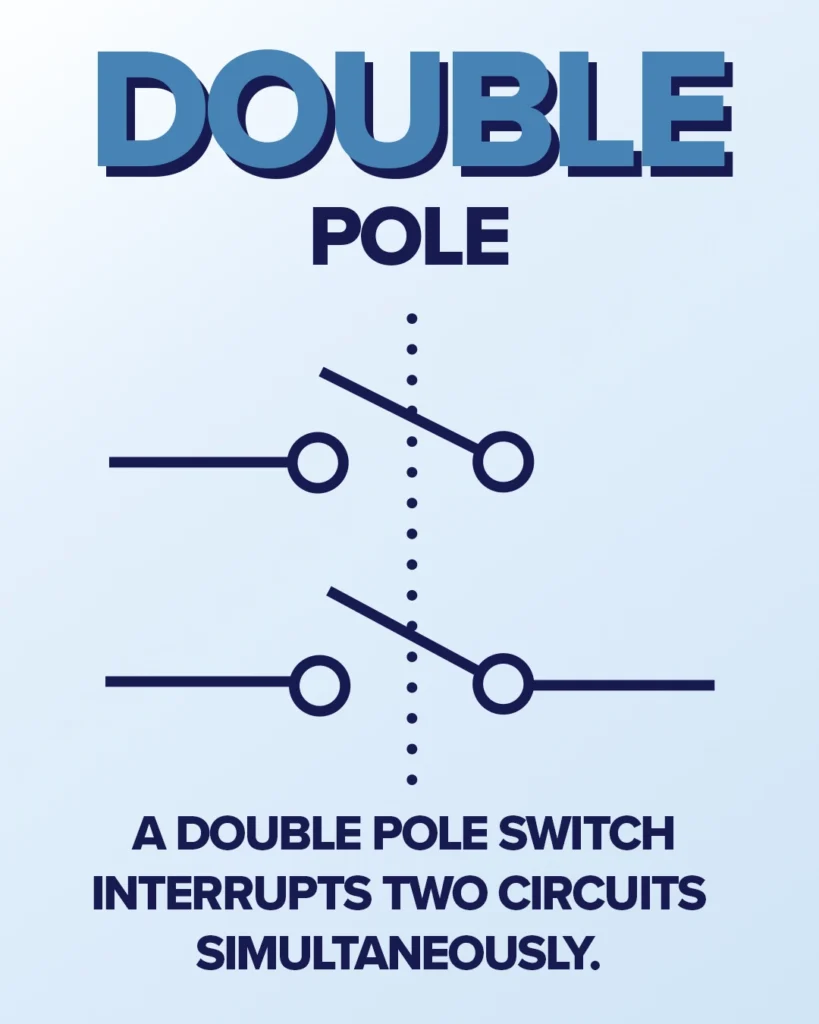
In electrical switching terminology, a pole refers to the number of separate circuits a switch can control. Each pole represents one independent current path. A single pole switch interrupts one circuit. A double pole switch interrupts two circuits simultaneously.
This definition serves as the foundation for the entire comparison. The distinction is not about size or power level. It is about how many conductors are being affected when the switch changes state.
What Is a Single Pole Switch?
If you are asking what a single pole is, the answer centers on single-circuit control. A single pole switch contains one set of contacts designed to open or close a single electrical path. When actuated, it changes the state of one circuit by opening or closing that path.
In many equipment and control system applications, this configuration is sufficient. If interrupting a single conductor effectively stops operation or changes the system state, a single pole design may be appropriate. The decision depends on circuit architecture and how the system achieves shutdown or control.
It is important to note that the pole does not determine voltage or current capacity. A single pole switch can be designed for a range of electrical ratings. The pole simply indicates how many circuits are being controlled.
What Is a Double Pole Switch?
Understanding what a double pole is builds directly on that same concept. A double pole switch contains two independent sets of contacts that operate together. When the switch is actuated, both circuits open and close simultaneously.
This configuration may be selected when the system design requires the simultaneous interruption of two energized conductors. In certain applications, both supply lines may carry voltage, and interrupting both together may be necessary to achieve the intended level of disconnection. In other designs, two separate loads may need to be controlled by a single switch.
Again, a double pole does not inherently mean higher voltage. It means two circuits are being controlled in parallel.
Single Pole vs Double Pole Switch: Key Technical Differences
When comparing a single pole vs double pole switch, the key difference lies in how the system achieves control and isolation. In some circuit designs, interrupting one conductor is sufficient to stop operation. In others, simultaneous interruption of multiple conductors is required.
The voltage rating must match the system voltage, regardless of pole configuration. A single pole and a double pole switch can both be designed for similar voltage levels, depending on construction. The current rating must also align with the expected load so that the internal contacts operate within safe limits.
Isolation requirements often determine whether a single pole or a double pole switch is appropriate. Some systems achieve functional shutdown by interrupting one path, while others may require both energized conductors to be opened to meet operational or compliance expectations.
This distinction between single pole and double pole becomes meaningful only when evaluated within the context of the entire electrical system.
Single Pole or Double Pole: When Should You Use Each?
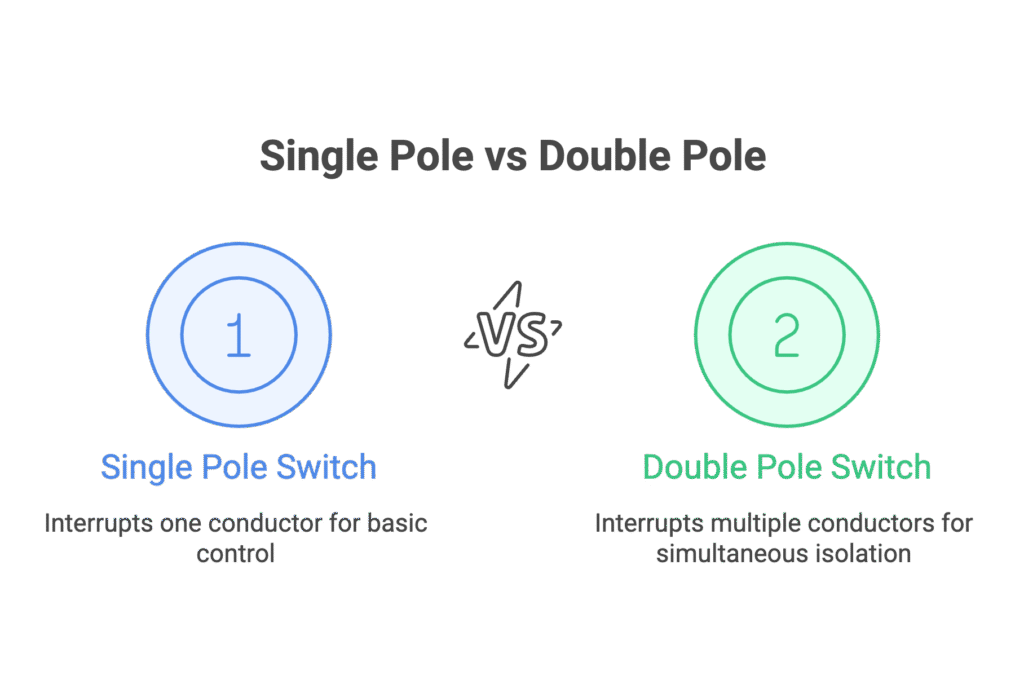
Choosing between a single pole and a double pole switch should be based on the circuit’s structure and the system’s intended operation. If the design calls for controlling a single independent circuit, a single pole configuration may be suitable. If the design requires simultaneous interruption of two conductors, a double pole configuration may be necessary.
In equipment and industrial environments, double pole switches are often used when simultaneous control of two circuits is required for shutdown procedures or servicing requirements. Single pole switches are frequently used in control and signaling circuits when interrupting one path is sufficient to change the operational state.
The correct selection is driven by system design rather than assumption.
Final Thoughts on Single Pole vs Double Pole Selection
Understanding single pole vs double pole configurations enables selection decisions based on circuit architecture, electrical ratings, and isolation requirements rather than terminology alone. Reviewing how many circuits must be controlled and how the system achieves shutdown helps ensure the chosen configuration aligns with operational expectations.
The difference between single pole and double pole may seem subtle at first, but in the context of equipment and control system design, it directly affects how safely and effectively the system performs.

Frequently Asked Questions
Can one foot switch control two different circuits or two different loads safely?
In some cases, yes. The switch must be designed and rated for simultaneous control of both circuits, and the electrical characteristics of each load must align with the contact configuration and ratings.
Is a double pole switch required for 240V equipment?
In a typical 240-volt split-phase system, there are two energized “hot” conductors, each at 120 volts relative to neutral. For equipment connected to this type of 240V supply, both hot wires should be switched on and off simultaneously. A double pole switch allows both conductors to be interrupted simultaneously, enabling proper control and disconnection of the equipment.
If I need redundancy, is a double pole the same as redundant safety?
Not necessarily. A double pole switch controls two circuits simultaneously, but whether that configuration qualifies as redundancy depends on how those circuits are implemented within the system. In some designs, double pole contacts may be used as part of a redundant safety strategy. In others, redundancy requires independent channels that are monitored or isolated separately. The distinction comes down to how the system is engineered, not to the number of poles alone.
Meet The Author

Arijan Kandic
Digital Marketing Specialist
Arijan is the Digital Marketing Specialist at Linemaster Switch Corporation and holds a bachelor’s degree in business management from Quinnipiac University. He manages the company’s SEO strategy, Google Ads campaigns, and digital marketing initiatives, and develops educational content for the Linemaster Learning Center to help engineers, OEMs, and medical device manufacturers better understand foot switch technology. Arijan works closely with Linemaster’s engineering and applications teams to translate complex technical concepts into clear, accurate articles on foot switch design, customization, and compliance considerations.
In Collaboration with

Christian D. Smutnick
Applications Engineer
Christian has fifteen years of experience in manufacturing and three years with Linemaster. He works with customers to identify solutions that meet their technical requirements while using existing designs and components whenever possible. This supports faster lead times and cost effective options without affecting performance.
Uploaded 03/18/2026
Custom Foot Switches
Linemaster’s custom footswitches are designed to meet specific user requirements, offering a range of features such as various pedal configurations, wired and wireless options, and customizable LED indicators. These custom footswitches provide reliable, durable solutions tailored to enhance functionality in diverse applications.

