

What Is a Kill Switch? How It Works and When You Need One
When equipment needs to stop immediately, the control responsible for that action must be simple, predictable, and reliable.
The term “kill switch” is commonly used to describe a device that quickly stops or disables a machine, vehicle, or system. However, in formal industrial and medical standards, “kill switch” is not a defined technical term. Instead, this function is typically implemented as a stop control, control circuit stop device, or emergency stop device, depending on system requirements.
In most industrial equipment, this type of control interrupts power or a control signal, causing the system to transition to a defined safe state.
In practical terms, a “kill switch” is not a distinct category of technology. It is a switching device applied with the specific purpose of stopping operation quickly and intentionally.
Understanding how this function works, how it differs from other safety controls, and what specifications matter helps determine whether a stop control device is appropriate for a given application.
Stop Control Function in Practical Terms for a Kill Switch
At its core, a stop control device changes the state of an electrical circuit to stop operation.
That interruption may occur due to:
- Opening a power circuit
- Interrupting a control signal
- Changing the state of a relay or controller input
In many control systems, the device does not completely remove incoming power from the machine. Instead, it interrupts the control path that permits operation. The result is the same: motion or function stops.
The key requirement is predictability. The control must move the system into a known condition when activated.
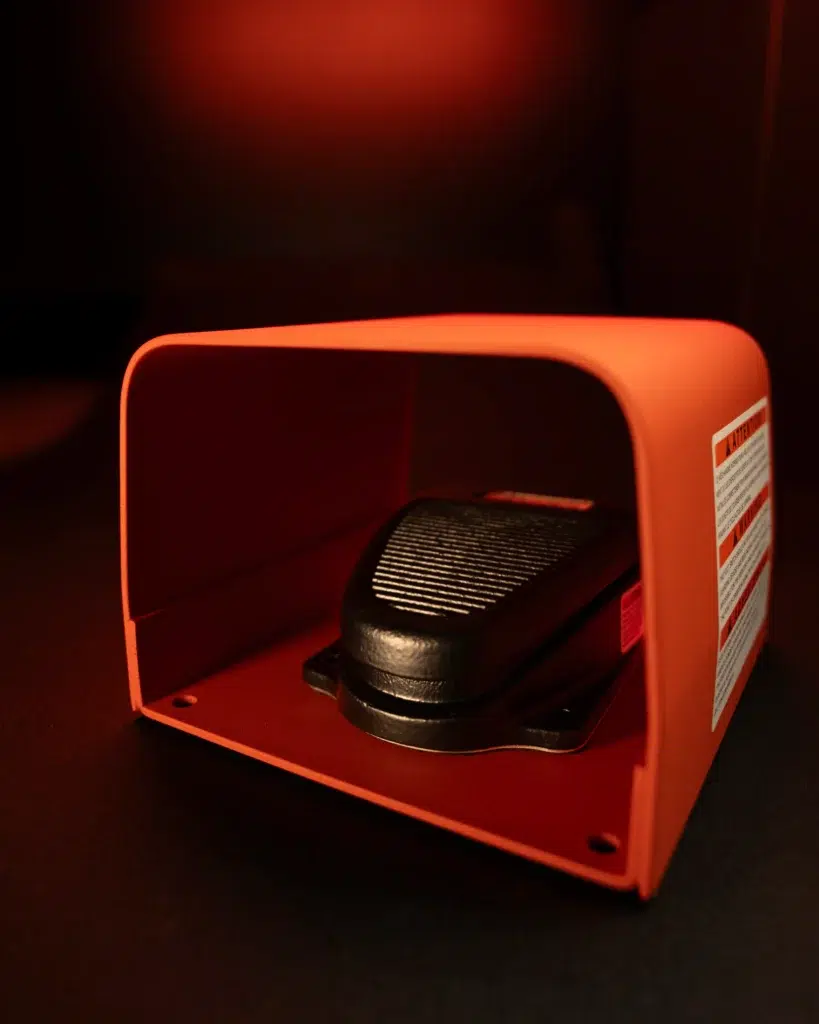
How Does a Kill Switch or Stop Control Work?
A stop control device works by opening or closing an electrical circuit.
When a circuit is closed, current flows and connected equipment operates. When the circuit opens, current flow stops and operation ceases. The specific behavior depends on how the device is integrated into the system.
Two design factors determine how the control behaves: contact logic and actuation type.
Normally Open vs Normally Closed
Switch contacts are commonly configured as:
- Normally Open (NO): The circuit is open at rest and closes when actuated.
- Normally Closed (NC): The circuit is closed at rest and opens when actuated.
In many industrial control strategies, normally closed logic is preferred for stop functions. Activating or releasing the switch opens the circuit and interrupts operation.
Normally closed wiring schemes provide inherent fault detection. If a conductor breaks, a terminal loosens, or control power is lost, the circuit opens, and the equipment stops. This “fail to safe” behavior reduces the risk of unintended operation caused by component failure. In contrast, a normally open configuration may not detect certain wiring faults because an open circuit can appear identical to a non-actuated state.
Normally closed configurations are also commonly used in safety-related control systems because they allow monitoring devices, such as safety relays or safety controllers, to verify circuit continuity. Any interruption, whether intentional or fault-induced, generates a stop command. This improves diagnostic capability and supports higher reliability in properly designed systems.
The appropriate logic depends on the equipment design and the overall control architecture.
Momentary vs Maintained Operation
Stop control devices may be configured as momentary or maintained.
A momentary device changes state only while pressure is applied. Once released, it returns to its original position. This configuration is often used when continuous operator input is required to keep equipment running.
A common example is a deadman switch. A deadman switch requires continuous operator presence or pressure to maintain operation. If the operator releases the control, loses grip, or becomes incapacitated, the switch automatically returns to its default state and interrupts the control circuit.
In many industrial designs, deadman functionality is implemented using a normally closed contact arrangement paired with momentary actuation. Releasing the control opens the circuit and stops the machine. Operation is permitted only while the operator actively commands it.
Deadman controls are commonly used in material handling equipment, hoists, mobile machinery, and certain medical or laboratory systems where continuous human supervision is required.
A maintained device remains in its new state after activation and stays there until manually reset or actuated again. This configuration may be used when a system must remain disabled until intentionally restarted.
The correct selection depends on how control authority is defined within the application.
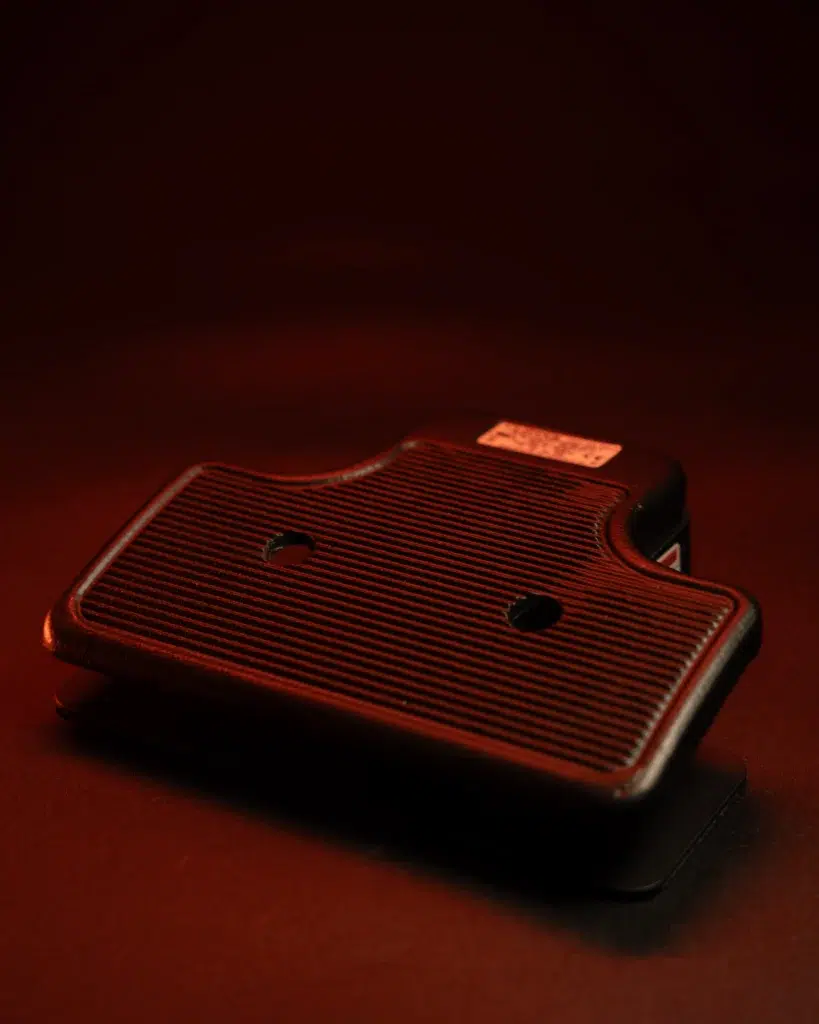
Kill Switch vs Emergency Stop vs Disconnect
Because “kill switch” is an informal term, it is often confused with other defined control devices.
An emergency stop device is typically a prominent, latching actuator intended for emergency situations and designed in accordance with standards such as ISO 13850. It is usually integrated into a broader safety related control system.
A disconnect or isolator is intended to remove incoming power from a system, typically for maintenance or servicing.
A general stop control or operator stop device may interrupt operation, but it does not automatically replace an emergency stop or a main disconnect. Each serves a distinct role within a control architecture.
Selecting the correct device requires understanding the equipment’s intended use, applicable standards, and the level of interruption required.
Where Are These Stop Controls Used?
Operator stop controls and related devices are used in equipment where immediate control over operation is important.
Examples include:
- Machinery requiring rapid stoppage capability
- Material handling systems
- Mobile or utility equipment
- Industrial processing systems
- Certain medical or laboratory interfaces
In these applications, the purpose of the device is to provide direct and reliable control over system operation.
The specific configuration depends on electrical ratings, environmental conditions, regulatory requirements, and overall system design.
What Specifications Matter When Selecting a Stop Control Device?
Selecting a stop control device requires evaluation of both electrical and mechanical characteristics. Key considerations include:
Electrical Ratings The device must be rated for the voltage and current of the circuit it controls.
Contact Configuration Single or multiple pole designs may be required depending on how many conductors must be interrupted.
Momentary vs Maintained The decision depends on whether continuous pressure is required or whether the system must remain disabled until reset.
Normally Open vs Normally Closed The default circuit state should align with the intended control strategy and, where applicable, the required safety architecture.
Environmental Protection Ingress protection, sealing, and enclosure design may be critical in industrial or medical environments.
Redundant Channels Some applications require two independent switching paths rather than a single point of interruption. This depends on the equipment’s risk assessment and applicable standards. There is no universal configuration. The correct solution is determined by how the overall control system is designed to function.
Final Thoughts
The term “kill switch” is widely understood, but in regulated industrial and medical environments, more precise terminology such as stop control device, operator stop control, or emergency stop device is typically used.
Regardless of terminology, the function remains the same: to stop operation quickly and reliably.
Effectiveness depends not only on the switch itself but on how it is integrated into the overall control architecture. A clear understanding of switching logic, contact configuration, redundancy, and applicable standards.

Frequently Asked Questions
Can a foot switch function as a stop control device?
Yes, depending on how it is configured and integrated into the control system.
A foot operated control can interrupt a power circuit or control signal in the same way as a hand operated control. Its function is defined by its wiring, contact configuration, and role within the system architecture.
Momentary configurations are commonly used in applications that require immediate stoppage upon release.
If I need two independent stop channels, does Linemaster support redundant designs?
In some applications, designers require two independent switching paths rather than a single point of interruption.
Multi-pole or dual-channel configurations may be implemented depending on system requirements. Whether redundancy is necessary depends on the equipment’s risk profile and applicable standards.
Should a stop control device be momentary or maintained?
The appropriate choice depends on how the system is intended to operate.
A momentary configuration may be used when continuous operator input is required to keep equipment running. A maintained configuration may be selected when a system must remain disabled until intentionally restarted.
The control strategy must align with the intended use of the equipment.
Meet The Author

Arijan Kandic
Digital Marketing Specialist
Arijan is the Digital Marketing Specialist at Linemaster Switch Corporation and holds a bachelor’s degree in business management from Quinnipiac University. He manages the company’s SEO strategy, Google Ads campaigns, and digital marketing initiatives, and develops educational content for the Linemaster Learning Center to help engineers, OEMs, and medical device manufacturers better understand foot switch technology. Arijan works closely with Linemaster’s engineering and applications teams to translate complex technical concepts into clear, accurate articles on foot switch design, customization, and compliance considerations.
In Collaboration with

Sean Lewis
Director of Engineering
Sean has more than fifteen years of experience in product development, engineering governance, and cross functional technical operations. His background in metal fabrication, including machining, forming, welding, and inspection, provides a strong manufacturing foundation that supports his approach to design and process optimization. Sean holds a bachelor’s degree in mechanical engineering, an MBA with a manufacturing concentration, and an MSOL. He is a Certified SolidWorks Expert with advanced capability in CAD, rendering, simulation, and rapid prototyping. Sean also specializes in DFMEA and PFMEA risk management practices and is the holder of several foot switch design and utility patents.
Uploaded 04/01/2026
Custom Foot Switches
Linemaster’s custom footswitches are designed to meet specific user requirements, offering a range of features such as various pedal configurations, wired and wireless options, and customizable LED indicators. These custom footswitches provide reliable, durable solutions tailored to enhance functionality in diverse applications.

