

Flip-Up Covers, Protection, Flexibility, and Control Options
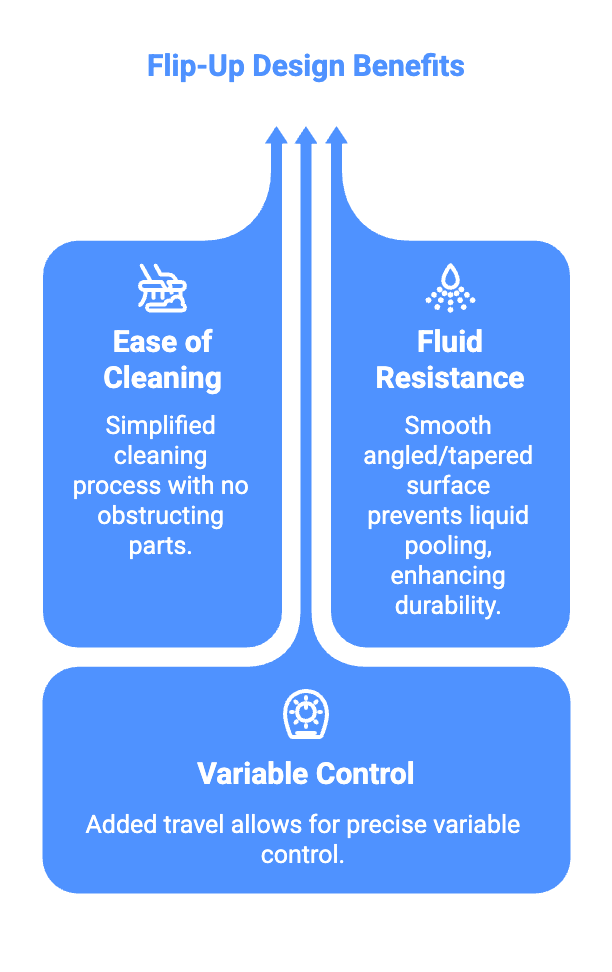
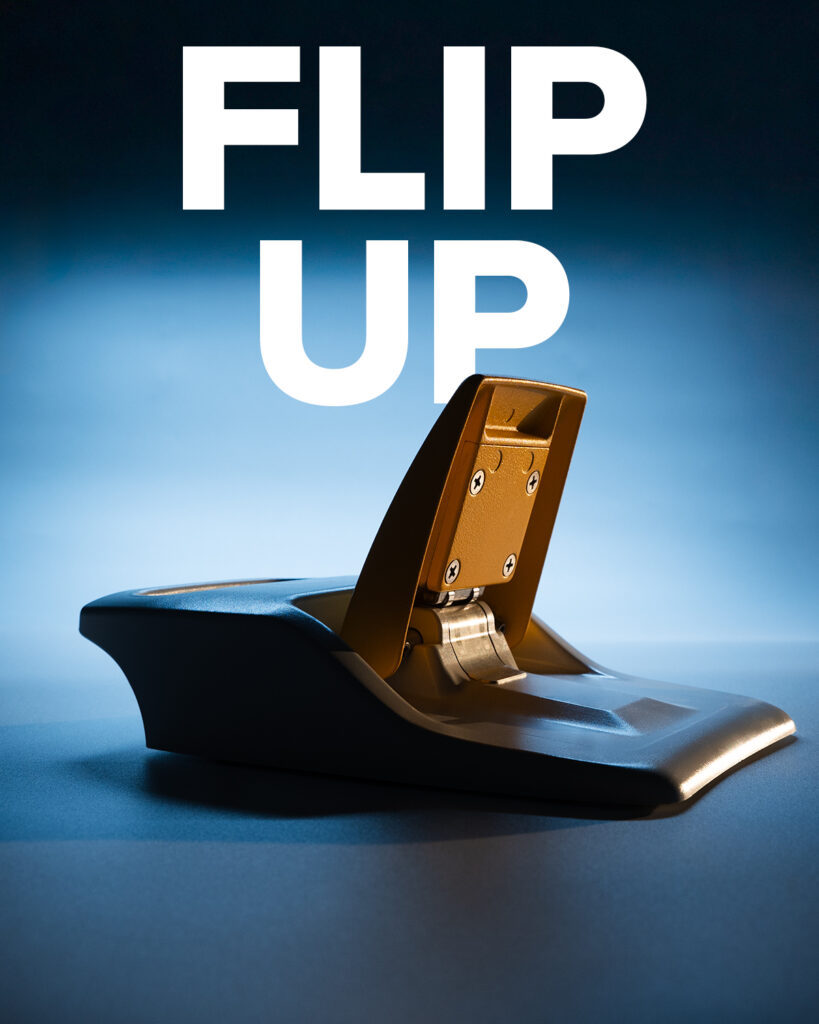
A flip-up cover is a foot switch cover that lets the treadle pivot into a vertical position for easy cleaning. When the treadle is up, the channel underneath does not have exposed mechanical parts like springs or electrical components. So the surface is smooth and simple to clean. That clean, open surface supports regular wipe downs and helps keep fluids away from sensitive components, which supports product longevity.
In applications that rely on linear or variable control, the flip-up cover also allows for increased pedal travel. That longer throw can give operators more precise control over output. If you are deciding when to use a foot switch cover, two common triggers are frequent cleaning and the need for precise control.
Benefits of the Flip-Up Cover Design
The main benefits are ease of cleaning and added travel for variable control. With the treadle flipped up, there are no parts to block the surface. So cleaning is straightforward on both the cover and the channel. That smooth angled surface contributes to a fluid resistant design by making it harder for liquids to pool or linger near components. Which supports foot switch protection over time.
Flip-Up Flexibility with Switch Types, Hall Sensors and Microswitches
Flip-up covers support switch mechanism flexibility. You can configure the assembly with Hall sensor compatibility or microswitch compatibility, depending on the feel and function you want.
A Hall sensor uses a magnetic field to detect treadle position. It can be set up for simple ON and OFF, or for variable output. It does not provide a tactile click. A microswitch provides a distinct click that you can feel and hear at the actuation point, which some operators prefer for feedback but is not capable of a variable output.
If the configuration is ON and OFF with a Hall sensor, the engagement point can be adjusted within the stroke. If the configuration is variable with a Hall sensor, the response can be tuned to act in a linear, logarithmic, or exponential way. These options let you match the response curve to the task without changing the overall pedal design.
Engineering and Customization Considerations for Flip-Up Covers
Engineers balance durability, ergonomic design, and flexibility by looking at the overall height of the control, whether the operator is standing or sitting, and the treadle angle at rest and when pressed. Those choices also help cover shed fluid and grip features on the treadle surface support control when conditions are wet.
Customization options for the cover are focused on appearance. Common choices include the color of the treadle and artwork on the cover, using pad printing or inkjet graphics.
In medical environments, designs account for impact, drop, and crush tests, along with the minimum activation force of 20 newtons. The goal is to meet the required IEC compliances for foot switch safety without changing the core function of the flip-up cover, while also ensuring that the treadle cannot move into the flipped-up position when the switch is inverted.
Customer Impact and Real-World Application
Customers tend to view flip-up covers as essential when cleanability and access are priorities. For variable control, the longer travel is a clear advantage because it gives more precise steps between low and high output.
A field application example is a dental laser system. A standard control did not have enough travel for doctors to make fine power adjustments. The increased travel available with flip up cover provided more granular control of the laser and helped deliver a more defined procedure.
Having both Hall sensors and microswitches available as standard options adds flexibility. Since both are designed into the same channel, customers can quickly select the configuration that works best for their application without additional redesign.
Conclusion
If cleanability and variable control are important to your application, a flip-up cover makes sense. It provides a protective foot switch cover that is easy to clean, supports product longevity by keeping fluids away from components, and gives you the control options you need through hall sensors or microswitches without changing the basic footprint.
Call to Action
Want to learn more about protective design for foot pedals and how different configurations affect performance? Exploring our Learning Center to see how we approach durability, operator safety, and customization options. You can also check out our post on What Are Our Capabilities for Testing to see how foot switch safety is validated or read our guide on Ingress Protection to better understand how fluid protection and contamination control factor into design.
Frequently Asked Question
Why do some foot switches have flip-up treadles and how does that help with cleaning?
A flip-up treadle pivots into a vertical position, opening up the channel underneath. With no springs or electrical components in the way, the surface stays smooth and simple to wipe down. The angled shape also helps fluids shed away instead of pooling near sensitive components, which is why flip-up covers tend to be a priority in applications where cleanability and access matter most.
Meet The Author

Arijan Kandic
Digital Marketing Specialist
Arijan is the Digital Marketing Specialist at Linemaster Switch Corporation and holds a bachelor’s degree in business management from Quinnipiac University. He manages the company’s SEO strategy, Google Ads campaigns, and digital marketing initiatives, and develops educational content for the Linemaster Learning Center to help engineers, OEMs, and medical device manufacturers better understand foot switch technology. Arijan works closely with Linemaster’s engineering and applications teams to translate complex technical concepts into clear, accurate articles on foot switch design, customization, and compliance considerations.
In Collaboration with

Christian D. Smutnick
Applications Engineer
Christian has fifteen years of experience in manufacturing and three years with Linemaster. He works with customers to identify solutions that meet their technical requirements while using existing designs and components whenever possible. This supports faster lead times and cost effective options without affecting performance.
Date Uploaded 12/03/25
Custom Foot Switches
Linemaster’s custom footswitches are designed to meet specific user requirements, offering a range of features such as various pedal configurations, wired and wireless options, and customizable LED indicators. These custom footswitches provide reliable, durable solutions tailored to enhance functionality in diverse applications.

