

EMC Design Considerations for Medical Foot and Hand Controls: What Engineers Need to Know
Electromagnetic compatibility (EMC) is a critical design requirement for modern medical devices, particularly operator interface systems such as medical foot switches and hand controls used in surgical, imaging, and diagnostic equipment. As healthcare environments continue integrating advanced electronics, wireless communication systems, imaging equipment, and digitally controlled instrumentation, the risk of electromagnetic interference increases substantially. Medical devices are expected to operate reliably in environments filled with potential electrical disturbances, without introducing interference that could affect nearby equipment.
Medical foot switches and hand controls are integrated into surgical systems, imaging platforms, diagnostic equipment, and patient treatment devices where operational reliability is essential. Within these applications, the medical foot switch often serves as the primary operator interface for activating critical system functions. Electromagnetic interference can cause unintended activation, communication interruption, or signal instability that disrupts clinical procedures and compromises system performance.
EMC performance is therefore not simply a compliance requirement. It is a fundamental reliability and patient safety consideration.
Why EMC Protection Matters in Medical Foot Switch Design
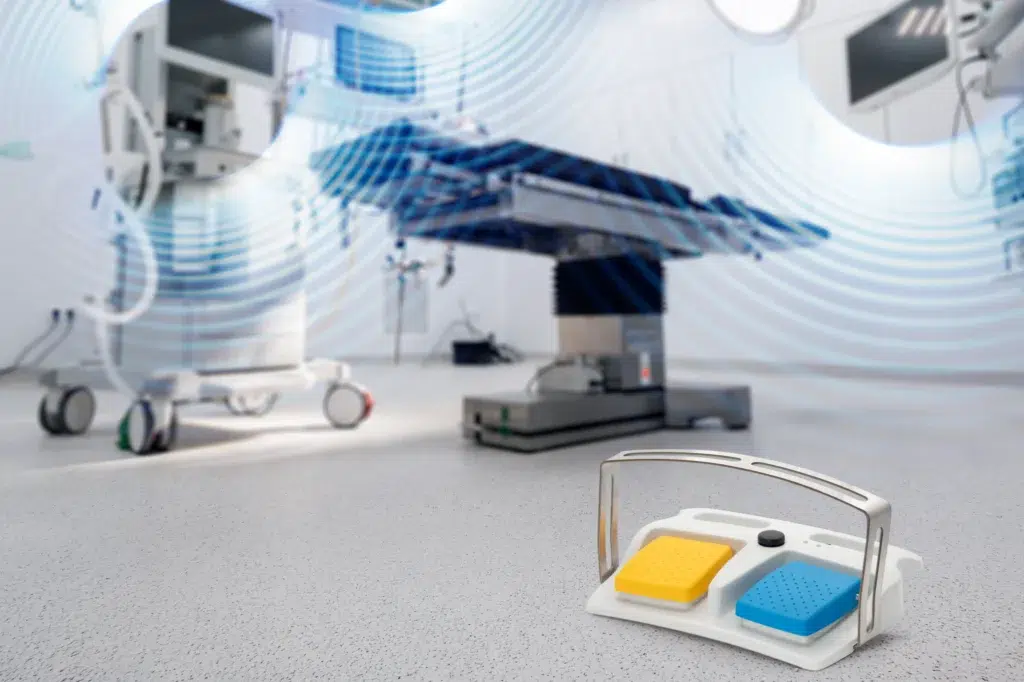
Medical environments present unique EMC challenges because many electronic systems operate simultaneously within close physical proximity. Electrosurgical generators, RF ablation systems, imaging equipment, wireless networks, switching power supplies, and portable communication devices all contribute to a complex electromagnetic environment. Medical control interfaces used within these systems must maintain reliable operation despite exposure to:
- Radiated and conducted disturbances
- Electrostatic discharge events
- High frequency switching noise
- Transient electrical activity generated by surrounding equipment
Because medical foot controls interface directly with operators during clinical procedures, EMC related interruptions can’t be treated as minor inconveniences. Reliable switch activation, signal integrity, and communication stability are essential in applications where precise control and repeatable operation are required.
EMC Design Begins at the System Level
Effective EMC protection takes more than adding shielding or filtering late in development. Reliable EMC performance depends on disciplined system level engineering, where electrical, mechanical, and PCBA design considerations are developed together from the beginning.
Experience designing medical footswitches and medical hand controls provides important technical insight into how electromagnetic noise propagates through cables, enclosures, grounding paths, and operator interfaces under real world operating conditions. In many cases, EMC failures are caused by the interaction between multiple design elements rather than a single isolated issue.
Cable routing, shield termination, grounding architecture, PCB layout, and enclosure construction all influence final EMC performance. Small design decisions made early in development can significantly affect whether a medical footswitch passes EMC compliance testing and maintains stable operation in the field.
Cable Shielding and Grounding in Medical Foot Switches
One of the most significant EMC challenges in medical control interface design involves cable behavior. Medical footswitch cables often operate near power supplies, surgical generators, imaging equipment, and motor driven systems. Long cable assemblies frequently become unintended coupling paths for both radiated and conducted noise.
Shielded cable construction improves both EMC immunity and emission control. However, shielding effectiveness depends heavily on termination strategy, connector bonding, and grounding architecture. Improper shield termination is one of the most common root causes of EMC instability in medical foot controls.
High frequency return currents follow fundamentally different paths than low frequency power currents. A grounding method may appear electrically correct while still creating EMC vulnerabilities. This often occurs when return current paths are not properly controlled. Understanding where and how shield connections should terminate takes application specific engineering experience, particularly in medical systems where leakage current limitations and isolation requirements influence grounding strategy.
PCBA Design Considerations for EMC Compliance
Printed circuit board assembly (PCBA) design has a direct impact on EMC performance in medical control interfaces. Sensitive low voltage sensing circuits, Hall effect devices, microcontrollers, LED drivers, and communication interfaces all need to coexist within compact enclosure spaces while maintaining immunity to external disturbances.
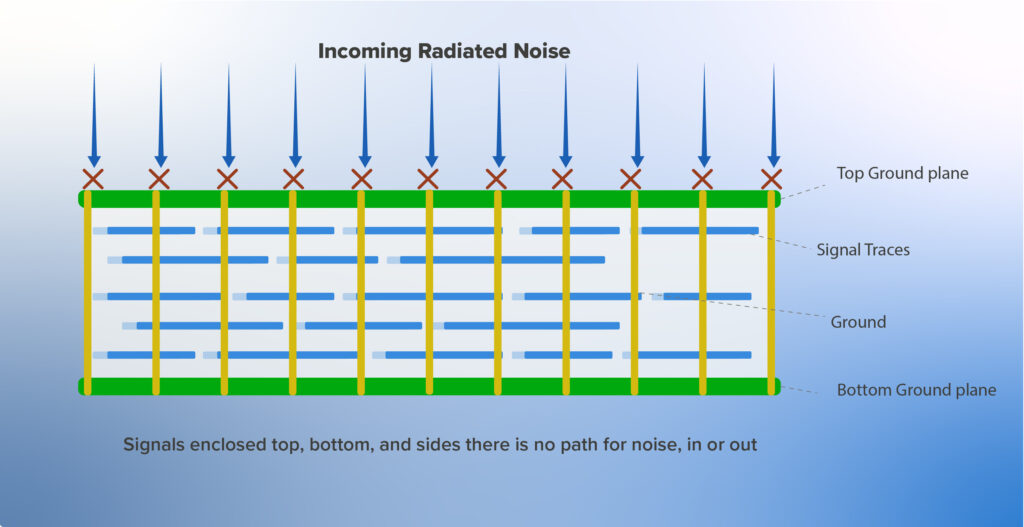
PCB component placement directly influences EMC performance. Separating noisy switching circuits from sensitive analog or sensing circuitry helps minimize unwanted coupling and improves signal integrity. Multilayer PCB stackups are frequently used because they provide continuous reference planes and shortest controlled return current paths. Dedicated ground planes help reduce loop inductance while improving shielding between signal layers and from external noise sources.
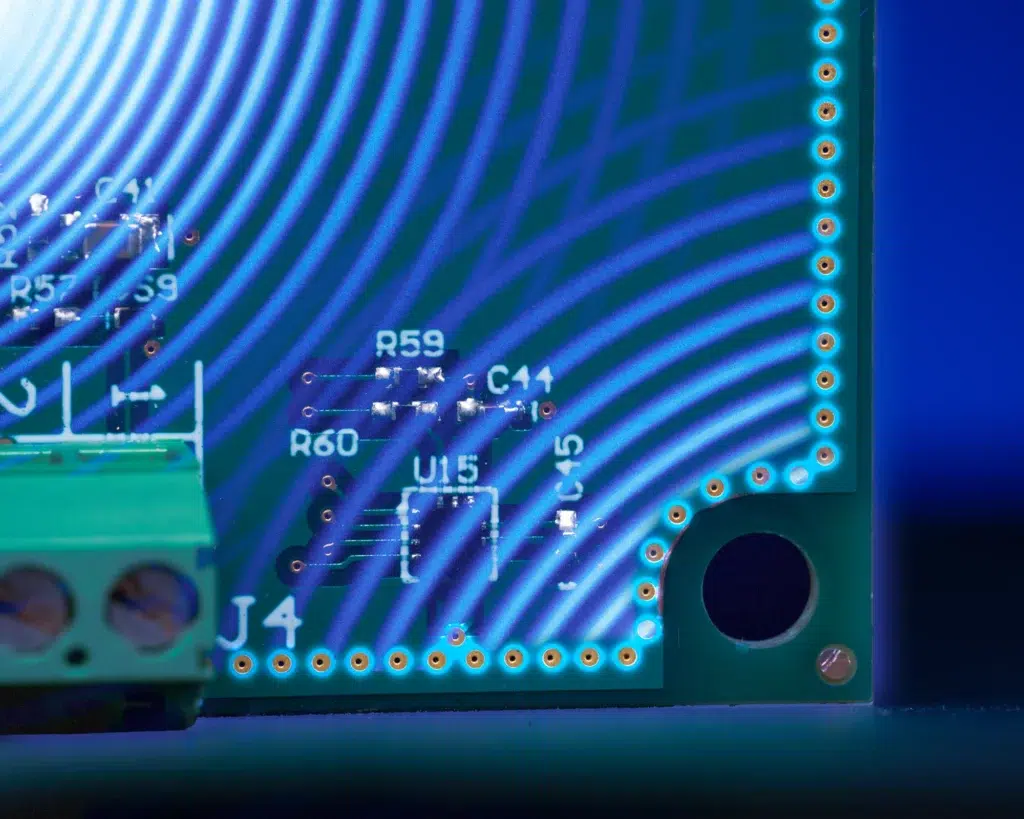
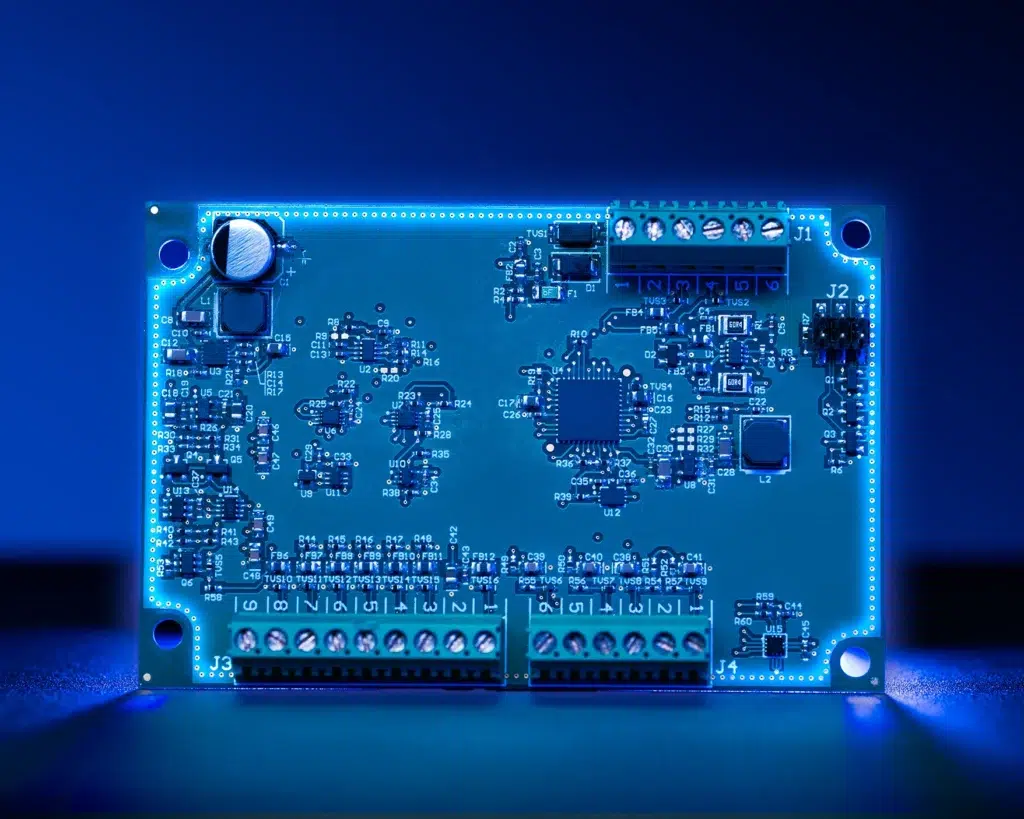
One effective technique involves turning every PCB into a Faraday cage by stitching the entire perimeter of the PCB with GND vias and sandwiching all traces between 2 parallel GND planes. This approach is applied consistently in well executed PCB layout design. With GND vias completely surrounding all signals like a prison cell, no noise can radiate from or penetrate into the sides of the PCBA.
Trace routing matters. Long parallel traces can increase both capacitive and inductive coupling, particularly in high-speed digital circuits. Maintaining short routing paths and minimizing unnecessary layer transitions reduces both radiated emissions and susceptibility to interference.
Another important EMC consideration involves return current behavior within the PCBA. EMC problems are often caused not by the signal itself, but by poorly controlled return current paths, turning ordinary pins and traces into noise pickup or transmitting antennas. Interruptions within reference planes, improper via placement, or split ground structures can force return currents into unintended paths. This increases radiated emissions and unwanted noise coupling. Experience with compact medical control PCBAs helps identify these risks early in development before they become compliance failures during EMC testing.
Electrostatic Discharge Protection in Medical Foot Switches
Electrostatic discharge (ESD) remains one of the most important considerations in medical control interface design because these devices are continuously exposed to direct operator interaction. Medical personnel can generate significant static discharge through normal movement and interaction within clinical environments.
Without adequate ESD protection, electrostatic discharge events may cause resets, unintended switching behavior, communication interruption, or permanent component damage. Effective ESD mitigation requires coordinated electrical and mechanical design, including:
- Transient suppression devices
- Controlled grounding strategies
- Conductive shielding features
- Carefully designed interface protection
Passing laboratory ESD testing alone is insufficient for reliable field performance. A properly engineered medical footswitch should maintain uninterrupted operation during repeated real world electrostatic discharge exposure while preserving signal stability and switching accuracy.
Mechanical Design and EMC Shielding
Enclosure design matters. Mechanical construction directly affects EMC performance in medical control interfaces. Even when the electrical design is well executed, enclosure gaps, poor shield continuity, or inadequate connector bonding can create significant radiated emission problems.
Plastic enclosures may require conductive coatings or internal shielding structures, while metal components have to maintain reliable bonding continuity across seams and mating surfaces.
Fastener placement, gasket compression, and connector bonding can significantly affect high frequency EMC performance.
Successful EMC protection requires electrical and mechanical engineering teams to work together throughout development, rather than treating shielding as a secondary design activity.
EMC Compliance Testing for Medical Devices
Medical EMC requirements are governed primarily by IEC 60601-1-2, which establishes immunity and emissions expectations for medical electrical equipment. EMC compliance testing evaluates product performance under exposure to:
Electrostatic Discharge
Radiated RF Fields
Electrical Fast Transients
Voltage Fluctuations
Conducted Disturbances
Compliance with IEC 60601-1-2 depends on complete system integration, not isolated component selection. EMC performance depends on the interaction between PCBAs, cables, grounding structures, shielding methods, enclosure design, and overall system integration.
One of the most important lessons in EMC engineering is that passing certification testing alone does not guarantee robust field performance. A design may technically satisfy laboratory requirements yet still experience intermittent operational issues in real world hospital environments if adequate design margin is not incorporated.
That’s why pre compliance EMC testing and application specific validation are essential throughout product development. Early testing helps identify noise coupling mechanisms, grounding weaknesses, PCB layout vulnerabilities, and shielding deficiencies before they become expensive redesign issues late in the development cycle.
The Future of EMC Design in Medical Foot Controls
As medical systems continue evolving toward higher electronic integration, increased wireless communication, more compact PCBAs, and more advanced digital interfaces, EMC engineering will remain a critical element of medical footswitch and medical hand control development.
Strong EMC protection strategies help ensure stable operation, long term reliability, regulatory compliance, and consistent performance within demanding clinical environments where operational integrity is essential. Advanced EMC design practices, combined with application specific engineering expertise, allow modern medical footswitches to maintain reliable performance even within increasingly complex electromagnetic environments.
Designing reliable medical control interfaces for EMC demanding clinical environments requires coordinated electrical, mechanical, and compliance engineering expertise from the earliest stages of development. Early EMC integration helps reduce redesign risk, improve reliability margins, and support long term field performance in demanding clinical environments.
Meet The Author

Arijan Kandic
Digital Marketing Specialist
Arijan is the Digital Marketing Specialist at Linemaster Switch Corporation and holds a bachelor’s degree in business management from Quinnipiac University. He manages the company’s SEO strategy, Google Ads campaigns, and digital marketing initiatives, and develops educational content for the Linemaster Learning Center to help engineers, OEMs, and medical device manufacturers better understand foot switch technology. Arijan works closely with Linemaster’s engineering and applications teams to translate complex technical concepts into clear, accurate articles on foot switch design, customization, and compliance considerations.
In Collaboration with

William Chan
Chief Electrical Design Engineer
Bill has more than thirty four years of experience in high speed digital and analog electronic system architecture and hardware circuit design across the medical and security industries. He has been with Linemaster for over sixteen years and serves as the primary technical contact for customer electrical requirements and application specific solutions. He is best known for his wired and wireless low power digital and analog circuit designs, PCBA development, and cybersecurity focused hardware work.
Uploaded 05/14/2026
Custom Foot Switches
Linemaster’s custom footswitches are designed to meet specific user requirements, offering a range of features such as various pedal configurations, wired and wireless options, and customizable LED indicators. These custom footswitches provide reliable, durable solutions tailored to enhance functionality in diverse applications.

