
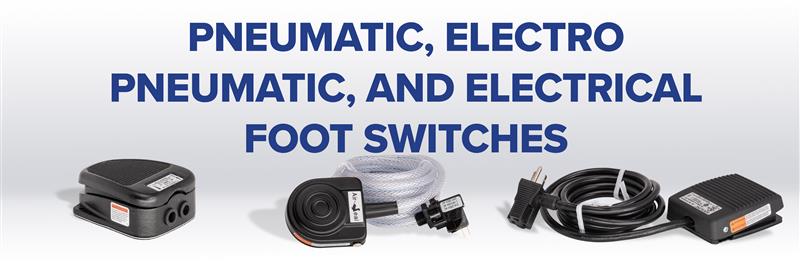
Pneumatic, Electro Pneumatic, and Electrical Switches: What’s the Difference
When it comes to foot switches, not all of them work the same way. The way a foot switch sends a signal can completely change how safe and effective it is in a given environment. In some cases that signal is air, in others it is air combined with electricity, and in the most common designs it is electricity alone.
Knowing the difference between pneumatic, electro-pneumatic, and electrical foot switches makes it easier to figure out which one belongs in your application. This breakdown looks at each type on a simple, macro level so you can see how they work and where they make sense.
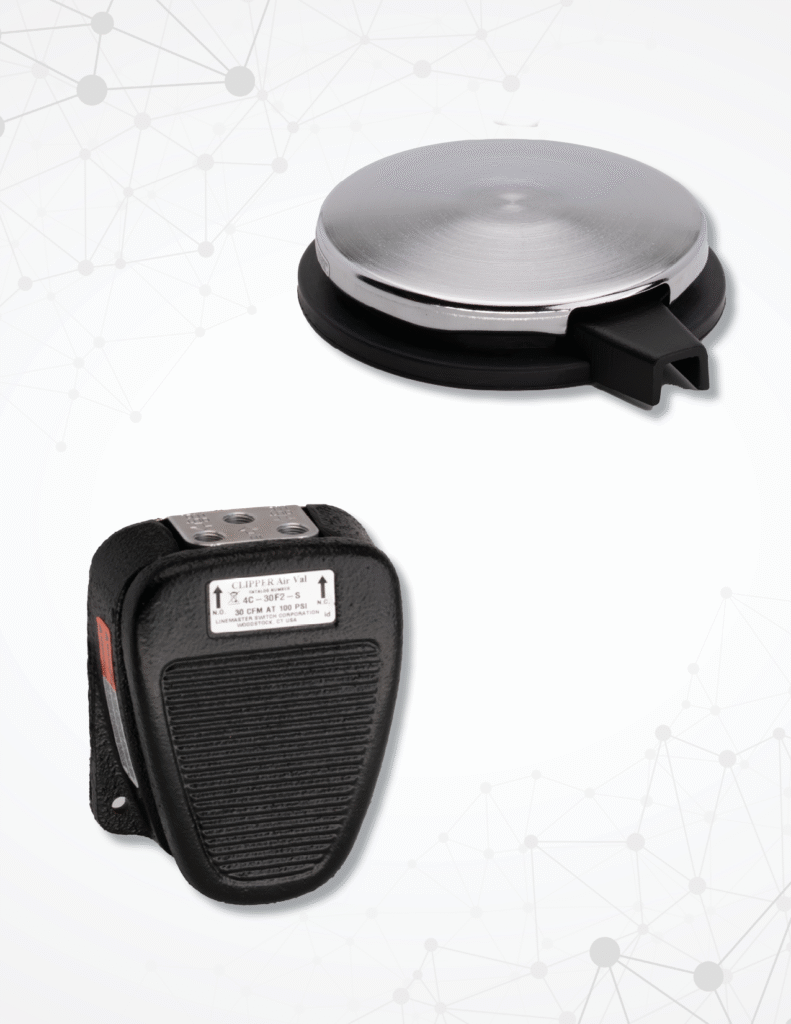
Pneumatic Switches
A pneumatic switch regulates compressed air to control tools or equipment. When the pedal is pressed, a valve opens and air moves through tubing to power the device directly. There is no electricity at the pedal at all.
Because the signal is purely air, pneumatic foot switches are especially useful in places where moisture, sanitation routines, or flammable materials make electrical actuation risky. They can be built in single stage or multistage versions, with different exhaust and port configurations to match different use cases. There are designs for variable and ON/OFF designs. Allowing operators to control air output proportionally or as a simple start-stop action depending on the application.
You will often see pneumatic switches in spa tubs, dental chairs, and washdown heavy industrial environments where reliable air control is more practical than running electricity.
Electro-Pneumatic Foot Switches
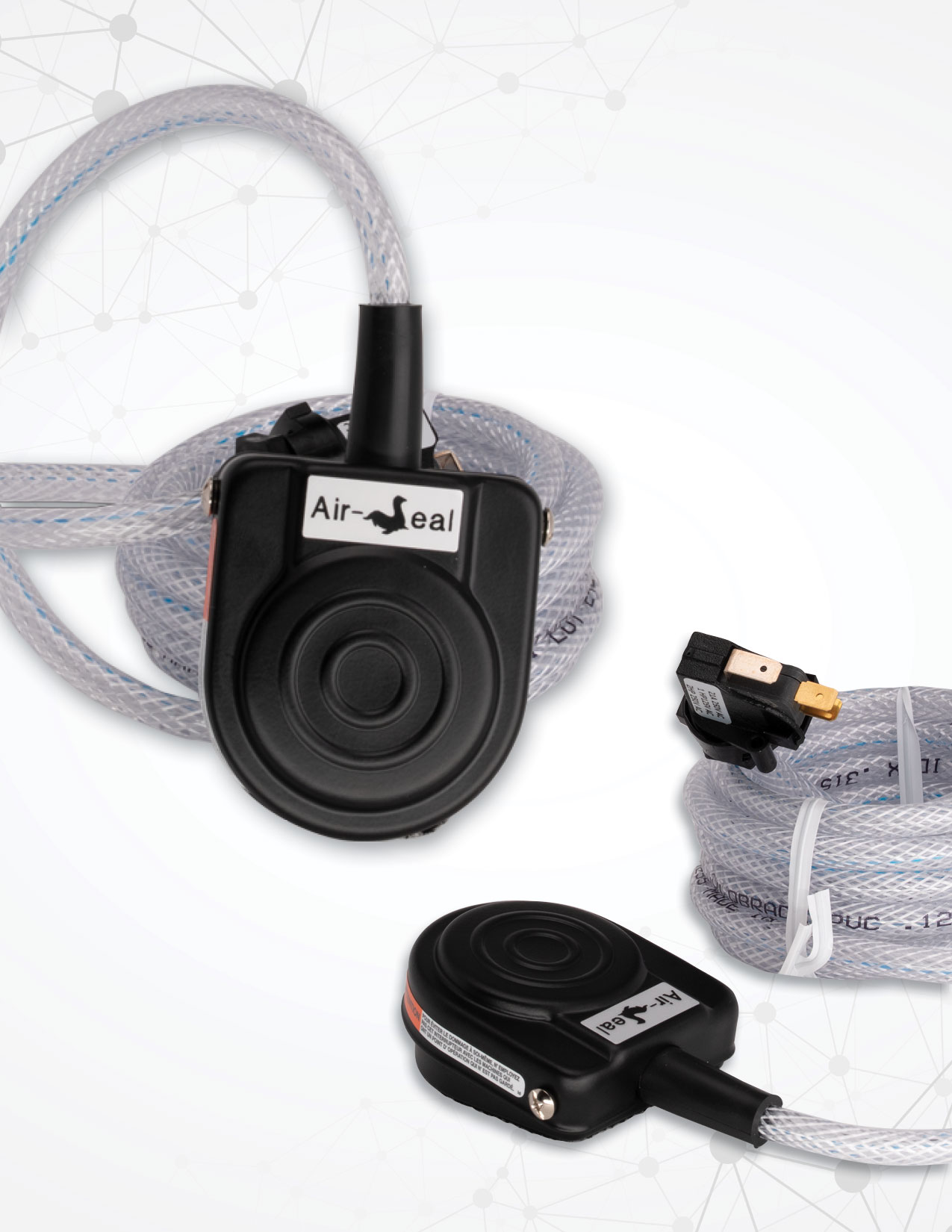
An electro pneumatic foot switch uses the air pressure created when you press the pedal to trigger an electrical circuit at a distance. When the operator steps on the pedal, the air pressure travels through tubing and moves a piston or diaphragm that actuates a microswitch. That microswitch then opens or closes the electrical circuit to power the equipment.
The key advantage is that no electricity runs through the pedal itself. The operator is fully isolated from live current, but the system still controls powered devices. This design is ideal in sterile, wet, or rugged conditions where direct electrical actuation would be unsafe.
Electro pneumatic foot switches are common in medical and industrial environments. You will find them in X-ray machines, anesthesia systems, surgical aspirators, tattoo equipment, and laser devices that rely on precise, isolated control. Tubing options matter here too.
Reinforced tubing is durable but less flexible, while vinyl tubing lays flat and reduces trip hazards but wears faster in rough conditions.
One example comes from a grinder manufacturer that replaced electrical pedals with air driven pedals in washdown areas. By removing live current from the pedal, they eliminated shock hazards caused by water exposure while still giving operators reliable control.
Electrical Foot Switches
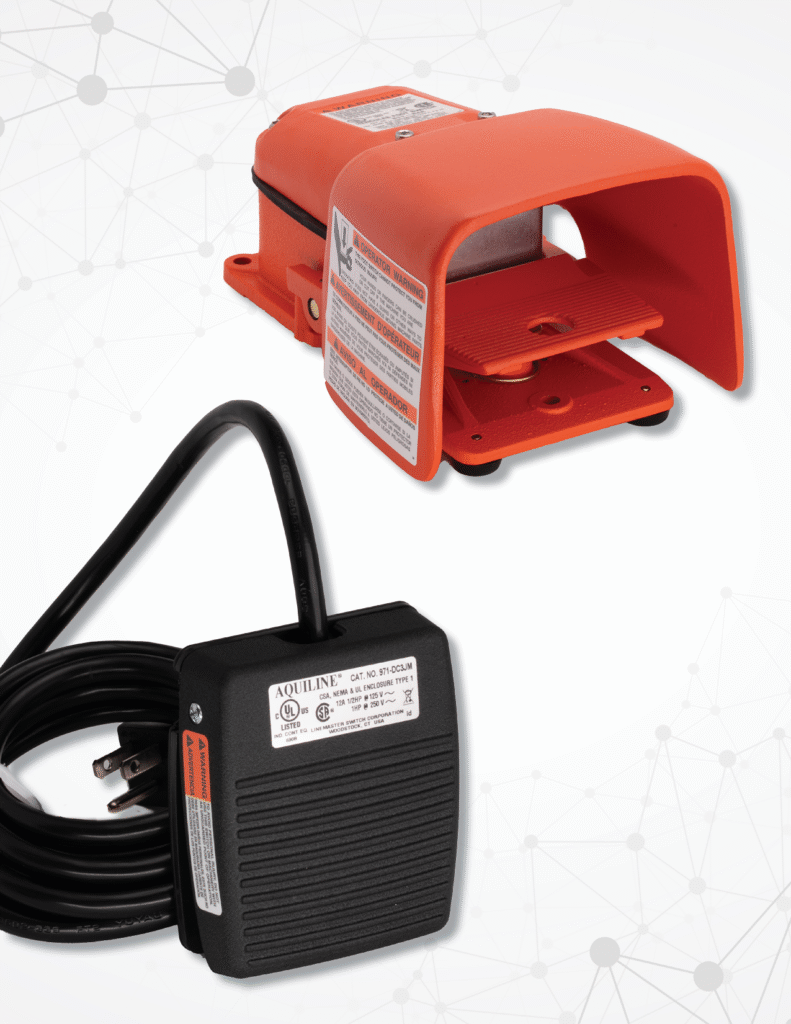
An electrical switch is the simplest and most widely recognized type. Pressing the pedal opens or closes a circuit so electricity can flow and power the device.
Some electrical switches are momentary, meaning the switch is activated only while the pedal is pressed. Others are maintained, meaning one press turns the device on, and another press turns it off. Both operate by controlling power directly at the pedal.
Electrical switches are cost effective, easy to install, and practical for most general-purpose equipment. The tradeoff is that live current is present at the pedal itself, which means they are typically used in dry environments such as factory floors, laboratories, and other controlled settings where the risk of shock is low. However, IP-rated electrical switches are available for applications where moisture or dust may be present, providing added protection in harsher conditions.
Comparing Pneumatic, Electro Pneumatic, and Electrical Foot Switches
At a macro level the difference comes down to the signal path.
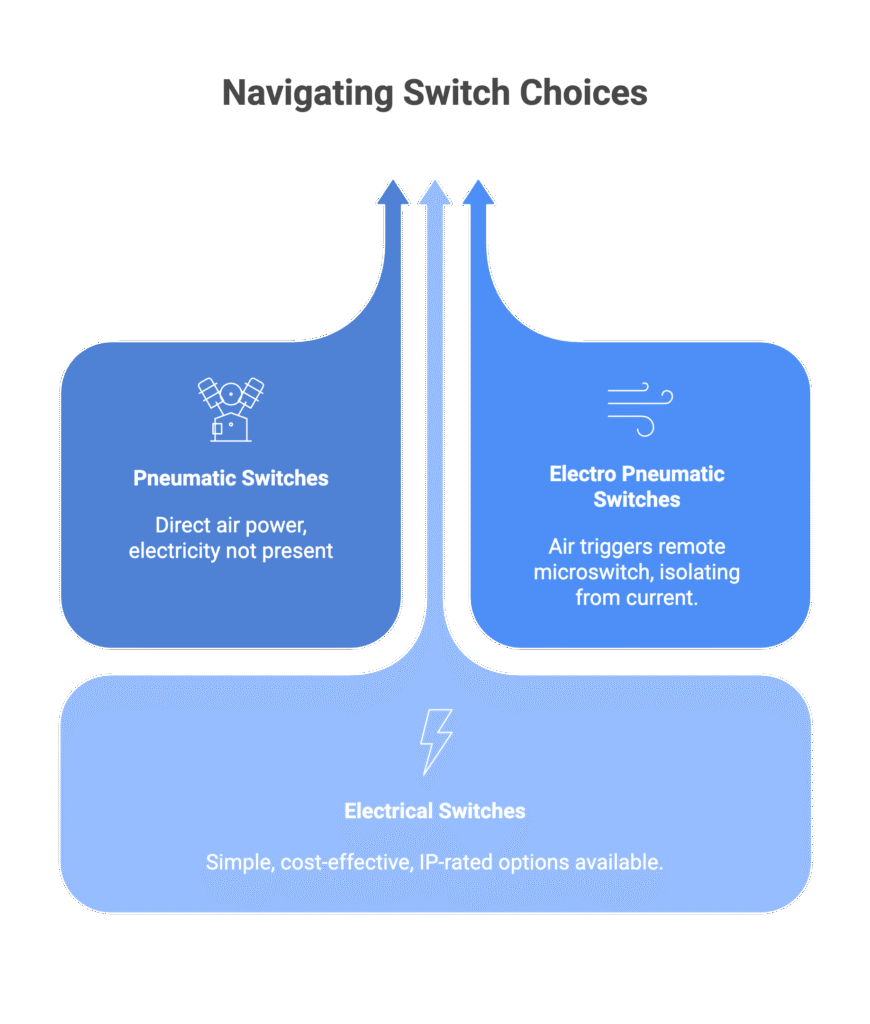
Pneumatic switches send compressed air directly to power equipment. Electro pneumatic switches use air to trigger a remote microswitch that controls electricity without exposing the operator to current. Electrical switches let current flow directly through the pedal to control the device.
The right choice depends on your environment. Pneumatic designs make sense when you want zero electricity at the switch and have a source of compressed air. Electro pneumatic designs are best when you need powered equipment but want isolation from current. Electrical designs are best when simplicity and cost are more important than isolation. They’re available in IP-rated versions that perform reliably even in environments where moisture or dust may be present.
Conclusion
Choosing between pneumatic, electro-pneumatic, and electrical switches ultimately comes down to understanding your environment and performance goals. Each design offers a different balance of control, safety, and practicality. But all are built to deliver reliable operation when matched to the right application.
If you’re exploring which switch type best fits your setup, consider factors like exposure to moisture, the need for electrical isolation, and how often the switch will be used.
To keep building your knowledge, visit our Learning Center for more in-depth breakdowns on topics like microswitches, ingress protection, and momentary versus maintained designs.
Meet The Author

Arijan Kandic
Digital Marketing Specialist
Arijan is the Digital Marketing Specialist at Linemaster Switch Corporation and holds a bachelor’s degree in business management from Quinnipiac University. He manages the company’s SEO strategy, Google Ads campaigns, and digital marketing initiatives, and develops educational content for the Linemaster Learning Center to help engineers, OEMs, and medical device manufacturers better understand foot switch technology. Arijan works closely with Linemaster’s engineering and applications teams to translate complex technical concepts into clear, accurate articles on foot switch design, customization, and compliance considerations.
In Collaboration with

Christian D. Smutnick
Applications Engineer
Christian has fifteen years of experience in manufacturing and three years with Linemaster. He works with customers to identify solutions that meet their technical requirements while using existing designs and components whenever possible. This supports faster lead times and cost effective options without affecting performance.
Date Uploaded 01/14/26
Custom Foot Switches
Linemaster’s custom footswitches are designed to meet specific user requirements, offering a range of features such as various pedal configurations, wired and wireless options, and customizable LED indicators. These custom footswitches provide reliable, durable solutions tailored to enhance functionality in diverse applications.

