
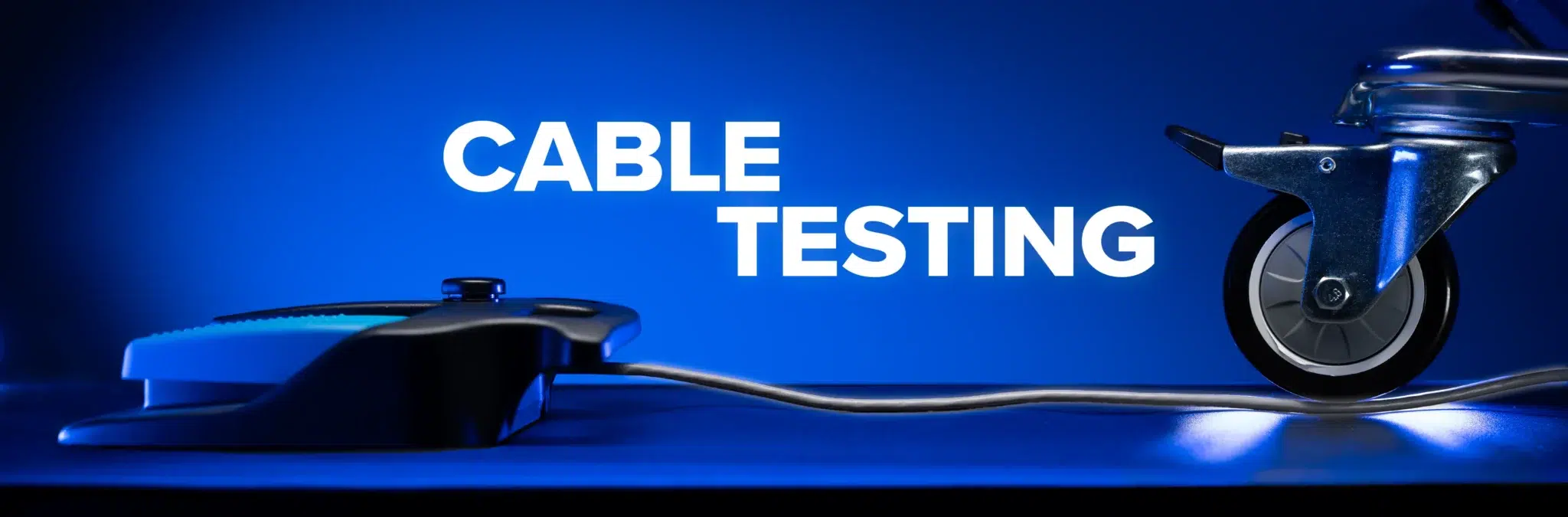
Cord Set Testing for Medical and Industrial OEM Applications
Cable failures rarely show up at a convenient moment. They typically surface during operation, on the production floor, or after equipment has already been deployed into the field. By that point, the cost extends well beyond the cable itself, affecting product reliability, service costs, customer satisfaction, and equipment uptime.
That’s where cord set testing becomes important.
Cord sets used in medical and industrial environments are exposed to conditions most standard cables never experience. Repeated movement, mechanical stress, aggressive cleaning routines, and real world handling conditions all contribute to wear over time. Validation testing provides a clearer understanding of how an assembly may perform before it enters the field.
The following overview highlights cord set testing methods commonly used to support OEM reliability programs, product qualification activities, and long term performance evaluations.
Why OEMs Request Cord Set Validation Testing
Cable assemblies are routinely exposed to flexing, dragging, pulling, rollover exposure, chemical cleaning agents, and repeated handling throughout their service life. Validation testing helps OEM manufacturers better understand how an assembly may perform under actual operating conditions before deployment.
OEM manufacturers often pursue validation testing to support product qualification programs, reliability verification activities, regulatory support documentation, supplier validation efforts, field failure investigations, and verification following material or design changes.
For medical and industrial equipment manufacturers, these evaluations can provide valuable insight into cable durability, shielding performance, connector reliability, and overall assembly integrity under demanding operating conditions.
Built to IPC/WHMA A-620 Workmanship Standards
Validation testing matters, but consistent manufacturing quality matters just as much. Cord set assemblies manufactured in accordance with IPC/WHMA A-620 workmanship requirements support consistent assembly quality across cable and wire harness manufacturing operations.
For OEM manufacturers, workmanship standards help support repeatability, assembly consistency, termination quality, and long term reliability expectations throughout the production process.
Pull Testing
Cord sets can experience significant mechanical loading during installation, handling, transportation, and everyday equipment use. Pull testing evaluates the mechanical retention strength between cable components, strain relief systems, shielding terminations, and connector assemblies.
Controlled tensile force is applied to the assembly to verify that conductors, shielding systems, and terminations remain mechanically secure under expected load conditions.
The testing helps verify crimp integrity, evaluate strain relief performance, assess connector retention strength, confirm shielding attachment integrity, and identify potential mechanical failure points before deployment.
For OEM manufacturers, pull testing can help support long term durability objectives and reduce the risk of cable related service failures in demanding operating environments.
Flex Testing
Cord sets used in medical and industrial equipment are frequently exposed to repeated bending and movement during normal operation. Over time, that motion can create stress on conductors, shielding systems, insulation materials, and strain relief components.
Flex testing evaluates how a cord set performs under repeated bending cycles designed to simulate long term usage conditions. During testing, the cable cycles through a controlled range of motion for a specified number of repetitions while continuity or electrical performance may be monitored throughout the test sequence.
The testing helps evaluate strain relief effectiveness, conductor durability, shield integrity during repeated movement, jacket flexibility, and resistance to repetitive motion fatigue.
Flex testing is commonly requested for portable equipment, handheld devices, foot operated controls, and high cycle operator interfaces where cable movement is continuous throughout daily operation.
Lift and Drop Testing
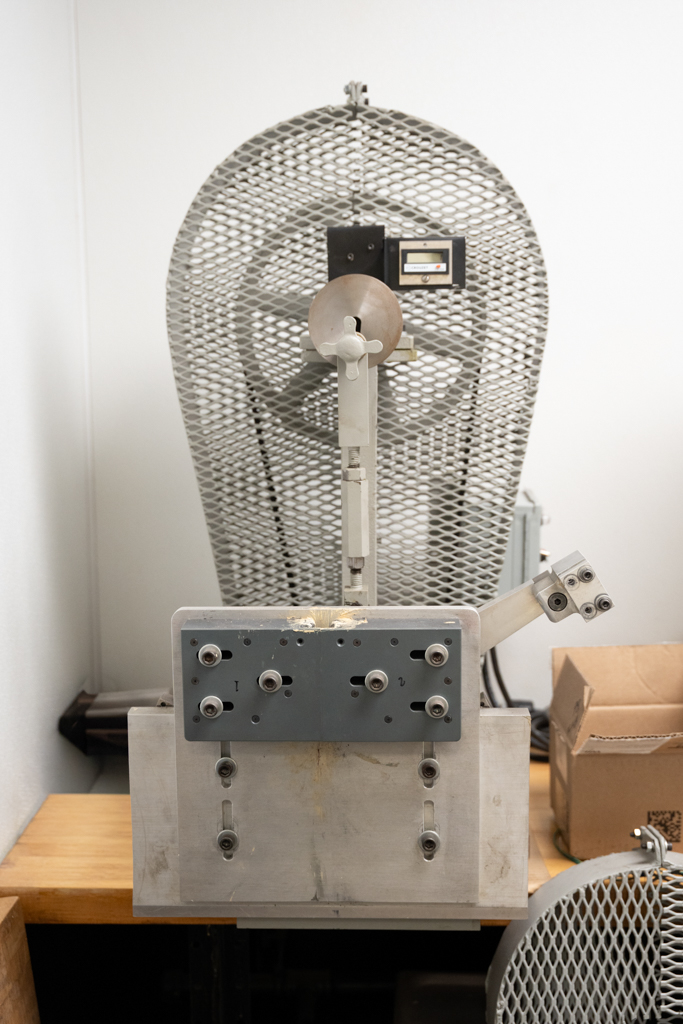
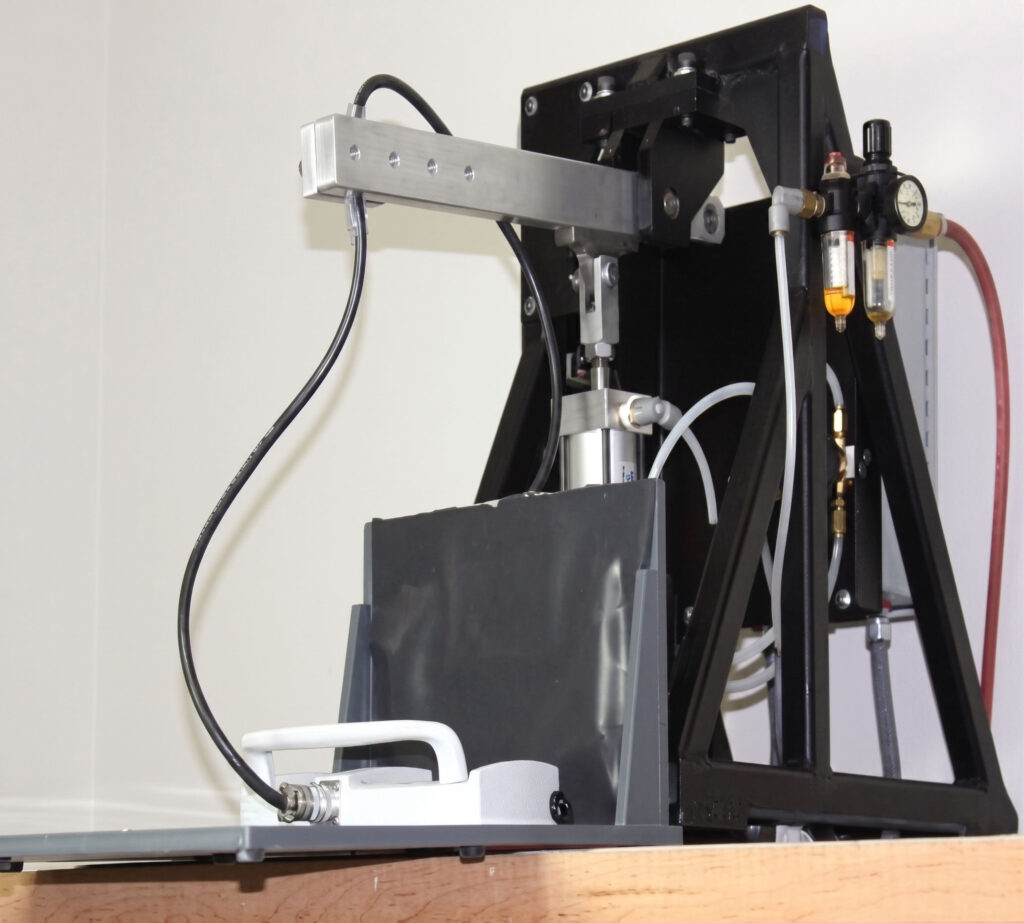
Operators do not always handle equipment exactly as intended. One common failure mode occurs when users inadvertently lift or reposition equipment by pulling or carrying it using the cord set rather than the intended handles or support structure.
While this practice is not recommended, it represents a realistic field condition that can place significant mechanical stress on the cable assembly, strain relief system, and connector interfaces.
Lift and drop testing applies controlled lifting loads and drop conditions to evaluate possible mechanical or electrical damage resulting from these handling events.
The testing may evaluate connector housing integrity, cable retention performance, strain relief effectiveness, internal conductor damage, shield termination integrity, and post impact electrical continuity.
Simulating realistic misuse conditions can help identify potential failure points before products are deployed into demanding medical and industrial environments.
Shielding Integrity and Shield Breakdown Testing
In many medical and electronic applications, shielding performance plays an important role in maintaining signal integrity and reducing electromagnetic interference.
Shielding integrity testing evaluates the effectiveness and durability of cable shielding systems following mechanical stress, flexing, rollover exposure, or environmental conditioning.
The testing may be used to verify shield continuity, evaluate shield termination effectiveness, assess shielding durability after flex or rollover testing, identify shielding breakdown or degradation, and support signal integrity and EMI protection evaluations.
For sensitive medical and electronic applications, maintaining shielding performance can be critical for minimizing electrical noise, preserving signal stability, and supporting consistent device operation.
Electrical Resistance Testing
Reliable electrical performance begins with stable and consistent conductor integrity. Electrical resistance testing measures conductor, shield, and contact resistance throughout the cord set assembly to verify proper continuity and electrical connection performance.
Precision measurement equipment can evaluate conductor resistance, ground continuity, shield continuity, connector contact resistance, and overall circuit integrity.
The results can help identify loose electrical connections, improper crimps or solder joints, damaged conductors, shield continuity issues, and excessive resistance conditions that may affect long term product reliability.
Maintaining low and stable resistance values supports consistent electrical performance and long term signal integrity.
Abrasion Testing
Cord sets used in industrial and mobile medical equipment may experience repeated surface contact, equipment edges, dragging, and continuous movement during operation.
Abrasion testing evaluates the resistance of cable jackets and insulation materials to surface wear under controlled mechanical contact conditions.
The testing helps assess jacket wear resistance, insulation protection, surface degradation, shield exposure risks, and resistance to repeated mechanical contact.
Abrasion testing can be valuable for applications where cables experience frequent movement, cable dragging, or continuous interaction with surrounding equipment and operating surfaces.
Chemical Compatibility and Cleaner Wipe Down Testing
Cleaning agents, disinfectants, and routine wipe down procedures are part of daily operation for many medical and industrial products.
Chemical compatibility and wipe down testing evaluates how cable jackets, molded components, labels, and connector materials respond to repeated chemical exposure over time.
Assemblies may undergo repeated wipe down cycles using specified cleaning agents to evaluate potential material degradation under simulated field conditions.
The testing helps assess jacket discoloration or swelling, surface cracking or material breakdown, label legibility retention, connector housing durability, and long term compatibility with cleaning agents and disinfectants.
For medical OEM applications, this type of testing can help evaluate how cord set materials may perform under repeated exposure to disinfectants and aggressive healthcare cleaning protocols.
Dielectric Withstand (Hipot) Testing
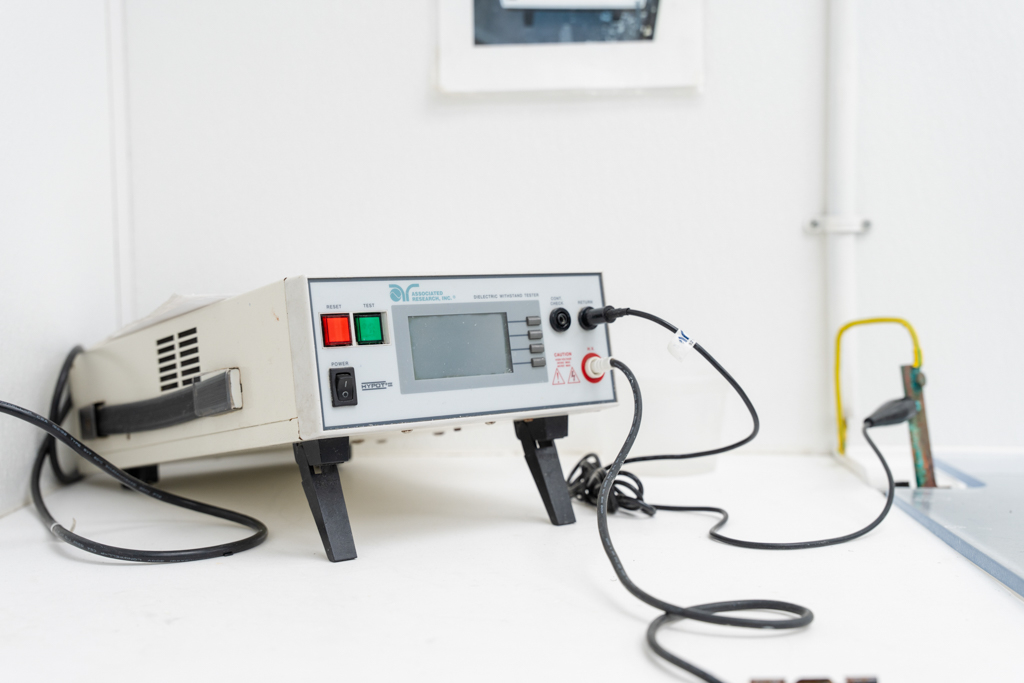
Dielectric withstand testing, commonly referred to as hipot testing, evaluates insulation integrity and electrical isolation within the cord set assembly.
During testing, elevated voltage is applied between conductors, or between conductors and accessible surfaces, for a specified duration while leakage current is monitored.
Hipot testing helps verify insulation system integrity, electrical isolation performance, manufacturing consistency, resistance to dielectric breakdown, and insulation durability following mechanical stress exposure.
It is commonly utilized during electrical safety evaluations and qualification activities involving high voltage cable testing and insulation verification for medical and industrial applications.
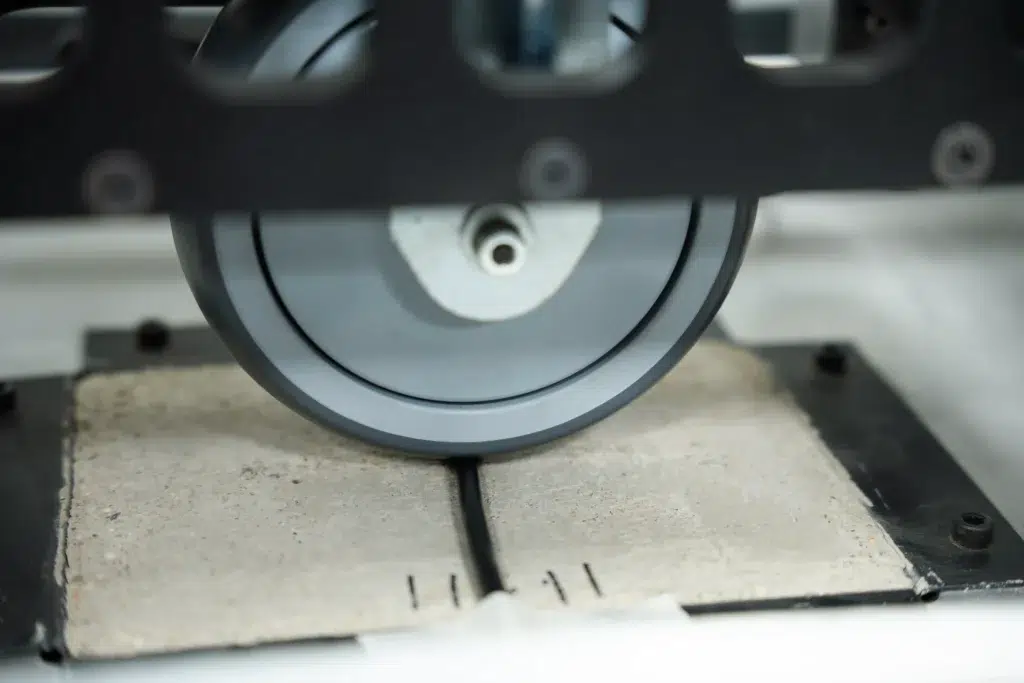
Gurney Rollover Testing
In medical environments, cord sets routinely encounter carts, hospital beds, transport equipment, and rolling devices that repeatedly pass over cable assemblies during normal operation.
Gurney rollover testing simulates these real world conditions by applying repeated rolling loads to the cable assembly to evaluate resistance to crushing, deformation, shielding damage, jacket breakdown, and conductor failure.
The testing helps evaluate cable jacket durability, compression resistance, shield continuity after mechanical loading, and continued electrical functionality following rollover exposure.
For medical OEM applications, rollover durability can be especially important in patient care environments where exposure to mobile equipment is unavoidable during everyday use.
Connector Cycle Testing
Many applications require connectors to be repeatedly connected and disconnected throughout the product lifecycle. Over time, repeated mating cycles can contribute to contact wear, retention changes, and electrical instability.
Connector cycle testing evaluates connector durability through repeated insertion and removal while electrical and mechanical performance is monitored throughout the process.
The testing may evaluate contact wear, connector retention performance, electrical continuity stability, shield connection integrity, and housing durability.
The result is a clearer understanding of long term connector reliability for applications involving frequent connection and disconnection in medical and industrial environments.
Cable Wrap Testing
Portable equipment and mobile applications often require cord sets to be repeatedly wrapped, coiled, stored, and repositioned during normal use.
Cable wrap testing evaluates how well an assembly withstands repeated coiling and handling without damage to the jacket, shielding systems, conductors, or internal structure.
During testing, the cable is wrapped around a fixture or mandrel to simulate storage and field handling conditions.
The evaluation may include cable flexibility, resistance to kinking, conductor fatigue, shield durability during repeated handling, and long term handling reliability.
This testing may be utilized for portable equipment, coiled cable assemblies, and applications involving frequent cable storage or repositioning.
Supporting Customer Specific Validation Requirements
Testing requirements vary significantly from one application to another. Operating environments, industry standards, cleaning expectations, electrical performance requirements, and customer specifications all influence the validation approach.
Linemaster supports customer specific validation activities through a range of cord set testing capabilities that can be incorporated into engineering evaluations, qualification programs, and product verification activities.
As a manufacturer and assembler of custom cord sets, Linemaster works closely with customers to support application specific performance goals, reliability objectives, and cable assembly quality requirements across medical and industrial products.
When Wireless Becomes the Better Answer
Cord sets provide reliable and cost effective interface solutions for many medical and industrial applications. However, cable assemblies are also exposed to repeated mechanical stress, rollover exposure, aggressive cleaning procedures, impact loading, flexing, pulling forces, abrasion, and continuous handling throughout their service life.
Even with strong strain relief systems, quality materials, IPC/WHMA A-620 compliant manufacturing, and application specific validation testing, cable assemblies can still represent one of the highest wear and failure points within an electromechanical system.
Common long term failure mechanisms may include conductor fatigue, shielding degradation, connector wear, insulation breakdown, jacket damage, or strain relief failure resulting from demanding real world operating conditions.
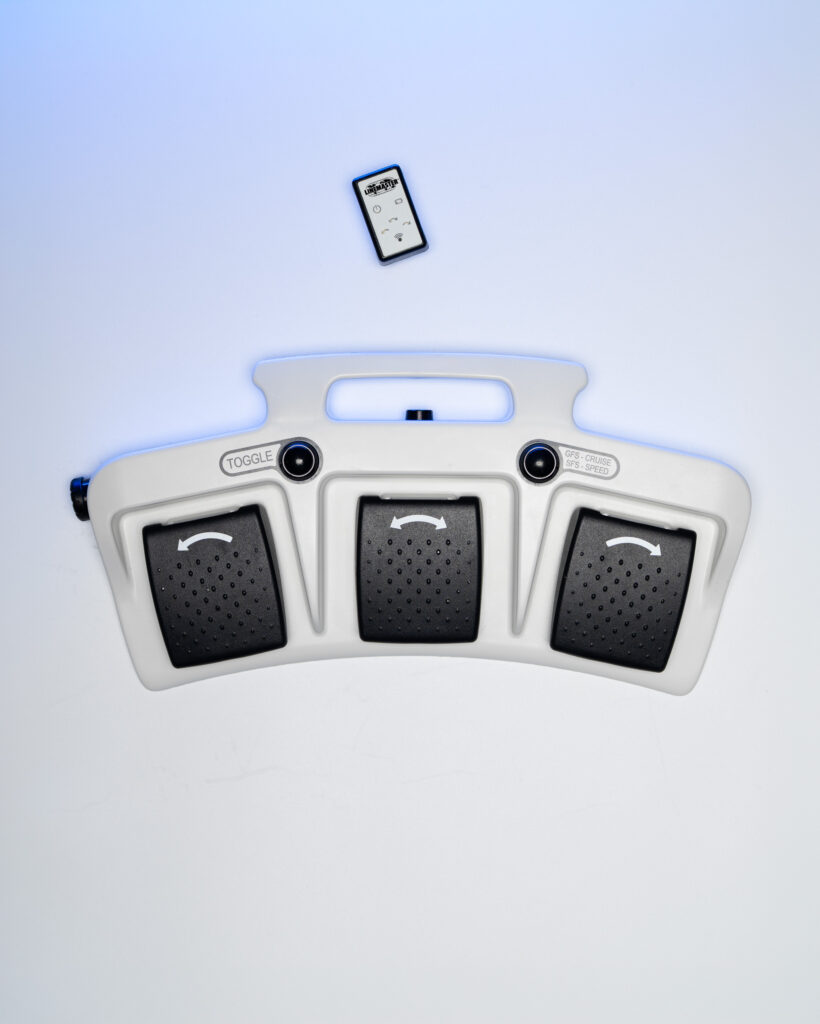
When cable related failures become persistent within an application, it may be worthwhile to evaluate whether wireless control technology is a better fit. Eliminating the physical cable assembly can reduce many of the mechanical and environmental stress factors associated with flexing, pulling, rollover exposure, impact events, abrasion, repeated handling, and chemical wipe down procedures.
For applications where cord set durability becomes a recurring operational, maintenance, or reliability concern, wireless switching technologies may provide improved long term reliability, reduced service requirements, and greater flexibility within the operating environment.
Both wired and wireless technologies continue to evolve, and the optimal solution ultimately depends on application requirements, operating conditions, reliability objectives, and overall system demands.
Working With Linemaster on Custom Cord Set Programs
Linemaster Switch Corporation manufactures custom foot controls, hand controls, and cord set assemblies for medical and industrial applications. With decades of manufacturing experience and vertically integrated production capabilities, Linemaster supports OEM customers with assembly solutions designed for demanding operating environments.
If your application requires custom cord set assemblies, application specific validation testing, medical cable assembly support, or IPC/WHMA A-620 compliant manufacturing, Linemaster can work with your team to help support product reliability and long term performance objectives.
Meet The Author

Arijan Kandic
Digital Marketing Specialist
Arijan is the Digital Marketing Specialist at Linemaster Switch Corporation and holds a bachelor’s degree in business management from Quinnipiac University. He manages the company’s SEO strategy, Google Ads campaigns, and digital marketing initiatives, and develops educational content for the Linemaster Learning Center to help engineers, OEMs, and medical device manufacturers better understand foot switch technology. Arijan works closely with Linemaster’s engineering and applications teams to translate complex technical concepts into clear, accurate articles on foot switch design, customization, and compliance considerations.
In Collaboration with

Sean Lewis
Director of Engineering
Sean has more than fifteen years of experience in product development, engineering governance, and cross functional technical operations. His background in metal fabrication, including machining, forming, welding, and inspection, provides a strong manufacturing foundation that supports his approach to design and process optimization. Sean holds a bachelor’s degree in mechanical engineering, an MBA with a manufacturing concentration, and an MSOL. He is a Certified SolidWorks Expert with advanced capability in CAD, rendering, simulation, and rapid prototyping. Sean also specializes in DFMEA and PFMEA risk management practices and is the holder of several foot switch design and utility patents.
Uploaded 05/14/2026
Custom Foot Switches
Linemaster’s custom footswitches are designed to meet specific user requirements, offering a range of features such as various pedal configurations, wired and wireless options, and customizable LED indicators. These custom footswitches provide reliable, durable solutions tailored to enhance functionality in diverse applications.

