

How Wireless Foot Switches Handle Cybersecurity
When a wireless foot switch is a part of a medical or industrial system, how the signal is protected as it travels between the pedal and the equipment is worth understanding before a design is finalized. Wireless communication introduces considerations that a wired connection simply does not have, and cybersecurity is one of them.
What Changes When a Switch Goes Wireless
A wired foot switch is straightforward. When the pedal is pressed, it opens or closes an electrical contact, and that signal travels directly through the cable to the connected equipment. The path is physical and the response is immediate
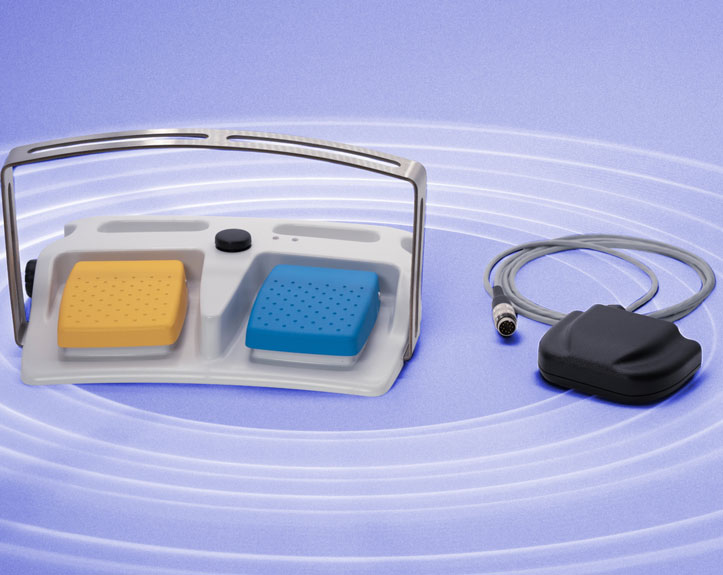
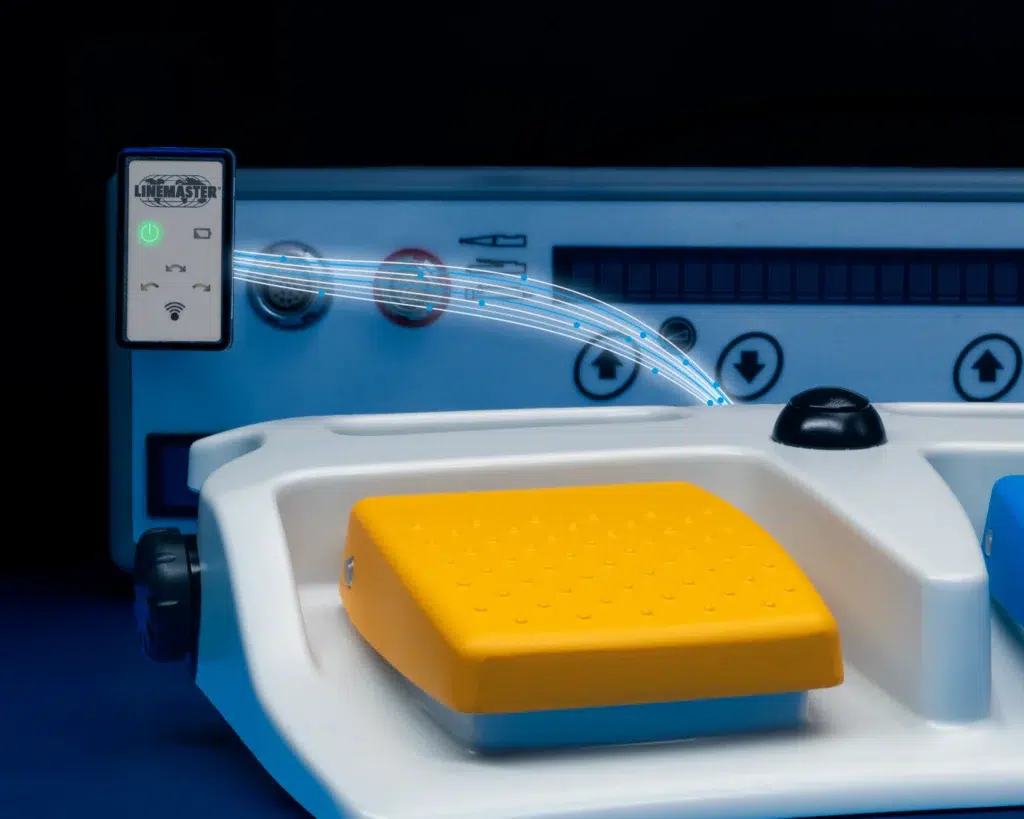
A wireless foot switch works differently. The pedal still detects the action, but instead of sending the signal through a cable, internal electronics convert it into a wireless transmission. A receiver, either built into the system or connected via an external interface, captures that signal and reproduces the same electrical output as a wired switch.
That extra step means a wireless system relies on more than just a mechanical switch. It involves circuit boards and electronic components that create and send a wireless signal to a receiver. That added complexity is what makes wireless operation possible, but it also brings additional design considerations. One of those is wireless foot switch security, specifically how the signal is protected as it moves between the transmitter and the receiver.
The transmitter requires battery power to operate, and the receiver draws power from the connected device to run its electronic circuits. Both sides of the system are active, and both need to communicate reliably and securely every time the pedal is pressed.

Wireless Foot Switch Encryption: Where Security Starts
Encryption is the process of encoding a wireless signal so that only the intended receiver can interpret it. The strength of that encryption is measured in bits. The more bits involved, the more complex the encoding and the more secure the communication. The widely recognized industry standard is 128-bit encryption. Linemaster’s wireless foot switches use 144-bit encryption, which goes beyond that benchmark. With more bits in the encryption, the number of possible combinations increases significantly. For engineers evaluating a wireless medical foot switch for a new system, building in encryption that exceeds the standard starting point is a meaningful design decision.

Super Encipherment: Layering More Than One Method
Linemaster’s wireless foot switches also use super encipherment. Rather than relying on a single encryption method, more than one method is applied to the signal at the same time. The signal goes through multiple layers of encoding before it ever leaves the device. Each additional method adds its own complexity. Together, they create a level of wireless foot switch security that any single approach cannot match on its own. It is a layered design, and that layering is intentional.
Perishable Packets: Signals That Expire After Use
Wireless systems send information in small packets. Linemaster’s wireless foot switches are designed so that those packets are perishable, meaning they expire after use. Once a packet has been received and processed, it becomes invalid. It cannot be replayed or reintroduced into the system later. This keeps communication between the transmitter and the receiver controlled and intentional. Each transmission is treated as a single-use event, so only what is actually being sent at that moment is recognized by the system.
Built Into Every Wireless Model
These protections are not add-ons. Cybersecurity in wireless foot switches is part of how Linemaster designs at the hardware level, which means the protections carry through to every application the switch is used in. Every wireless model incorporates these safeguards to support secure and dependable communication between the foot pedal and the equipment it controls.
For engineers and OEMs evaluating a secure wireless foot switch for a new or existing system, the security design of the device is just as relevant as its electrical and mechanical specifications. Those decisions are made in the hardware, and they stay with the product throughout its service life.
If you want to learn more about how Linemaster approaches wireless foot switch design, reach out to our team or explore our wireless foot switches to see available configurations.
Meet The Author

Arijan Kandic
Digital Marketing Specialist
Arijan is the Digital Marketing Specialist at Linemaster Switch Corporation and holds a bachelor’s degree in business management from Quinnipiac University. He manages the company’s SEO strategy, Google Ads campaigns, and digital marketing initiatives, and develops educational content for the Linemaster Learning Center to help engineers, OEMs, and medical device manufacturers better understand foot switch technology. Arijan works closely with Linemaster’s engineering and applications teams to translate complex technical concepts into clear, accurate articles on foot switch design, customization, and compliance considerations.
In Collaboration with

Sean Lewis
Director of Engineering
Sean has more than fifteen years of experience in product development, engineering governance, and cross functional technical operations. His background in metal fabrication, including machining, forming, welding, and inspection, provides a strong manufacturing foundation that supports his approach to design and process optimization. Sean holds a bachelor’s degree in mechanical engineering, an MBA with a manufacturing concentration, and an MSOL. He is a Certified SolidWorks Expert with advanced capability in CAD, rendering, simulation, and rapid prototyping. Sean also specializes in DFMEA and PFMEA risk management practices and is the holder of several foot switch design and utility patents.
Uploaded 04/22/2026
Custom Foot Switches
Linemaster’s custom footswitches are designed to meet specific user requirements, offering a range of features such as various pedal configurations, wired and wireless options, and customizable LED indicators. These custom footswitches provide reliable, durable solutions tailored to enhance functionality in diverse applications.

