

Understanding Foot Switch Actuation Force: Why “Feel” Matters More Than You Think
Actuation force is one of the first things someone notices when they step on a foot switch. It shows up in the way the pedal pushes back under the foot and how much resistance it gives. Some pedals feel light and quick. Others feel steady and controlled. That difference comes from the choices made inside the switch and from how the pedal is meant to be used.
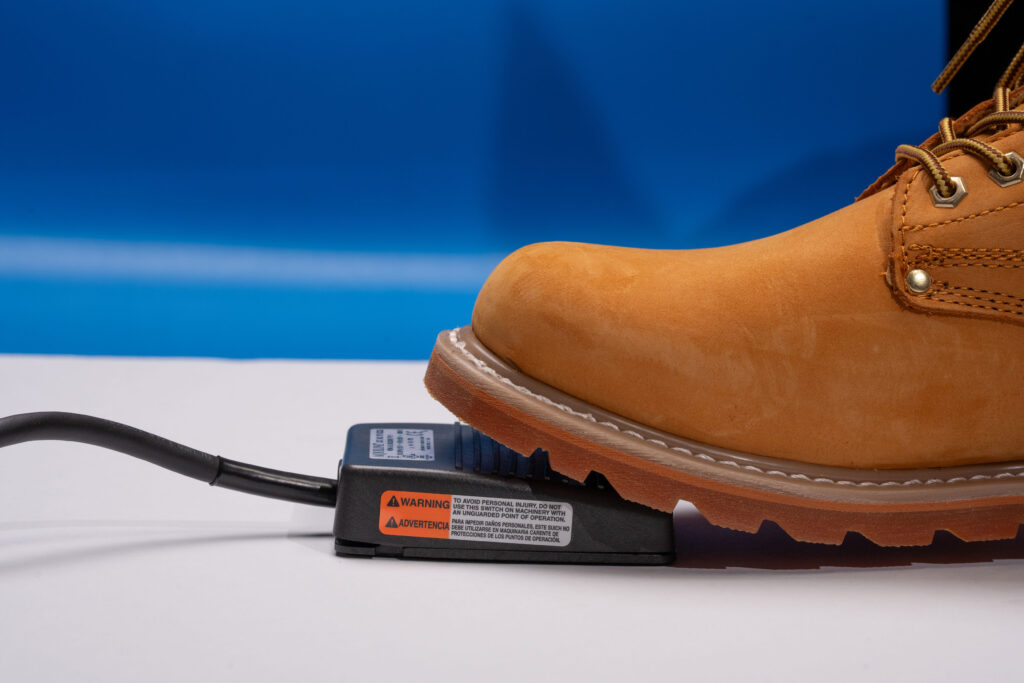
When the actuation force is too easy to move, the pedal can be pressed without the operator meaning to. When there is not enough actuation force, control becomes harder because the pedal does not offer enough resistance to modulate the movement with precision.
Actuation force shapes the experience of using a foot switch. It affects control, comfort, and how intuitive the pedal feels during real work. This blog looks at what actuation force is, how it is created, and why the feel of a pedal matters across different applications.
What is Actuation Force and Why Does it Matter?
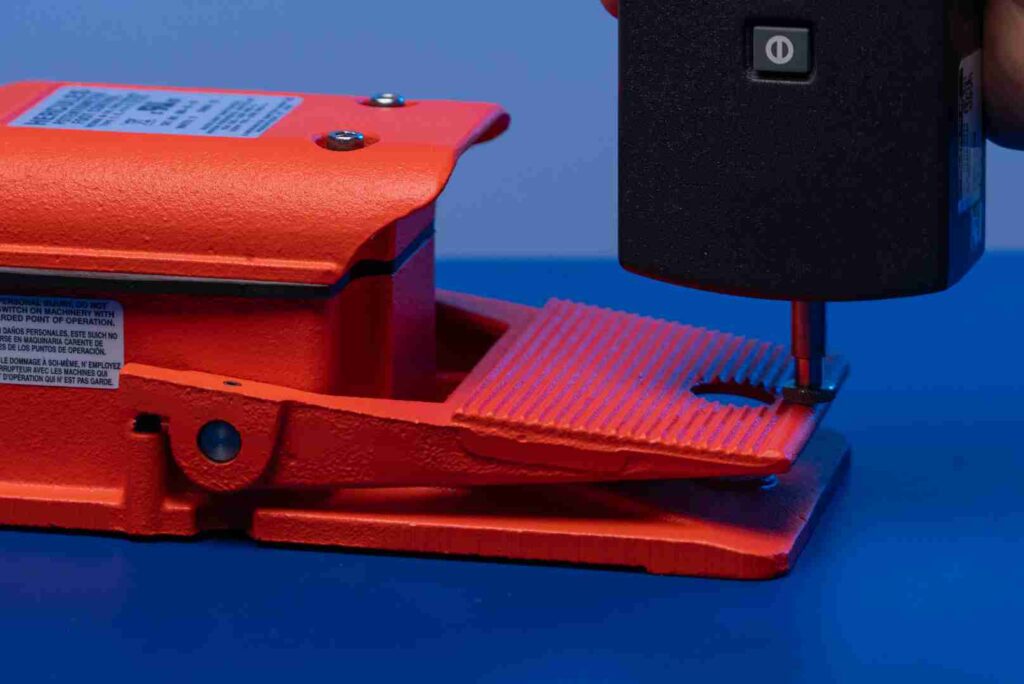
Actuation force is the amount of force it takes for the internal switch inside a foot pedal to activate. It is the moment the spring inside the pedal compresses enough for the internal mechanism to make a connection. That movement is what the operator feels under their foot. Whether the design uses a microswitch, reed switch or a hall sensor, the idea is the same. The pedal needs a certain amount of force before it turns something on.
Because this force comes from the spring inside the switch, it becomes noticeable right away. The resistance of the pedal, how firm it feels, and how quickly it reacts all come from that spring. Even small changes in the way the spring behaves can make a pedal feel completely different to the operator.
When the actuation force does not fit the application, the experience can shift in ways the operator feels immediately. If the force is too easy to move, the pedal may activate sooner than intended. In medical settings, this is why pedals often fall within a familiar range that begins around 10 newtons and stays below 50. The goal is to create enough resistance to prevent unintended activation while still keeping the pedal comfortable and consistent during real use.
How Feel is Created, Travel, Mechanism, and Pedal Design
The way a foot switch feels under the operator’s foot comes from more than the actuation force alone. A big part of it is where the actuation point sits within the pedal’s travel. Some switches activate about halfway through the stroke, while others have a longer movement before anything happens. When a pedal has a longer stroke, the operator travels farther to reach the actuation point, and that extra distance changes how the force is experienced.
The internal mechanism also shapes the feel of the pedal. A hall sensor or reed switch activates without any sound or tactile response, so the transition is smooth and quiet. A microswitch feels different. When it reaches its actuation point, the operator feels a clear click. Even when two pedals have the same measured actuation force, the way the internal mechanism behaves can make them feel completely different in use.
Pedal Design and Actuation Force
Pedal designs adds its own influence. The length of the treadle and the position of the spring affect how the force is distributed under the operator’s foot. A longer treadle often feels lighter because the foot has more leverage, although it requires more distance before activation. A shorter treadle feels firmer with the same spring, but the operator moves a shorter distance to reach the actuation point. Foot placement also plays a role, since pressing in different spots on the treadle changes how much leverage the operator has. A two-stage design uses two springs. The first spring controls the actuation force of the initial stage. As the pedal is pressed further, there is a noticeable increase in resistance before entering the second stage, which combines the force of the first spring with the additional force of the second spring. This increase in force helps reduce the likelihood of inadvertently activating the second stage.
These elements work together to create the overall feel of the pedal. Even small differences in travel, mechanism, or geometry can make two switches with the same measured actuation force feel completely different to the operator.
Real-World Use: How Actuation Force Impacts Operators and Applications
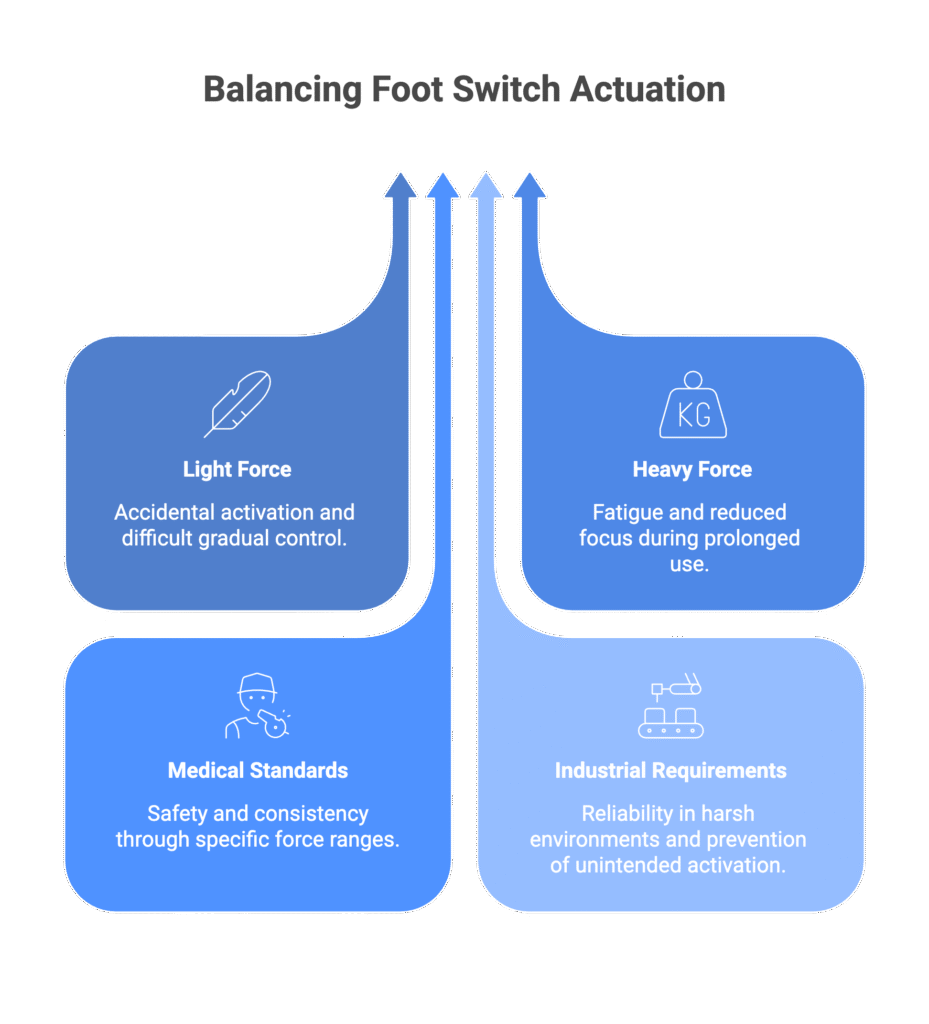
Actuation force becomes noticeable the moment someone begins using a foot switch. When the force is too light, the pedal is easier to press than the operator expects, which can lead to accidental activation. Light force also makes gradual control harder, especially on equipment where the operator needs to ease into movement. There is not enough resistance to guide the motion. When the force is heavier than it needs to be, the experience shifts in a different way. A pedal that requires more effort can create fatigue during longer procedures or repeated use.
Finding the right balance is what gives the operator a steady sense of control. With an appropriate amount of resistance, the pedal feels predictable and intentional. When the actuation force does not match the application, whether too light or too heavy, the pedal becomes less intuitive, and the operator ends up thinking about pressing it instead of focusing on the task.
Actuation Force in Medical Foot Switches
Medical foot switches approach this with a stronger focus on safety and consistency. Even though the standards that apply to medical devices do not list a specific force number, the intent is to prevent accidental activation and ensure the pedal performs the same way every time. In practice, medical pedals usually land with a familiar range. A minimum force around 10 newtons helps reduce unintended activation, and many medical designs settle between 20 and 40 newtons once testing and validation are complete.
Industrial foot switches follow a different set of expectations. Instead of aiming for a typical force range, the requirements focus on how the pedal behaves in tougher environments. The priority is to prevent activation from vibration or anything happening around the equipment. The pedal should respond only when the operator intends to press it and remain reliable through regular and repeated use.
Meet The Author

Arijan Kandic
Digital Marketing Specialist
Arijan is the Digital Marketing Specialist at Linemaster Switch Corporation and holds a bachelor’s degree in business management from Quinnipiac University. He manages the company’s SEO strategy, Google Ads campaigns, and digital marketing initiatives, and develops educational content for the Linemaster Learning Center to help engineers, OEMs, and medical device manufacturers better understand foot switch technology. Arijan works closely with Linemaster’s engineering and applications teams to translate complex technical concepts into clear, accurate articles on foot switch design, customization, and compliance considerations.
In Collaboration with

Christian D. Smutnick
Applications Engineer
Christian has fifteen years of experience in manufacturing and three years with Linemaster. He works with customers to identify solutions that meet their technical requirements while using existing designs and components whenever possible. This supports faster lead times and cost effective options without affecting performance.
Date Uploaded 02/04/26
Custom Foot Switches
Linemaster’s custom footswitches are designed to meet specific user requirements, offering a range of features such as various pedal configurations, wired and wireless options, and customizable LED indicators. These custom footswitches provide reliable, durable solutions tailored to enhance functionality in diverse applications.

